How to Build a Family Tree Beginning With the Relatives You Can Still Call
Most family tree projects stall for the same reason: people start with the oldest, hardest question first. They go looking for a great-great-grandfather in another country before they have written down their own grandmother's maiden name. The result is a tangle of half-verified names and a project that quietly gets abandoned. The fix is not more research hours; it is a better order of operations. Anchor the tree in the people you can still talk to, build outward one generation at a time, and the work stays manageable. This guide covers that process from the first conversation at the kitchen table to a tree you can share and keep updating.
Begin With Living Relatives, Not Archive Searches
Your parents and grandparents are the only people who can explain why a surname changed, which cousin is actually a half-cousin, and which town the family was living in during a particular decade. Treat that first conversation as an interview rather than a chat. Open questions work far better than direct ones, because they surface people and places you did not know to ask about.
- Who lived in the house when you were ten years old?
- Which relatives came to your wedding, and who was missing?
- Whose photo sat on the mantelpiece, and why that one?
- What family stories were repeated so often that everyone got tired of them?
Record the conversation if your relative agrees, or take notes and read them back at the end. Memory is associative: one place name usually pulls three more with it.
Sketch Three Generations and Deliberately Stop There
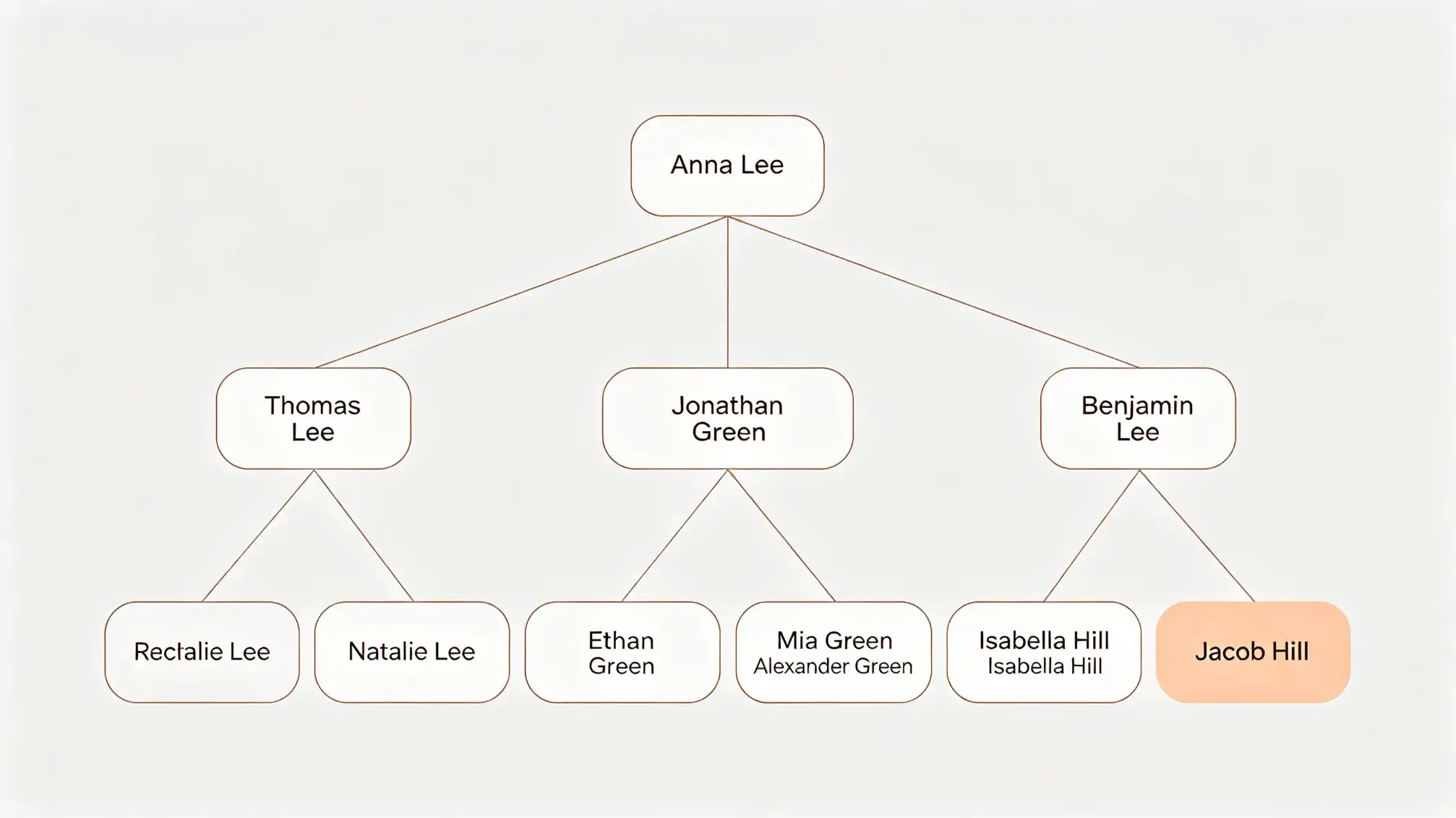
The single most useful discipline when learning how to build a family tree is knowing when to pause. Draw yourself at the bottom, your parents above you, and your grandparents above them. Fill in what you already know, even if some boxes stay empty. That is enough for a first draft.
Three generations gives you a stable spine. It is wide enough to show siblings, aunts, uncles, and cousins when you need them, but narrow enough that you can still see the whole picture on one screen or one sheet of paper. Resist the urge to bolt on a distant branch the moment you find a promising name — every generation you add multiplies the number of relationships you have to verify.
Capture the Details That Actually Connect People
A name on its own is nearly useless for research. What links two records together is the combination of name, date, and place, plus the relationships around them. Build the habit of recording all three from the beginning, even when it feels excessive.
Names, Dates, and Places That Match Records
- Record women under both their maiden name and their married name.
- Write dates in a consistent format so months and days never get confused.
- Give places a hierarchy: town, county or region, country.
- Add nicknames and spelling variants in a notes field rather than overwriting the official name.
A Source Note for Every Entry
Next to each fact, note where it came from: a conversation with your mother, a birth certificate, the back of a photograph, a newspaper obituary. Six months from now you will not remember which details were confirmed and which were guesses, and unsourced guesses are how family trees quietly go wrong.
Choose One Home for the Tree Before It Grows
Paper is pleasant and spreadsheets are flexible, but both become fragile once two people start editing. Pick a single place where the tree lives, and keep everything else as a backup. If you prefer not to maintain rows and columns by hand, you can organize relatives and their relationships directly on the Family page, which keeps parents, grandparents, siblings, and extended relatives connected in one view while you continue researching.
Whatever you choose, add one rule: every new person gets a source and a date added. That single habit separates a tree you can trust from a decorative diagram.
Then Move From Memory to Documents, One Generation Back
Once the living generations are written down, work backward from the known to the unknown. Ask relatives for certificates, service records, and family bibles. Read the backs of photographs. Look for obituaries, which often list siblings, children, and the town of birth in a single paragraph. Census records are useful because they place a whole household at one address on one night, which confirms relationships rather than just names.
Move one generation at a time and confirm each link before chasing the next. A verified grandparent is worth more than five speculative great-great-grandparents, and it prevents the most common beginner mistake: attaching your family to the wrong branch because two people shared a common name.
Be Honest About Gaps and Complicated Branches
Real families include second marriages, adoptions, step-siblings, estrangements, and children raised by grandparents. A family tree that cannot show these is not more accurate — it is just less true. Mark unknowns clearly as unknown instead of filling the space with a guess, and use notes to explain relationships that a simple line cannot capture. Future researchers, including your own children, will thank you for the honesty far more than for a tidy but invented pedigree.
Keep the Tree Alive After the First Draft
A family tree is a living document, not a finished poster. Share the draft with the relatives you interviewed and ask them to correct it; corrections are the cheapest accuracy you will ever get. Add photographs where you have them and label the people in them. Bring the tree to the next family gathering and let cousins fill in the blanks. Then set a reminder to revisit it once a year, because older relatives are the primary source you cannot replace.