How to Capture a Parent's Life Story Before the Details Fade
Ask almost anyone what they know about their grandparents and you will get dates: a birth year, a wedding year, maybe the year someone crossed an ocean. Ask what those years actually felt like — what the kitchen smelled like, what the money worries were, why they left — and the conversation often stalls. That gap is where a life story lives. It is also the part of family history that disappears first, quietly, long before anyone thinks to write it down.
This guide is written for beginners: people who want to record a family member's story but are not sure where to start, what to ask, or how to keep it organised. You do not need a professional microphone or a research degree. You need a little patience, a few good questions, and a place to put what you learn.
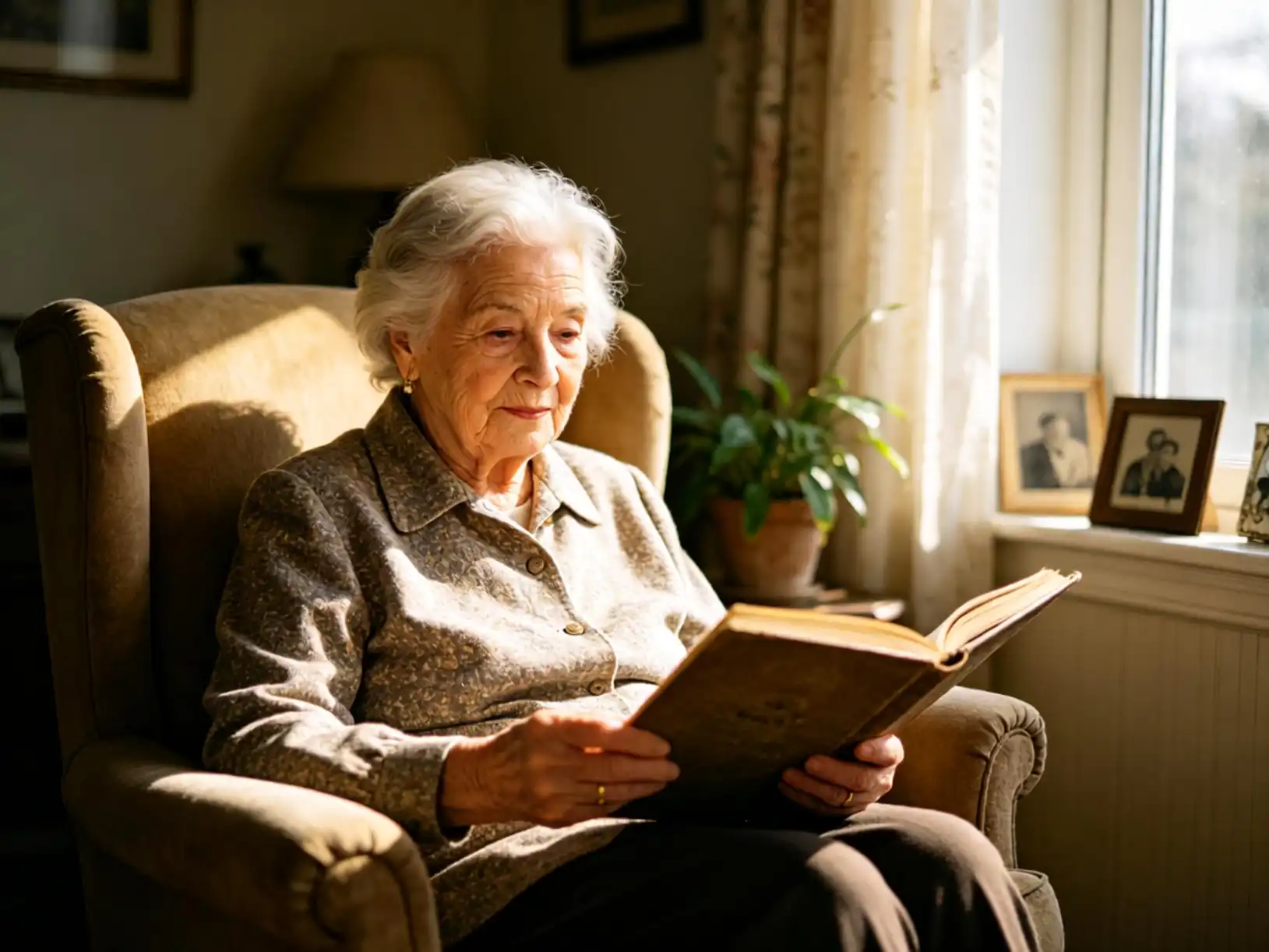
Facts Tell You Where Someone Was; a Life Story Tells You Why
A birth certificate confirms a date. A life story explains what that date meant to the person living it. When you record memories in someone's own words, you capture context that no document can supply: what the family expected of them, what they were afraid of, what they were proud of, what they gave up.
That context does something practical for your research. It turns a name in a family tree into a recognisable person, and it gives you clues about where to look next. A passing comment like "my father worked the night shift at the mill after we moved" can point you toward an address, an occupation record, or a migration route you would never have thought to search.
What Beginners Usually Get Wrong
Most first attempts fail for the same few reasons — and all of them are easy to fix.
Waiting for the perfect moment
There is no ideal day. Memory is generous in casual conversation and stingy under pressure. A fifteen-minute chat while washing dishes often yields more than a scheduled two-hour sit-down that everyone dreads.
Treating the conversation like a form
Rapid-fire questions produce short answers. "Where did you live in 1962?" gets a street name. "What was it like to move that year?" gets a story, and the story usually contains the address anyway.
Recording only the highlight reel
Weddings, graduations, and arrivals are the easy parts. The texture is in between: the first wage packet, the neighbour who helped, the meal that was always on the table when money was short. Those details are what later generations will read twice.
Why This Work Matters More Than Another Photo Album
Photographs show what people looked like. A recorded life story shows how they thought. For younger family members, that is the difference between a vague set of ancestors and a real inheritance — someone whose choices make sense, whose difficulties can be imagined, and whose example can be argued with.
There is a research benefit too. Written and oral accounts frequently break through walls that records alone cannot: nicknames that explain a confusing index entry, a second marriage nobody mentioned, a hometown name pronounced so differently that you had been searching the wrong spelling for months. Genealogy rewards context, and context is exactly what a recorded conversation supplies.
It also protects the future of your family history project. A family tree is only as strong as the evidence and memory behind it. When the person who remembers is no longer available to ask, the questions do not get a second chance.
Questions That Open a Conversation Instead of Closing It
Good questions are specific enough to trigger a memory but open enough to let the answer go somewhere unexpected. Keep a short list on your phone and use whatever fits the moment.
- What did your street sound like in the evening when you were growing up?
- What was your first paid job, and what did you spend the money on?
- Who in the family was the best storyteller, and what did they always repeat?
- What did your parents worry about that you did not understand at the time?
- What is something you were told never to do, and did you do it anyway?
- Which year changed the most for you, and why that one?
- What do you hope your grandchildren know about you that a document cannot show?
Follow the emotion, not the timeline. If a memory makes someone pause or laugh, stay there and ask one more question. Chronology can be assembled later; feeling cannot be reconstructed.
How to Record Without Making It Feel Like an Interrogation
Choose the format that the person is comfortable with. Some people talk freely but freeze in front of a microphone. Others prefer writing or being asked questions by email. All of these count.
- Use your phone's voice recorder, and say the date and full name at the start of each file.
- Record in short sessions of twenty to thirty minutes rather than one long interview.
- Ask permission before recording, and explain where the file will be kept.
- Scan photographs together — images prompt memories that direct questions cannot reach.
- Write a short summary within a day, while you still remember the details that were never spoken.
Label everything consistently: name, date, place, interviewer. Future-you will thank present-you for this small discipline, because unlabelled audio files become anonymous within a year.
Where a Life Story Fits Into Your Family History Work
Treat the recording as a source, not a souvenir. Transcribe the key passages, note the names and places mentioned, and then check them against records. Attach quotes to the relevant person so the story travels with them rather than sitting in a separate folder nobody opens.
This is where a shared workspace makes a real difference. When you build out the person's profile and connect relatives, the stories stay attached to the right branch of the family tree instead of being scattered across notebooks and messages. You can start that structure on the family profiles page, then invite other relatives to add what they remember — aunts and cousins often hold the half of the story you were missing.
Over time, small contributions compound. One recorded conversation becomes a set of notes, then a profile, then a branch of the tree with voices attached. That is how a family history stops being a list of names and becomes something a child can actually read.