Building Your First Family Tree: A Clear Starting Point for Family History
Almost everyone starts the same way: with a name, a half-remembered story, or a photograph with no caption on the back. The urge to know more is immediate, but the path forward is not obvious. That is where a family tree earns its place. It is not a wall poster or a decorative chart to hang above the sofa. It is a working document — a structured record of people, relationships, dates, and places that turns scattered memories into something you can check, correct, and build on.
For a beginner, the value of that structure is difficult to overstate. Family history grows quickly and chaotically. Within a few weeks you may hold a dozen census entries, three contradictory birth years, and a second cousin's phone number. Without a framework that keeps each piece attached to the right person, the material becomes noise. A tree keeps it organized.
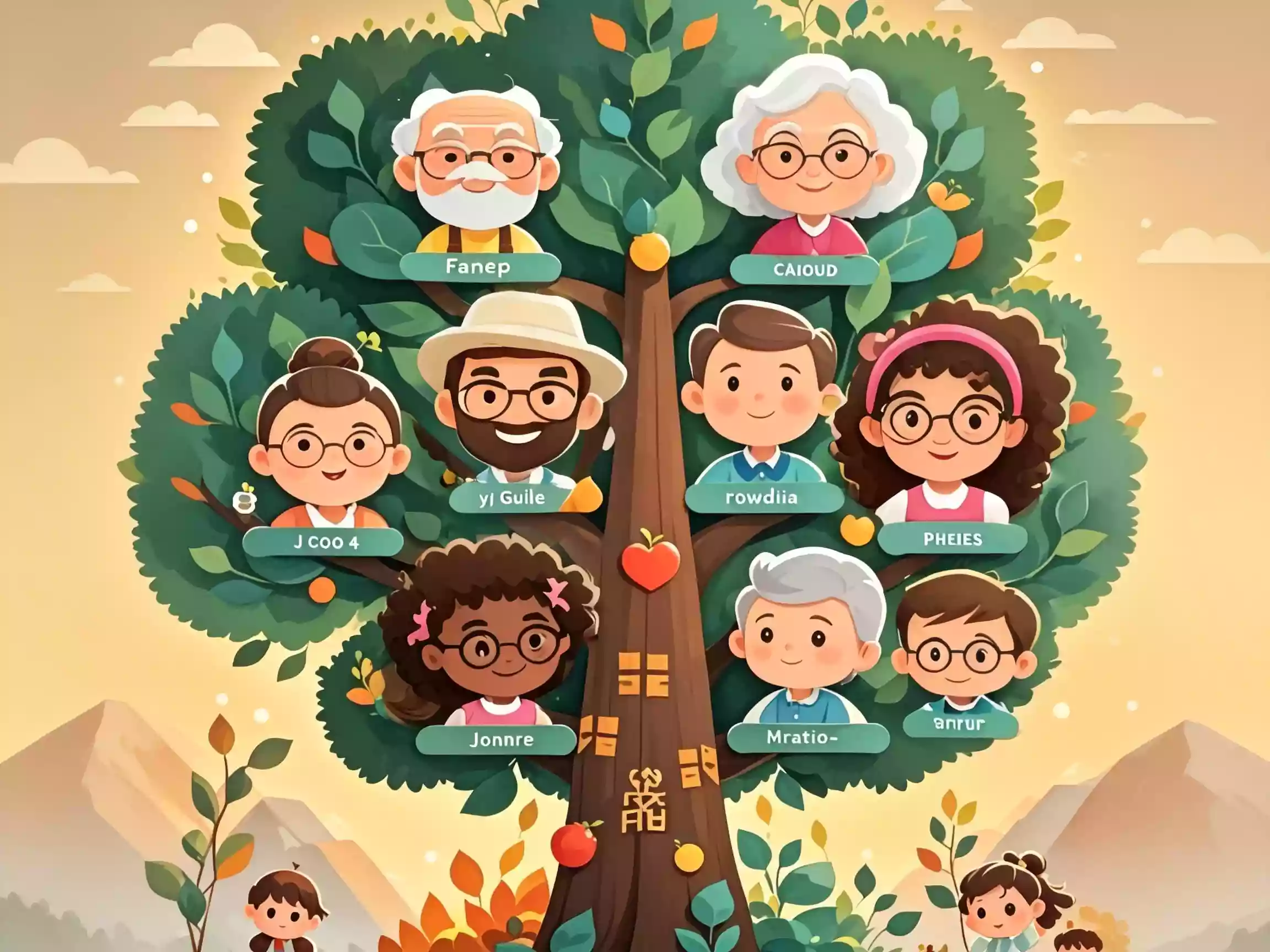
What a Family Tree Actually Records
Strip away the software and the design choices, and every tree answers four questions about a person: who they were, what happened to them, when it happened, and where. Everything else — the branches, the charts, the colour coding — exists to display those answers clearly.
This is why a tree differs from a photo album or a memoir. Albums preserve feeling; trees preserve relationships and evidence. A memoir can say that grandma came from a farming family. A tree has to say which farm, in which parish, in which year, and how you know.
Why Structure Comes Before Stories
New researchers often want to jump straight to the dramatic material: the immigrant ancestor, the missing branch, the rumoured connection to someone famous. That instinct is understandable and almost always counterproductive. You cannot recognise a breakthrough in the archives if you have no baseline to compare it against.
Building downward from what you know — yourself, your parents, your grandparents — creates that baseline. Each confirmed generation becomes a reference point. When a record appears with a plausible name but the wrong birthplace, you will notice, because the structure tells you what should have been there. Skilled genealogists rarely have better luck than beginners; they simply have better reference points.
The Four Building Blocks of Every Entry
Before adding anyone to your tree, decide what a complete entry looks like. For most researchers, four elements are non-negotiable:
- Full name — including maiden names for women, middle names, and any spelling variants you encounter. Variants belong in the notes, not as separate people.
- Event details — birth, marriage, death, and any migration or occupation you can document, each with a date.
- Place — recorded as fully as the source allows, from village to county to country. Boundaries and place names change; capture what the record said.
- Source — the document, interview, or database the information came from. An entry without a source is a claim, not a fact.
That last point deserves emphasis. Family history is not the collecting of names; it is the connecting of names to evidence. Anyone can copy a name from a stranger's online tree. Very few can explain why that name belongs in the right place.
A Repeatable Method for Getting Started
Begin with the living, then step back one generation
Record yourself, your siblings, your parents. Then stop and verify what you have before moving further. One fully documented generation is worth more than five speculative ones, and it protects you from the most common beginner error: attaching your tree to someone else's and inheriting their mistakes.
Interview before you search
Relatives are living archives, and they are the only archives that can answer questions you have not thought to ask. Ask about full names, nicknames, siblings who died young, migrations, occupations, and where family documents are kept. Record the conversations and note who said what — an oral account is a source too, just one that needs corroboration.
Work backwards, one question at a time
Do not attempt to research a whole family at once. Choose a single question — where was great-grandfather born? — and pursue it until you can answer it or prove the answer is unavailable. Focused questions produce clean results; broad ones produce a folder of unrelated printouts.
Keep a research log
Write down every source you searched, including the ones that failed. Negative evidence is genuinely valuable: knowing you have already checked a parish register for a given decade saves you from checking it again in two years, when your memory of it will have faded.
Chart Formats and When Each Helps
Most people picture one style of diagram, but different layouts serve different questions. A pedigree chart follows direct ancestors backwards and is excellent for spotting gaps in a lineage. A descendant chart spreads forward from one couple and is better for sorting out cousins and inherited records. Family group sheets sit behind both, holding the detail for a single household. You do not need to choose permanently — but knowing which view you are looking at prevents a great deal of confusion when your tree passes fifty people.
Mistakes That Cost Beginners Years
- Copying entire branches from unverified online trees without checking a single source.
- Merging two people with the same name in the same place and calling them one ancestor.
- Ignoring spelling variations, which are normal rather than errors in older records.
- Recording relationships without recording the document that proves them.
- Chasing a distant line while the nearest generation remains undocumented.
Each of these is easier to avoid than to undo. A tree built slowly and carefully stays useful for decades; a tree built quickly from borrowed data usually has to be dismantled and rebuilt.
Where to Keep Your Tree Working
Paper is a fine starting point, and many researchers keep notebooks permanently. But as soon as your tree involves more than thirty people and multiple sources, a digital home becomes essential — somewhere relationships, dates, places, and notes live together instead of scattered across folders and phone photos. You can organise your family records in one connected space and keep each profile linked to its evidence as you go. Whatever tool you choose, the principle is the same: one person, one entry, one set of sources, so future you can retrace every step.
Family history rewards patience more than enthusiasm. Start small, document thoroughly, and let the tree grow at the speed your evidence allows. Genealogy is a long game, and the researchers who enjoy it most are the ones who never have to wonder where a name came from.