Genealogy for Beginners: A Calm, Evidence-First Way to Trace Your Family History
Most people begin researching their family history with one question and a shoebox of photographs. That is genuinely enough to start. You do not need an expensive subscription, a degree in archival studies, or a perfect filing cabinet before you can make real progress. What you do need is a method: a repeatable way of moving from one confirmed fact to the next, so that every name on your family tree rests on evidence rather than memory or guesswork.
This guide walks through that method in the order you will actually use it — the people you can still talk to, then the records, then the long-term preservation of whatever you find.
Why a Careful Approach Beats a Fast One
It is tempting to type a grandparent's name into a search box and accept the first result that appears. The trouble is that names repeat heavily within families and within regions. A single county can hold four men with the same first and last name, born within a decade of each other, and only one of them is yours. Accepting the wrong one does not just add an error; it attaches an entire invented branch to your tree and makes every later search harder.
Family stories also drift as they are retold. A great-uncle becomes a grandfather, a town becomes a county, a birth year shifts by five years. None of that is dishonesty — it is simply how memory works. Treat every unverified detail as a lead, not a fact, and you will avoid months of untangling later.
Begin With Living Memory, Not With the Internet
The most valuable archive available to a new researcher is a relative with a working telephone and an hour to spare. Before you search a single database, talk to the oldest people in your family. Ask open questions rather than yes-or-no ones, write down their exact wording, and record the conversation if they agree. Contradictions between two relatives are not a problem to settle immediately; they are clues pointing to records worth checking.
Collect the details that databases cannot give you: occupations, migrations, nicknames, religions, military service, family disputes, and the reason someone left one place for another. These details are what allow you to tell four identically named men apart later.
Questions that unlock the most
- What are the full names of your parents and grandparents, including maiden names?
- Where were they born, and where did they live when you were a child?
- What work did they do, and did that work move the family anywhere?
- Which documents, photographs or letters are still in the family, and who holds them?
- What family stories were repeated often, and who told them first?
Build Your Family Tree One Generation at a Time
Work backwards from yourself, and finish each generation before starting the next. Begin with your own birth record, then your parents' marriage, then your grandparents' births. Each step should be supported by at least one document that names the person you already know and introduces the person you are adding. That link — the document that connects a known person to a new one — is the backbone of sound research.
Resist the urge to chase a famous ancestor or a dramatic origin story you have heard about. Confirming four ordinary generations solidly is a far greater achievement than gathering two hundred names you cannot verify. It is also the only reliable foundation for going further back.
Keep Names, Dates and Places Consistent
Small inconsistencies create large confusion once your tree passes a few dozen people. Decide on conventions early and apply them everywhere.
- Names: record women under their maiden name, with married names noted separately.
- Nicknames: place them in parentheses so you can still search the formal version.
- Dates: pick one format, such as 12 March 1911, and never switch.
- Places: record the town, then the county, then the country, using the names that existed at the time of the event.
- Uncertainty: mark an approximate date as about 1894 rather than inventing a precise one.
Which Records to Search First
Once living memory is exhausted, move to documents. Start with sources held in the family, because they are free, unique and three generations at once. Then work through official records in roughly this order.
- Home sources: certificates, bibles, photo albums, letters, diaries, funeral cards, military papers and school reports.
- Civil registration: government birth, marriage and death records, usually the most reliable starting point.
- Census records: they place an entire household at one address on one night, which is ideal for building families.
- Religious records: baptisms, marriages and burials, often extending earlier than civil registration.
- Military, immigration and land records: useful for movement, service and property.
- Newspapers: announcements, accidents, court reports and obituaries that add texture to a name.
When a record is missing, do not assume the event went unrecorded. Ask what else might have been created at the same time — a tax list, a directory, a probate file — and search for those instead.
Cite Your Sources From Day One
For every fact you enter, note where it came from: the record type, the archive or website, the reference number, the date you accessed it, and what the document actually said. This takes seconds at the time and saves days later. It also lets you weigh conflicting evidence honestly, because you can see whether a birth year came from a certificate or from a family story told forty years after the event.
Preserve and Share the Story Behind the Names
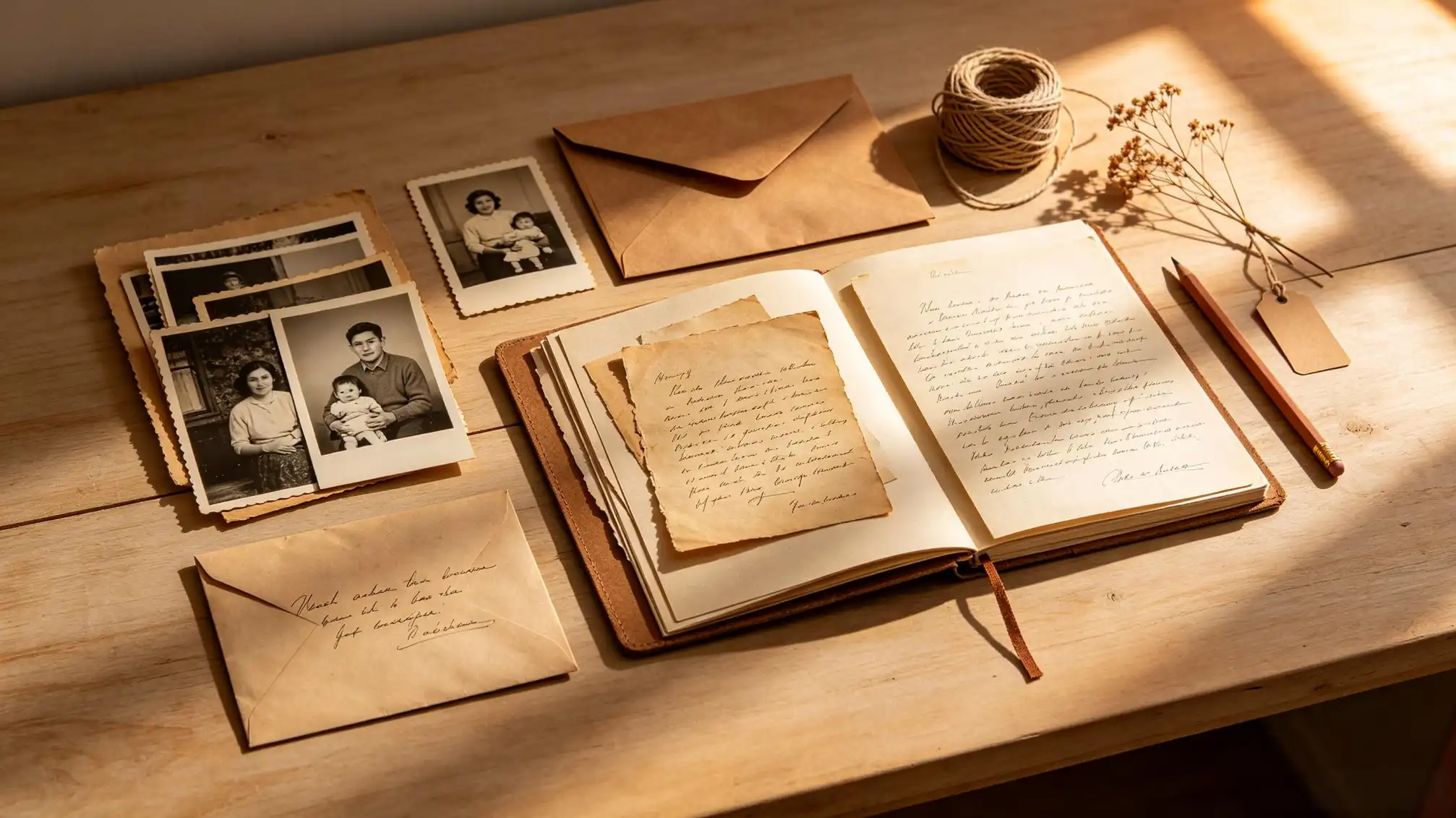
A family tree of dates is useful; a family tree with context is memorable. As you gather material, store digital copies in two places, label photographs with names and approximate dates while someone still recognises the faces, and write short notes explaining why each person matters to the family. Oral history is fragile, and photographs without captions quickly become anonymous.
Sharing is part of preservation, too. Writing up a single branch — even three paragraphs about a great-grandmother's journey — keeps the research alive for cousins who will never open a database. You can publish and organise those written memories at familylove.love/stories, which is a natural home for the narratives that sit alongside your tree.
Expect the work to take years rather than weekends. That is normal, and it is also the point: each verified generation is a genuine discovery, and the slower you go, the more of it survives.