Family History Questions That Help Relatives Share the Stories You’ve Never Heard
You’ve probably heard the same few family stories at every gathering—the funny one about the road trip, the proud one about a grandparent’s first job. But there’s a deeper layer underneath: the choices, fears, routines, and small details that shaped your relatives long before you knew them. The right family history questions don’t just collect facts. They invite people to remember out loud, and they make it easier for you to capture the stories that might otherwise fade away.
Whether you’re sitting across from a parent, calling a grandparent, or recording an aunt over coffee, the goal is the same: create a comfortable space where memories can surface naturally. That means asking with curiosity, following the energy of, and knowing when to pause.
Why Great Family History Questions Feel Like Conversations, Not Interviews
A list of questions can be useful, but it can also make a relative feel like they’re being processed. The best interviews feel like a chat that happens to go deep. Start with open-ended prompts, listen for the details that light someone up, and then ask about those details. If your grandmother’s voice softens when she mentions her older sister, that’s your next question—not the next item on your list.
It also helps to think of yourself as a guide rather than an investigator. You’re not looking for a single “correct” version of family history. You’re gathering perspectives. Two siblings may remember the same holiday completely differently, and both versions are valuable. Your job is to help people feel safe enough to share what they remember.
Warm-Up Questions That Open the Door to Memories
Before you ask about big life events, start with easy sensory questions. These are low-pressure, and they often trigger vivid recollections.
- What’s the first home you remember living in? What did it smell and sound like?
- Who was in your family when you were growing up, and how did everyone get along?
- What was a typical Sunday or holiday morning like in your house?
- What was your favorite meal that someone in the family made? Can you almost taste it?
- What games or activities filled your free time as a kid?
These family history questions work because they’re concrete. A relative doesn’t have to summarize their whole childhood; they just have to remember one room, one meal, one afternoon. From there, you can follow up with: “Who else was there?” “What happened next?” “How did that make you feel?”
Childhood and Growing-Up Questions for Parents and Grandparents
When you interview parents and grandparents, childhood is often the richest territory. It’s also where family culture—rules, rituals, personalities—first took shape.
- What did your parents teach you that you still carry with you today?
- What was school like for you? Did you have a favorite teacher or a subject you dreaded?
- What did you do for fun that didn’t cost money?
- Who was your best friend, and what did you do together?
- What was a rule in your house that you didn’t understand until later?
- What did you want to be when you grew up, and why?
- What’s something you got in trouble for that still makes you laugh?
Listen for names, places, and everyday objects. If they mention a neighborhood, a family business, or a pet, ask more. Specifics are what make a family history feel alive later.
Questions About Work, Love, and Life-Changing Decisions
As relatives move into adulthood, the questions can get more reflective. These prompts are about choices, turning points, and the stories behind the milestones.
- How did you meet your partner, and what did you notice first about them?
- What was your first job, and what did it teach you about people or money?
- What’s a decision you made that changed the direction of your life?
- Was there a moment when you felt especially proud of yourself?
- What was the hardest season of your life, and who helped you get through it?
- If you could go back and tell your younger self one thing, what would it be?
- What did you worry about when you were my age?
These questions can bring up strong emotions. Give your relative room to pause, and don’t push for details they seem reluctant to share. Sometimes the most meaningful answer is simply, “I’d rather not go into that today.” Respect it, and leave the door open for another time.
Everyday Life, Traditions, and Family Culture
Some of the most valuable family history details aren’t about dramatic events at all. They’re about how people lived day to day. Ask about traditions, food, language, faith, and the little rituals that made your family feel like your family.
- What holidays or traditions mattered most in our family, and how did they start?
- Was there a phrase or saying that someone always used?
- What songs, recipes, or stories were passed down?
- How did the family handle celebrations, disagreements, or hard times?
- What did “home” mean to you when you were growing up?
If your relative comes from a different country or culture, ask about language, immigration, and what they missed most after moving. Those details are often lost first when families spread out. You can also ask about neighborhood life, church or community events, and the small routines that filled ordinary weeks.
How to Ask About Difficult or Sensitive Chapters
Every family has complicated chapters—loss, illness, estrangement, financial struggle, or secrets. You don’t have to avoid them, but you do need to approach them with care. Introduce the topic gently and give your relative control over how much they share.
A Gentle Script for Sensitive Topics
Try a soft opener: “I know this might be hard to talk about, and we can stop anytime. Would you be willing to tell me what you remember about…?” If they say yes, keep your follow-ups simple and supportive. If they say no, thank them for considering it and move on. Trust matters more than any single answer.
Follow-Up Prompts That Turn Short Answers Into Rich Stories
Many relatives give short answers at first—not because they don’t want to share, but because they’re not sure what you’re looking for. Follow-up prompts show them you’re genuinely interested.
- What happened right before that?
- Who else was involved?
- What did that look like, sound like, or feel like?
- How did that change things for you afterward?
- What do you wish more people understood about that time?
- Is there a story you’ve never told anyone that you’d be willing to share now?
You can also repeat a phrase they just used. If they say, “It was a different world then,” ask, “What made it feel like a different world?” That simple mirroring often opens up a whole new layer. Silence is fine too—give them a few seconds to gather their thoughts.
Recording, Organizing, and Sharing What You Learn
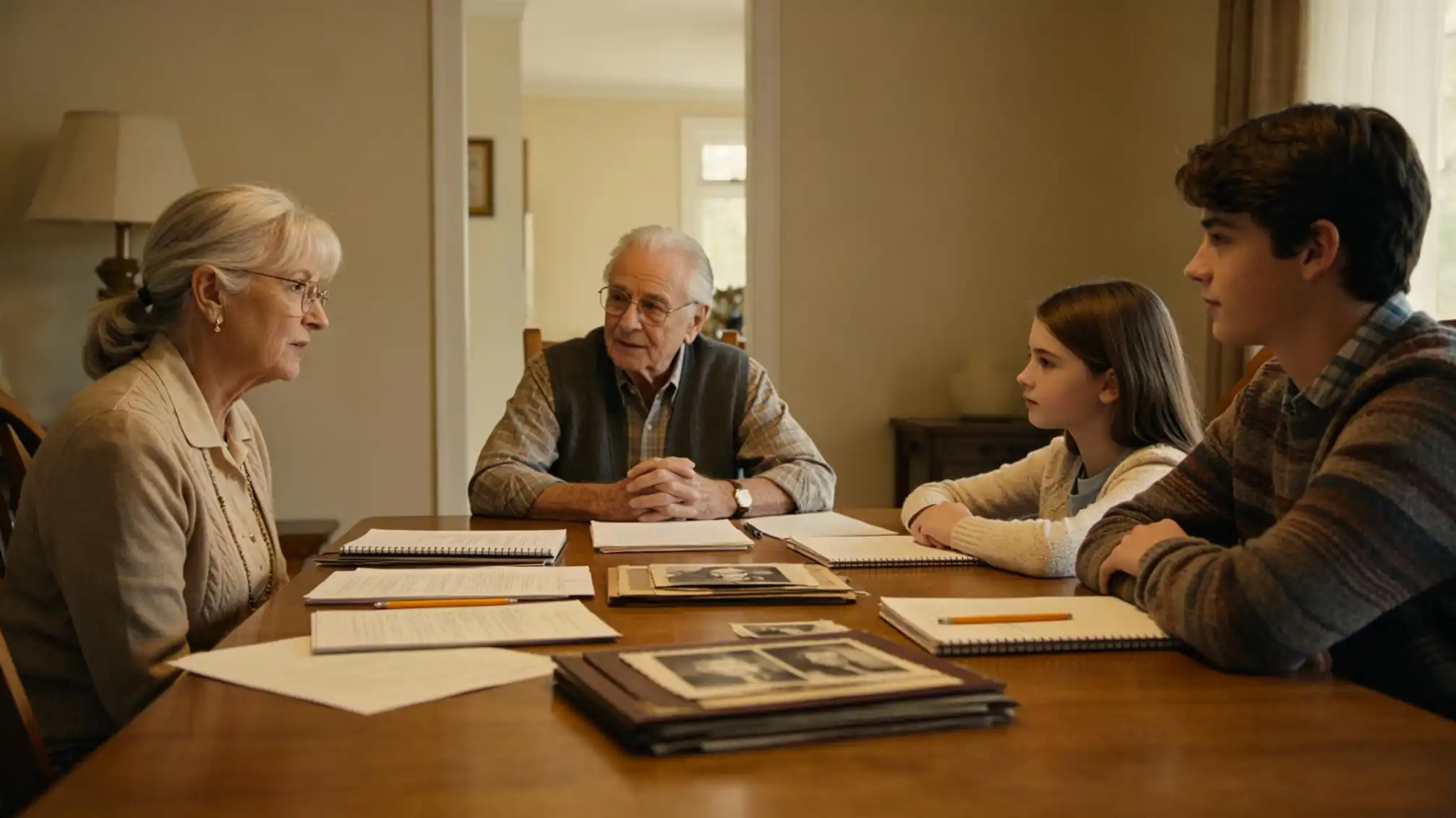
Before you start, ask for permission to record audio or video. Some relatives open up more when they know their words will be preserved; others get nervous. Let them choose. A phone voice memo is usually enough, and a notebook works fine too.
After the conversation, write down the date, the setting, and any names or places you want to verify later. Then consider sharing the highlights with the rest of the family. When you’re ready to turn those notes into something others can read and add to, FamilyLove.love Stories is a natural place to collect and publish family memories sorelatives can contribute their own versions.
Remember that family history isn’t a one-time project. Every conversation adds a piece. The more you ask, the more you’ll realize how much is still waiting to be told.