Family History Begins With a Conversation: How to Record the Stories That Matter
Family history is often imagined as a tidy chart: names, dates, lines connecting one generation to the next. But the part that truly holds a family together is messier and more human. It is the sound of a grandmother laughing mid-sentence, the recipe card stained with butter, the story of how two people met during a thunderstorm, the reason a family left one country for another. If you have been meaning to start recording your family history, you do not need a research degree or an expensive subscription. You need a little curiosity, a way to capture voices, and a willingness to begin before every detail is perfect.
This guide is for anyone who wants to preserve memories without turning family history into a chore. The goal is not to finish the whole family tree this month. The goal is to save one story, then another, until your family history becomes a living archive rather than a distant idea.
Start With One Person, Not the Whole Family Tree
The fastest way to feel overwhelmed is to open a blank tree and try to fill every branch at once. Instead, choose one person. It might be a living relative, a recently passed ancestor, or even yourself. Ask a single question: What is one memory you would never want forgotten?
That question changes the tone. It invites reflection rather than interrogation. It gives the storyteller control. And it almost always leads to another memory, then another. Before long, you have a fragment of family history that feels vivid, specific, and worth keeping.
If the person is no longer living, start with an object. A photograph, a military ID, a prayer book, a piece of jewelry, a handwritten note. Objects are excellent doorways into family stories because they prompt questions: Who held this? Why was it saved? What was happening when it was new? Write down what you already know, then note what you want to discover.
Build a Simple Recording Kit
You do not need professional equipment. A smartphone with a voice recorder app is enough to begin. Add a quiet room, a charged battery, and a list of gentle prompts. If you are recording an older relative, a small external microphone can improve sound, but it is optional. What matters most is that you press record and let the conversation unfold.
Before you start, ask permission. Explain what you plan to do with the recording and who might hear it. Some memories are private, and that is okay. Respecting boundaries builds trust, and trust is what allows deeper family stories to surface later.
Use file names that make sense to future you. A simple format works well: LastName_FirstName_Year_Topic. For example, Miller_Rose_1962_Childhood. Store recordings in two places, such as your phone and a cloud folder. If you scan photographs, label them immediately with names, places, and estimated dates. An unlabeled photo can become a mystery in only one generation.
Ask Questions That Unlock Family Stories
Yes-or-no questions close conversations. Open questions open them. Instead of asking, Did you like school?, try, What do you remember about your first day at school? Instead of, Was your father strict?, ask, What was your father like when he came home from work? The difference is small, but the answers are much richer.
Here are prompts that tend to work across generations:
- What was the first home you remember? Describe the rooms, the sounds, the smells.
- Who in the family made you feel safe, and why?
- What did your parents or grandparents do for work, and how did that shape daily life?
- What was a family meal like? Who cooked, who cleaned, what was always on the table?
- What is a holiday or tradition that has changed over time?
- What is a hard season your family survived together?
- What do you hope younger generations understand about where they come from?
Follow the energy. If your relative lights up when talking about a summer job or a neighbor, stay there. Details are gold. Ask what the street looked like, what music was playing, what people wore. Sensory details turn a fact into a memory.
Let Silence Work for You
When someone pauses, do not rush to fill the space. Silence often means a memory is forming. Give it a few seconds. You can also repeat a phrase back gently: You said she was the one who kept everyone together. What did that look like? This shows you are listening and helps the storyteller go deeper.
Do not correct small errors during the recording. If a date seems wrong or a name is misspelled, make a note and check later. The priority is the story, not the audit.
Organize Lightly, So You Keep Going
Family history projects often stall because the organizing system becomes more complicated than the collecting. Keep it simple. Create one main folder called Family History. Inside, add folders for Recordings, Photos, Documents, and Notes. Use a basic spreadsheet to track who you interviewed, when, and what topics you covered. That is enough to start.
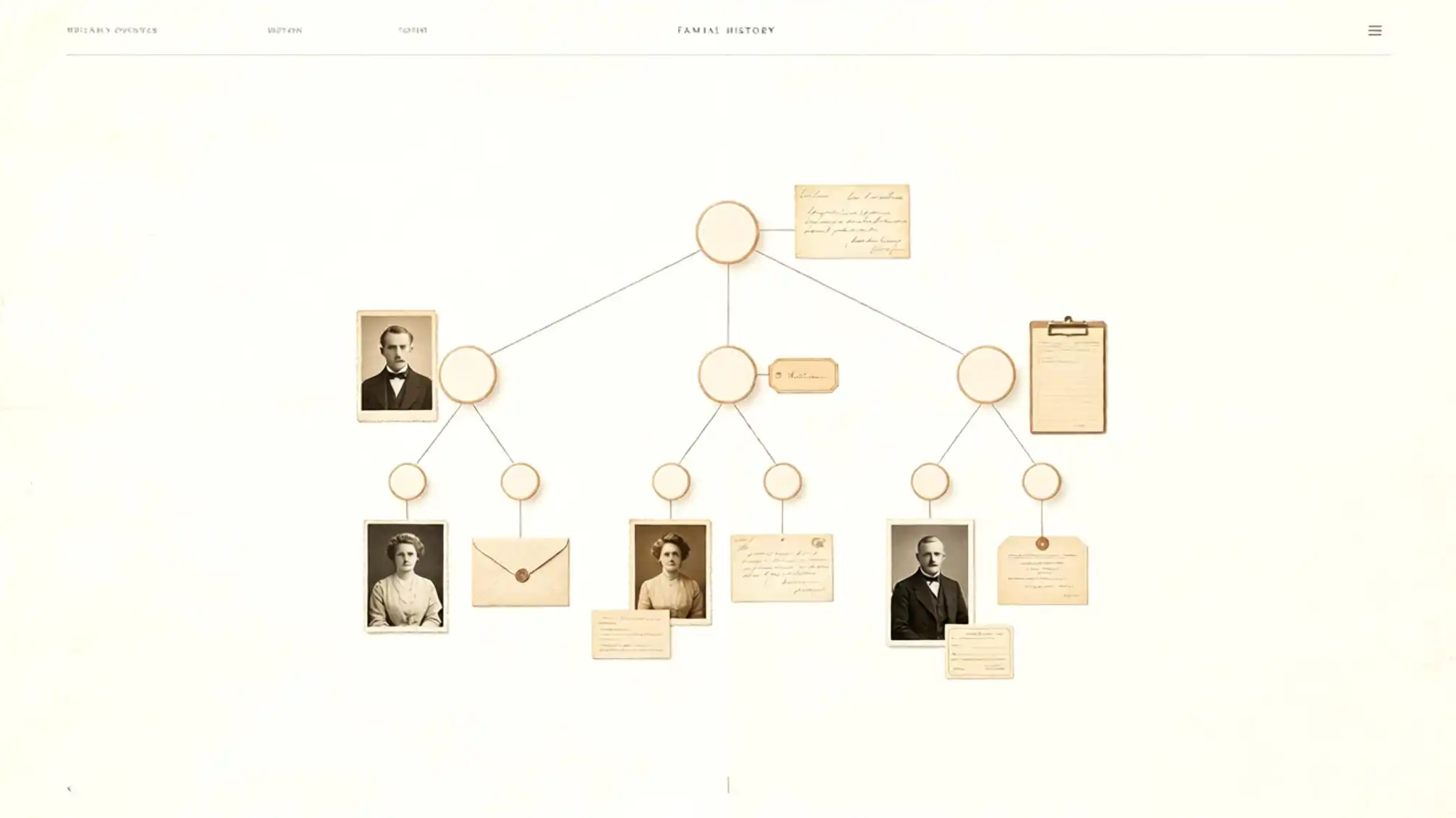
Build the family tree gradually. Add names and relationships as you confirm them, but do not let the tree become the only goal. A tree without stories is a skeleton. Family stories give it a heartbeat. If you want a place to gather and share what you find, you can explore family stories as a natural next step.
Keep a Research Log for Ancestors
As you move further back, you will encounter ancestors you never met. Keep a simple log for each one: what you know, what you assume, and what you want to verify. Note where each fact came from, whether it was a census record, a family Bible, a death certificate, or a cousin’s memory. This small habit saves hours later and keeps your family history trustworthy.
If you hit a brick wall, widen the circle. Siblings, cousins, and old neighbors often hold pieces that direct descendants do not. A brief phone call can unlock a name, a place, or a photograph that changes the whole branch.
Turn Fragments Into Something Shareable
You do not need a polished book to share family history. Start with one page. Transcribe a short recording, add a photo, and write two or three sentences of context. Or create a simple audio file with an introduction: This is Rose Miller, recorded by her granddaughter in 2024. She is describing her childhood in Ohio. Small, finished pieces are more valuable than a perfect project that never leaves your computer.
Share what you gather with the people who helped. Send a transcript, a photo, or a short audio clip. Ask if anything needs correcting or adding. This turns family history from a solo task into a family conversation. It also creates a feedback loop: the more people see that their memories matter, the more they remember and share.
Handle Roadblocks With Patience
Some relatives will not want to talk. Some records are lost. Some stories are painful. That is part of family history too. If someone declines, thank them and leave the door open. You can say, 'If you ever want to share a memory, I would love to record it. No pressure.' Sometimes the invitation is enough.
When a story is painful, let the storyteller set the pace. You can ask, Would you like to pause, or would you rather skip this part? Never push for details that are not offered. The goal is preservation with dignity, not extraction.
Perfectionism is another roadblock. You will miss questions. You will misplace a file. You will forget a date. That is normal. A messy archive that exists is better than a flawless plan that stays a plan.
Make Family History a Family Ritual
The easiest way to keep going is to attach recording to something you already do. A Sunday phone call. A holiday dinner. A summer reunion. A birthday. Set aside ten minutes to ask one question and record the answer. Over a year, that becomes fifty-two small pieces of family history.
Include children when you can. Let them press record, hold a photo, or ask a question. When younger generations see ancestors as real people with voices, humor, and struggles, family history becomes personal. It stops being schoolwork and starts being identity.
What to Do With What You Gather
Your archive can live in many forms: audio files, transcripts, scanned photos, a simple website, a printed booklet, or a private family group. The format matters less than accessibility. Make sure more than one person knows where the files are stored and how to open them. Technology changes; a little planning keeps your family history readable for decades.
Finally, return to the stories. Listen to a recording on an anniversary. Read a grandparent’s words at a family dinner. Add a note when a new memory surfaces. Family history is not a box you finish and close. It is a conversation that continues across generations.