My Family History, Branch by Branch: Turning Everyday Stories into a Family Tree
Somewhere in your memory there is a sentence like this: “Your great-grandmother came over on a boat with two suitcases and a sewing machine.” Or: “We were the only family on that street who kept chickens.” These lines are easy to dismiss as background noise at family gatherings. In reality, they are the raw material of a family tree — and often the most interesting part of it.
You do not need a subscription database or a spare weekend at a records office to begin. You need to notice what your family already says out loud, write it down while it is still fresh, and give those names a place to sit. Here is how to move from stories to structure without losing the warmth that made you curious in the first place.
Begin With Voices, Not Documents
Plenty of guides start with census records and parish registers. That order works for professional researchers, but it is a hard way to begin when your spark came from a person. Start with the teller instead: the aunt who remembers everything, the grandfather who repeats the same three anecdotes, the cousin who still lives in the old neighbourhood.
Records can confirm a date. They cannot tell you that your grandmother sang while she ironed, or that the family moved twice in one year because of a strike. Those details are what make a family tree worth opening — so collect them first, before the impulse fades.
Capture the Stories Before You Try to Organize Them
The classic mistake is trying to build a tidy tree in the first hour. Resist it. Spend your first sessions simply gathering material, with no filing system at all.
- Record, with permission. A phone voice memo during a cup of tea is worth more than a formal interview that never happens. Ask first, then let the conversation run.
- One story per note. When you write things up afterwards, keep each memory separate — “the bakery on Mill Street,” “the year the roof came off.” Mixing everything into one long paragraph makes it almost impossible to sort later.
- Always note who told you. Write the speaker’s name and the rough date you heard it. This one habit will save you hours of confusion when two relatives remember the same event differently.
If writing feels slow, speak instead. Talk into your phone for three minutes after a family call and describe what you heard. Transcription can wait; the memory cannot.
Pull Three Things Out of Every Story
Every anecdote, no matter how rambling, contains three useful ingredients: people, places, and relationships. Read back through your notes with a highlighter — literal or digital — and mark all three. “Uncle Ray” is a person. “The house on Fenwick Road” is a place. “My mother’s older brother” is a relationship.
Once you have highlighted those, you have a rough list of names and connections. That list, not a fancy chart, is the actual beginning of your family tree.
Map the Branches With a Pencil First
Take a large sheet of paper and put yourself in the middle. Add your parents above you, your grandparents above them, and your siblings beside you. Then fill in every name that appeared in your stories — even the half-remembered ones. Write “?” next to anything uncertain rather than leaving a blank; a question mark is a to-do item, while a blank looks like a dead end.
Work outward from the people you know best, or, if it feels less overwhelming, start from one single grandparent and trace only their line for an evening. There is no rule that says a family tree must be built evenly. Lopsided trees are completely normal, and they are usually the ones that grow fastest, because they follow your curiosity.
What to Record for Each Person
Once a name lands on the page, give it a small, consistent set of details. This keeps your notes usable and makes it easy to compare with records later.
- Name, including nicknames — “Margaret ‘Peggy’ Doyle” saves confusion down the line.
- Key dates — birth, marriage, death, even if you only know the year.
- Places — where they were born, lived, worked, and died.
- Work and daily life — trade, employer, the shop they ran, the garden they kept.
- Immediate relationships — spouse, children, siblings.
- One memory in a sentence — the detail that makes them a person, not a record.
- Your source — who told you, and how sure they were.
Handling Gaps, Guesses, and Family Disagreements
Two aunts will disagree about a wedding year. A cousin will insist the family came from a different town entirely. This is not a problem to solve immediately; it is information in itself. Record both versions side by side, note who said what, and move on.
Mark confidence levels in a simple way: confirmed (you have seen a document), family says (repeated by relatives), and unsure (a single vague memory). Later, when you have time for research, you will know exactly where to look first. A gap is not a failure — it is the next question you get to ask someone.
Choose a Format You Will Actually Keep Using
Paper, a spreadsheet, or an online tree all work. What matters is that adding one new name takes seconds rather than an evening of formatting. If you want relatives to see it, comment on it, and add their own memories, an online family space is the friendliest option — you can keep your growing tree alongside photos and shared stories on our family page, which is built for exactly this kind of slow, collaborative collecting.
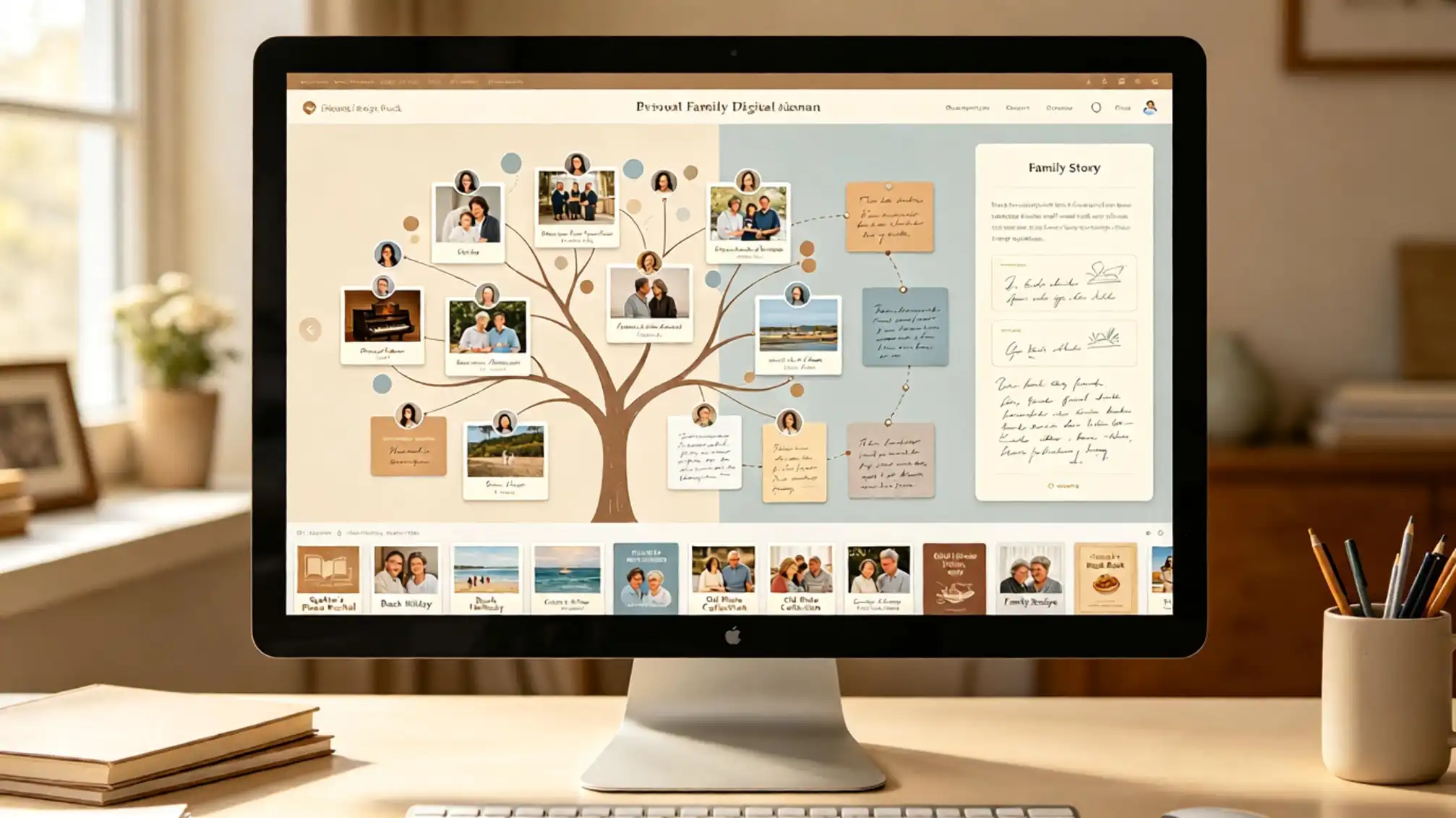
Keep It Growing and Shared
A family tree that lives only on your laptop will stall. A tree that gets opened at a birthday dinner will not. Try sending one photograph to a group chat with a single question attached — “Who is the man on the left?” — and watch how quickly memories surface. Add one person a month. Print a rough draft and let someone scribble corrections on it.
The goal is not a flawless diagram. It is a living record of the family stories you already carry, made a little clearer each time someone remembers something new.