Grandparents Family History: Turning Kitchen-Table Chats Into a Keepsake
Every family has one person who remembers how the street looked before the highway cut through it, who knows exactly why cousin Ray stopped speaking to cousin Pete, who can still taste a grandmother's plum dumplings forty years later. That person is usually a grandparent — and that memory is a library that closes one day without warning.
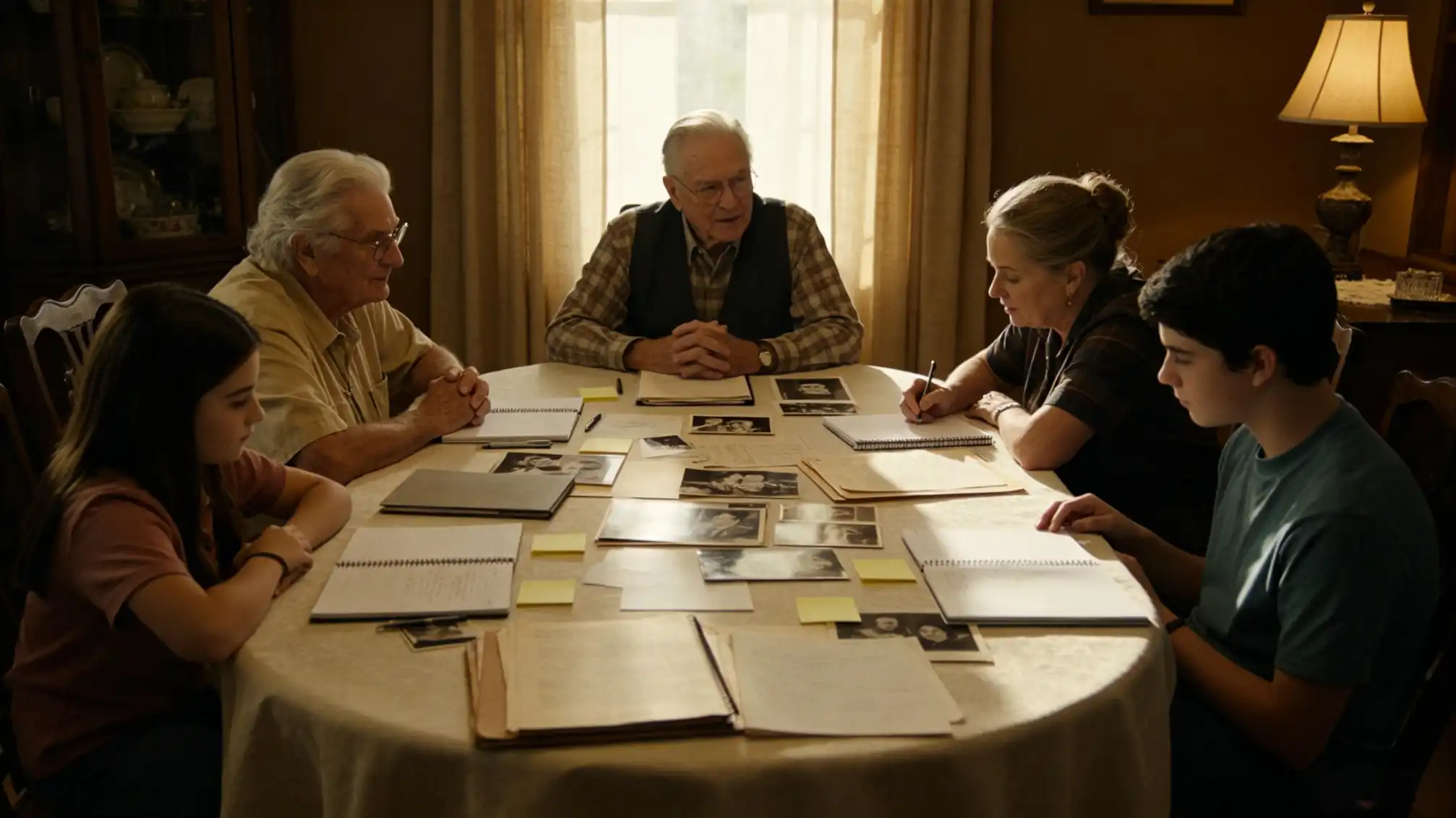
Collecting grandparents family history isn't a research project. It's a series of small, unhurried conversations, ideally with a cup of tea going cold between you, that you write down or record before the details soften at the edges. You don't need an archivist's training. You need a few good openers, a willingness to sit in silence, and a place to keep what you gather.
Start with places, not pedigree charts
Most people freeze when handed a blank page labelled "tell me about your childhood." Ask about a room instead, and watch what happens.
- Describe the kitchen of the house you grew up in — where was the stove, who sat where, what was always on the counter?
- What did your street smell like on a hot afternoon? What sounds did you hear through the window?
- Which shop did you walk to on Saturdays, and who did you usually see on the way?
- What was the first house you remember living in? Draw me the floor plan.
- Where did the family gather for holidays, and what did that room feel like when everyone arrived?
Place-based prompts work because memory is spatial. Once your grandparent is standing mentally in that kitchen, the relatives, the nicknames, and the half-forgotten dates tend to arrive on their own — no interrogation required.
Family history questions worth asking — grouped so it doesn't feel like a form
Bring a short list, not a questionnaire. Choose four or five prompts per visit and let the conversation wander. These groupings give you range without turning a grandmother into a witness statement.
Childhood and the wider family
- Who were you closest to growing up, and what did you do together?
- What were your parents like when they weren't being parents — what made them laugh?
- Which relatives came to the house most often, and what were they known for?
- Was there a family member nobody talked about? What did you understand about them as a child?
Work, money, and ordinary days
- What was your first job, and what did it pay?
- What did a normal Tuesday look like when you were fifteen?
- What did your family do when money was tight — who helped, and how?
- What was considered a real treat in your house?
Love and the choices behind it
- How did you meet your partner, and what did you think of each other at first?
- What did your parents say about the match?
- Was there a road you almost took — a job, a move, a person — that would have changed everything?
Hard seasons and how the family got through them
- What was the hardest year you remember, and what carried you through it?
- Who in the family was the one everyone turned to in a crisis?
- What do you wish people understood about that time?
Ask the follow-up, not the next question
The most common mistake in oral history is treating the list as the point. It isn't. The gold is in the second and third sentence, the one your grandparent says after you've stopped filling the silence.
So when an answer lands, stay there. Try "What happened next?" "Who else was in the room?" "How did that feel at the time?" "What did your mother say when she found out?" Let a pause stretch for three full seconds — it feels enormous, but it is usually where the real story begins.
And resist the urge to correct. If a date doesn't match your aunt's version, write it down anyway and note the discrepancy later. Arguing about 1957 versus 1958 will cost you the rest of the afternoon and possibly the next visit.
Make recording feel like a favour, not an exam
You can capture a great deal with a phone voice memo and no equipment at all. A few things make it easier on everyone:
- Ask permission out loud before you hit record, and say what you'll do with the file.
- Keep sessions to thirty or forty minutes. Tired memories get shorter.
- Bring photographs, letters, or an old recipe card as props — objects unlock detail that questions can't.
- Record one conversation at a time. Group interviews turn into performances for the room. >Follow up within a week with a short thank-you and one detail you loved. It builds the habit.
Keep the stories where the family can actually find
A voice file buried in your phone's downloads folder is a story nobody inherits. As you gather these conversations, add them gradually to a shared family page — a photo, a short quote, the date and place of the telling — so cousins and siblings can add their own memories yours. You can start a shared collection at familylove.love/stories and let relatives fill in gaps you didn't know existed.
Do that consistently and something quiet but powerful happens: the family history stops being one person's project and becomes a place everyone can contribute to, argue with affectionately, and pass on.
When memory is patchy, or time is short
If a grandparent is living with dementia, drop the timeline entirely and ask about feelings, textures, songs. A familiar recipe or a piece of music from their twenties can open a door that a date never will. If a grand has already died, interview the siblings and old friends instead — they hold pieces of the same puzzle, and their memories often spark each other.
And if you only get one conversation, make it the one where you say thank you. The stories matter, but so does the fact that you asked.