Genealogy for the Curious: A Beginner's Roadmap to Tracing Your Family Tree
Most people begin genealogy with a single question — where did my family come from? — and quickly discover the answer is less a destination than a skill. The good news is that the skill is learnable. You do not need a subscription, a degree, or a spare room full of binders to make real progress in your first month. You need a method: interview the living first, write down what you find, and only then go looking for your ancestors in the records.
This guide lays out that method in the order you will actually use it, so your family tree grows on evidence rather than assumption.
Begin With Breathing Sources, Not Dead Ends
New researchers often start by typing a great-grandparent's name into a search engine and hitting a wall. Reverse the order. The most valuable records you willever access are the people still alive: parents, aunts, cousins, neighbours, and the friend of the family who remembers everything.
Ask open questions rather than yes-or-no ones. "Tell me about your mother's kitchen" unlocks more detail than "Was your mother a good cook?" Record the conversation if you have permission, and note the date, the setting, and who else was in the room. Those context notes matter later, because memories shift and you will want to know which version came from whom.
Pay attention to the small facts people mention in passing: a street name, a trade, a church, a nickname, a rumour that an uncle "came over from somewhere else." Each one is a search term waiting to be used.
Build a Family Tree You Can Actually Trust
A family tree is only as strong as the notes behind it. From your very first entry, record where each fact came from — a birth certificate, a headstone photograph, a recorded interview, a newspaper notice. This practice, called source citation, feels tedious for about a week and then becomes the thing that saves you from months of confusion.
Keep a simple working file, whether on paper or in free software, with three elements for each person: the full name as written in the record, key dates and places, and a short source note. Resist the urge to merge your tree with a stranger's online tree just because the names match. Shared names are common; shared identities are not.
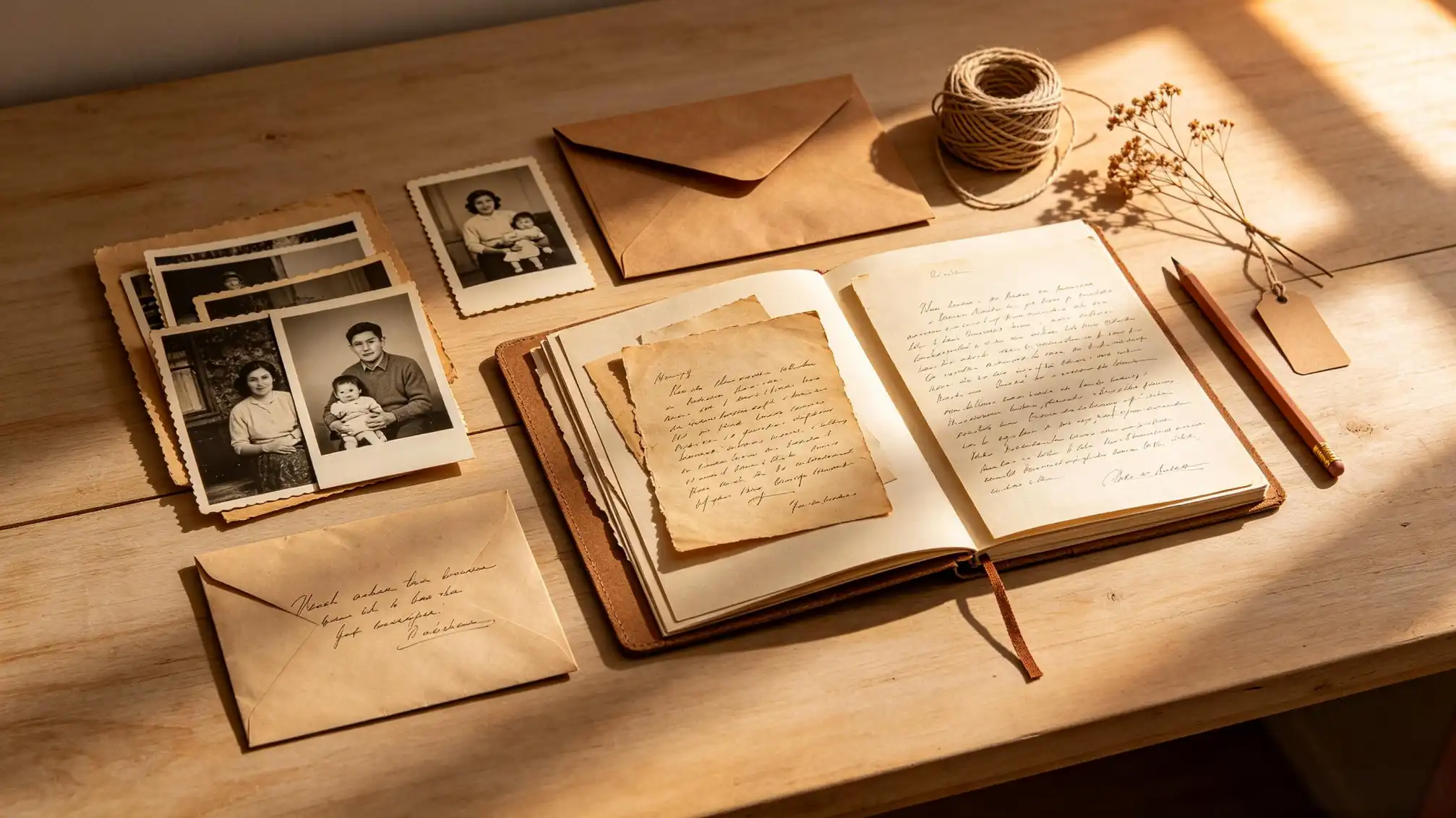
Preservation belongs in this early stage, not at the end. Scan photographs while the people who can identify them are still around, label the backs of prints, and back up digital files in more than one place. If you want a simple way to gather and keep these family narratives in one visible place, Family Love Stories is built for exactly that kind of memory keeping.
The Four Record Groups That Answer Most Beginner Questions
1. Civil registration
Government birth, marriage, and death records are the backbone of modern genealogy, generally beginning in the mid-nineteenth century in much of Europe and North America and later elsewhere. They establish names, dates, places, and — crucially — parents' names, which is what lets you move back one generation.
2. Census and household returns
Decade-by-decade household listings place your ancestors in a specific house with a specific occupation and set of children. Comparing two consecutive censuses reveals who was born, who died, who married, and who moved — often pointing to records you would never have found otherwise.
3. Church and parish registers
Before civil registration, baptisms, marriages, and burials kept by religious institutions are usually the best available evidence. They are often handwritten, sometimes in Latin or an older script, and frequently held in diocesan or county archives rather than online.
4. Migration and military records
Passenger lists, naturalisation papers, conscription files, and service records fill in the gaps between countries and generations. These are the records that tell a family's story rather than just its dates.
Read Every Record Like a Detective
Names in old records are unreliable in predictable ways. Spelling was not standardised, clerks wrote what they heard, and families used nicknames, middle names, and step-relationships informally. Search for variants: Corrigan and Corigan, Elisabeth and Elizabeth, Bauer and Bower. Search by place and approximate date even whenthe exact name eludes you.
Then ask the questions a detective would. Who registered this event, and did they actually know the facts? Was the informant a neighbour, a son-in-law, or a midwife? Is the age consistent with the age given ten years earlier? Discrepancies are not dead ends — they are clues about second marriages, informal adoptions, or families who simply guessed.
Mistakes That Cost Beginners the Most Time
- Working backwards too fast. Adding thirty generations in a week almost always means importing someone else's assumptions.
- Chasing the famous name. A family legend of noble or notable ancestry is worth recording, but treat it as a hypothesis, not a starting fact.
- Ignoring women. Maiden names, remarriages, and inconsistent name usage mean female lines require deliberate effort.
- Skipping the siblings. Brothers, sisters, and in-laws appear in each other's documents and often hold the clue that breaks a brick wall.
- No backups. A decade of research can vanish with one failed hard drive.
When You Get Stuck, Widen the Circle
Every researcher reaches a point where the direct line goes quiet. That is the moment to research neighbours, witnesses, godparents, and employers rather than the ancestor themselves. Families travelled, worshipped, and worked in clusters, and those surrounding names often appear in the same records from a different angle.
Also revisit your own notes. Beginner brick walls are frequently caused not by missing records but by a mistaken date, a misread place name, or a wrong county boundary. Verify your starting assumptions before you spend another evening searching.
Progress Beats Perfection
Genealogy rewards patience and honesty more than speed. A tree of forty well-documented people, each linked to a source you can show someone, is worth more than a thousand borrowed names you cannot defend. Start with the voices in the room, write down what you learn, and let each confirmed record lead you to the next.