Genealogy for Newcomers: A Calm, Step-by-Step Way to Trace Your First Ancestors
Most people begin genealogy with a single question — a grandparent's birthplace, a surname nobody explains, a photograph with no names on the back. Within an hour of searching online, that question multiplies into dozens of half-answers, mismatched dates, and trees copied from strangers. The result is usually confusion, not progress.
This guide takes a different route. Instead of chasing records across the internet, you will build a small, reliable foundation first — one that makes every later search faster and far less frustrating. Think of it as learning to read a map before you drive.
Begin With Memory, Not With a Search Bar
The most valuable genealogy database you have access to right now is the people around you. Before you type a single name into a search engine, spend a week gathering what your family already knows. Living relatives can confirm relationships, correct spellings, and point you toward documents that exist nowhere online.
Ask open questions rather than yes-or-no ones: Where did the family live when you were small? Who came to visit? What did people do for work? Record the conversations if your relative agrees. Voices, phrasing, and small details are themselves part of your family history.
- Interview the oldest relatives first, then work outward through cousins and in-laws.
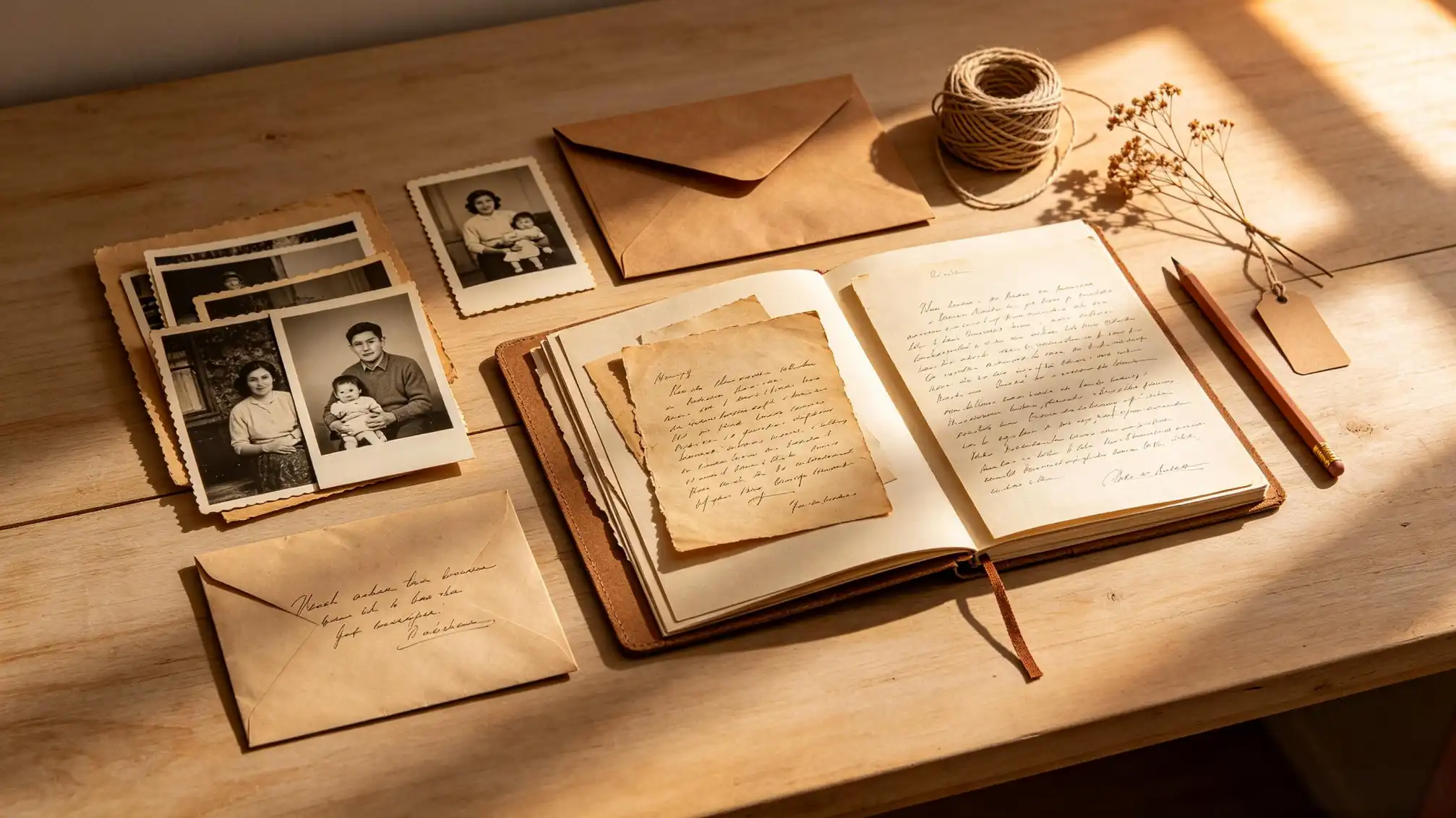
- Photograph family photographs in place, then label them with names and relationships while people can still identify faces.
- Collect certificates, military papers, prayer cards, letters, diaries, and anything with a date or place on it.
- Check family Bibles, recipe books, and the backs of framed pictures — beginners often find their best clues there.
Build a Small Family Tree You Can Actually Trust
A family tree is not a trophy to grow as large as possible. It is a working document, and its value depends entirely on the accuracy of each entry. Start with yourself, then your parents, then your grandparents — and stop expanding sideways until each generation is solid.
For every person, record three things consistently: a full name (including maiden names), a date, and a place. Dates and places are what allow you to find a person in records at all; a name alone is nearly useless in genealogy.
- Use one spelling of a name as your standard, but note every variant you encounter.
- Write dates in a single format so nothing is misread later.
- Never merge two people with the same name unless a document connects them.
- Attach a source to every fact, even if the source is simply “conversation with Aunt Marie, March 2024.”
The Record Groups That Unlock Most First Breakthroughs
Beginners often assume that genealogy requires exotic archives. In practice, a handful of record groups answers the majority of early questions about your ancestors.
Civil registration
Birth, marriage, and death records created by governments are the backbone of modern research. They usually supply parents' names, occupations, and addresses — enough to push back one more generation. Availability depends on country and year, so check what your local records office provides.
Census and household listings
Household returns place your ancestors in a specific house on a specific night, alongside neighbours, lodgers, and servants. They are excellent for tracking migration and for separating people with identical names.
Church and cemetery records
Baptisms, marriages, and burials often predate civil registration and frequently include details the government never recorded. Grave markers and cemetery registers can confirm dates and reveal family groupings.
Newspapers and directories
Local newspapers report the events that certificates omit: accidents, court cases, business openings, emigration farewells. Trade directories list occupations and addresses year by year, which helps you follow a family through a city.
Read Every Document With Healthy Suspicion
Records are created by people, and people make mistakes. Informants guessed at parents' names, clerks misheard accents, and enumerators wrote what they assumed. Learning to weigh evidence is the single skill that separates a reliable family tree from an attractive but fictional one.
- Names shift. Spelling was not standardized; immigrants often anglicized names, and families used middle names interchangeably.
- Ages drift. People rounded up, rounded down, or simply did not know their birth year.
- Places move. Borders, counties, and parish names changed repeatedly.
- Ask who provided the information. A death certificate's details come from a grieving relative, not from the deceased.
When two records disagree, do not delete one. Note both, mark the conflict, and keep searching for a third source that settles it.
Organize as You Go, or Pay for It Later
The difference between a hobby that grows and one that collapses under its own weight is usually file discipline. Decide on a naming pattern on day one and apply it without exception — for example, surname, given name, year, and record type.
Keep a simple research log: what you searched, where you searched it, and what you found (including nothing). Negative results are genuinely valuable, because they stop you from repeating the same search in a year's time. Back up your files in two places, and keep scanned originals separate from your working notes.
Share What You Find — It Accelerates Everything
Genealogy is unusually collaborative. A distant cousin may already hold the photograph you are missing, or a local historian may know which parish register survived a fire. Publishing your findings, even in rough form, invites exactly those corrections and contributions.
A good place to start is to write up one ancestor's story and post it to FamilyLove Stories, where relatives can read it, respond, and add details you never knew. Stories also make your research meaningful to people who will never open a research log.
Five Traps That Catch Almost Every Beginner
- Copying an online tree without verifying it against a document.
- Assuming name matches are identity matches, especially in large cities.
- Jumping overseas too early before exhausting records in the country of arrival.
- Ignoring women's maiden names, which usually requires marriage records to discover.
- Skipping the source citation, then being unable to remember where a fact came from.
A Realistic Plan for Your First Month
- Week 1: Interview one or two relatives and inventory documents at home.
- Week 2: Build a four-generation family tree with names, dates, places, and sources.
- Week 3: Order or download two civil records and one census entry.
- Week 4: Write a short profile of one ancestor and share it with the family.
Progress in genealogy is measured in verified generations, not in the size of a database. One properly documented ancestor is worth more than a thousand unverified names.