Family History Starts With One Conversation: A Warm, Practical Guide to Capturing the Stories You Already Have
Almost everyone has a version of the same regret: the relative they meant to interview, the recipe nobody wrote down, the question about a grandfather's childhood that was never asked. Family history is rarely lost in dramatic moments. It disappears quietly, in the space between a thoughtful intention and a busy week.
The good news is that beginning does not require a subscription to an archive, a filing system, or a free weekend. It requires one conversation, held soon, and captured in a way you can keep. Everything else — the family tree, the dates, the documents — is scaffolding that can be built afterward, around the voices you save first.
Begin With the Question You Keep Avoiding
Before you think about software or charts, think about the one story in your family that everyone references but no one can fully explain. The aunt who emigrated alone at nineteen. The great-grandfather who changed the family name. The reason one branch of the family stopped speaking to another.
That single unanswered question is your starting point, because it carries emotional weight. People answer questions they feel are meaningful. They close up when they sense an interrogation. So choose curiosity over completeness: one story, told properly, is worth more than forty names typed into a database without context.
Ask Three Questions That Open Almost Anyone Up
Interviewing relatives is not about dates. It is about sensory memory. These three openers work across generations and rarely fail:
- What did your street sound like when you were ten? Sound, smell, and weather unlock memory faster than any timeline.
- Who made you feel safe as a child, and why? This surfaces the people who never appear in official records but shaped your family's character.
- What were you told never to do — and did you do it anyway? The answer is usually funny, revealing, and the beginning of a much longer story.
Then use the most powerful tool in any interview: silence. When your relative finishes, wait a beat longer than feels comfortable. Nine times out of ten, the real story arrives in that pause.
Record It in the Simplest Way You Can Manage
Perfection is the enemy of preservation. A phone voice memo recorded at the kitchen table is worth infinitely more than a professional interview that keeps being postponed. Ask permission first, explain where the recording will be kept, and offer to share it. People say yes far more often when they understand the destination.
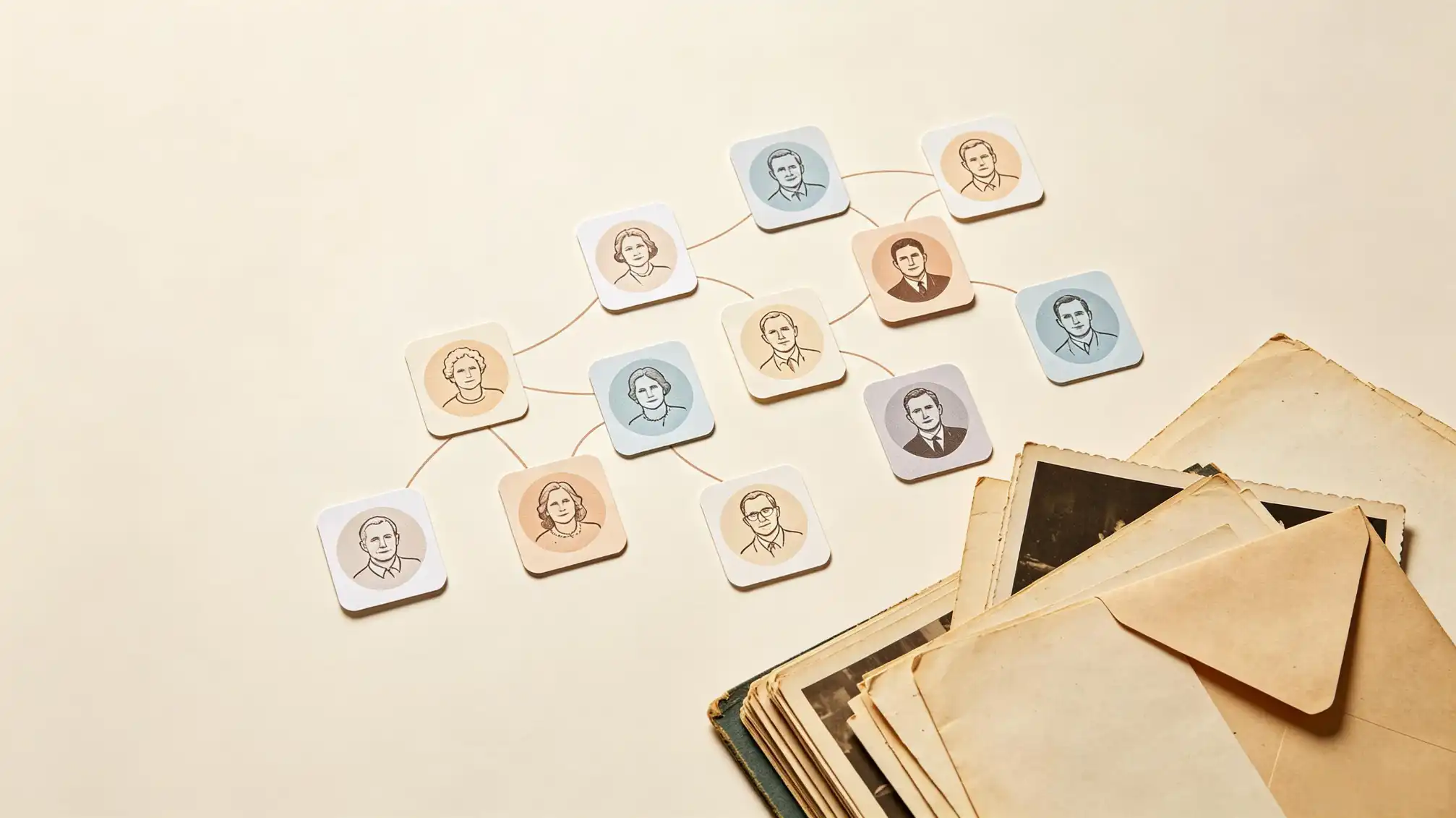
Name your files before you forget what they contain — a date, a name, and a topic are enough: 2024-06-aunt-maria-childhood.mp3. Later, that small habit will save you hours.
Capture the Small Details That Make Ancestors Real
Genealogical facts place people in time and space. Details place them in life. While the conversation is running, gently steer toward the specifics that history books ignore:
- Nicknames and the way names were actually pronounced at home
- Streets, shops, and villages that no longer appear on any map
- Occupations described in the family's own words, not job titles
- Words, sayings, prayers, or songs unique to your family's dialect
- Foods cooked for celebrations — and who was allowed to make them
These fragments do something census records cannot: they show your ancestors as people rather than entries.
Turn Gathering Into a Gentle Rhythm
Most family history projects collapse because they are planned as a sprint. Treat them as a habit instead. One twenty-minute conversation a month with a different relative. One letter read and transcribed each week. One photograph scanned and labelled every Sunday evening.
Over a single year, that modest rhythm produces twelve recorded stories and fifty labelled photographs — an archive most families never manage in a lifetime. Consistency will always beat intensity.
Build the Family Tree Beside the Stories, Not Before Them
Research is far easier once the stories tell you where to look. A recorded remark that a grandmother was born while the family was living on a farm in another county gives you a place name, a decade, and a household. Suddenly census records, passenger lists, and parish registers have a target.
As your tree grows, keep the two halves together. Attach a photo, a quote, or a voice recording to every ancestor where possible, and record where each fact came from. Your family tree without sources is a hypothesis; with sources, it becomes something your grandchildren can trust.
What to Do When You Can No Longer Ask the Person Who Knew
For ancestors who died before your project began, become a detective of objects. Letters, diaries, photo backs, recipe cards, military papers, and cemetery stones carry information that no one remembers. Then interview the living about the dead: ask siblings and cousins what they heard about the person you are researching. Memory handed down second-hand is still evidence worth writing down.
Also hold a photo night. Invite relatives to look at old images together and say names aloud. One person's uncertain guess often triggers another's certainty — and the conversations that follow are themselves worth recording.
Store Everything Where Others Can Actually Find It
An archive that exists only on one phone is not an archive. Follow a simple rule: keep three copies, on two kinds of media, with one stored somewhere else. Then go one step further and share it. When you publish stories to a family space that relatives can read and add to, you stop being the sole custodian of your family history — and it stops depending on your hard drive.
If you want a simple place to start sharing, you can publish your first family stories here and invite a cousin to add what they remember. Collaboration corrects details, fills gaps, and keeps momentum alive when your own enthusiasm dips.
Include Your Own Story Before You Think It's Interesting
The most overlooked gap in every family history is the person doing the collecting. Your childhood, your first job, the way the family changed in your lifetime — all of it will be the archive someone longs for in sixty years. Record a short entry for yourself each month, in the same format you use for everyone else. You are an ancestor in progress.
Family history is not a research project with an ending. It is an ongoing habit of noticing, asking, and saving. Begin with one conversation this week, and let the record accumulate from there.