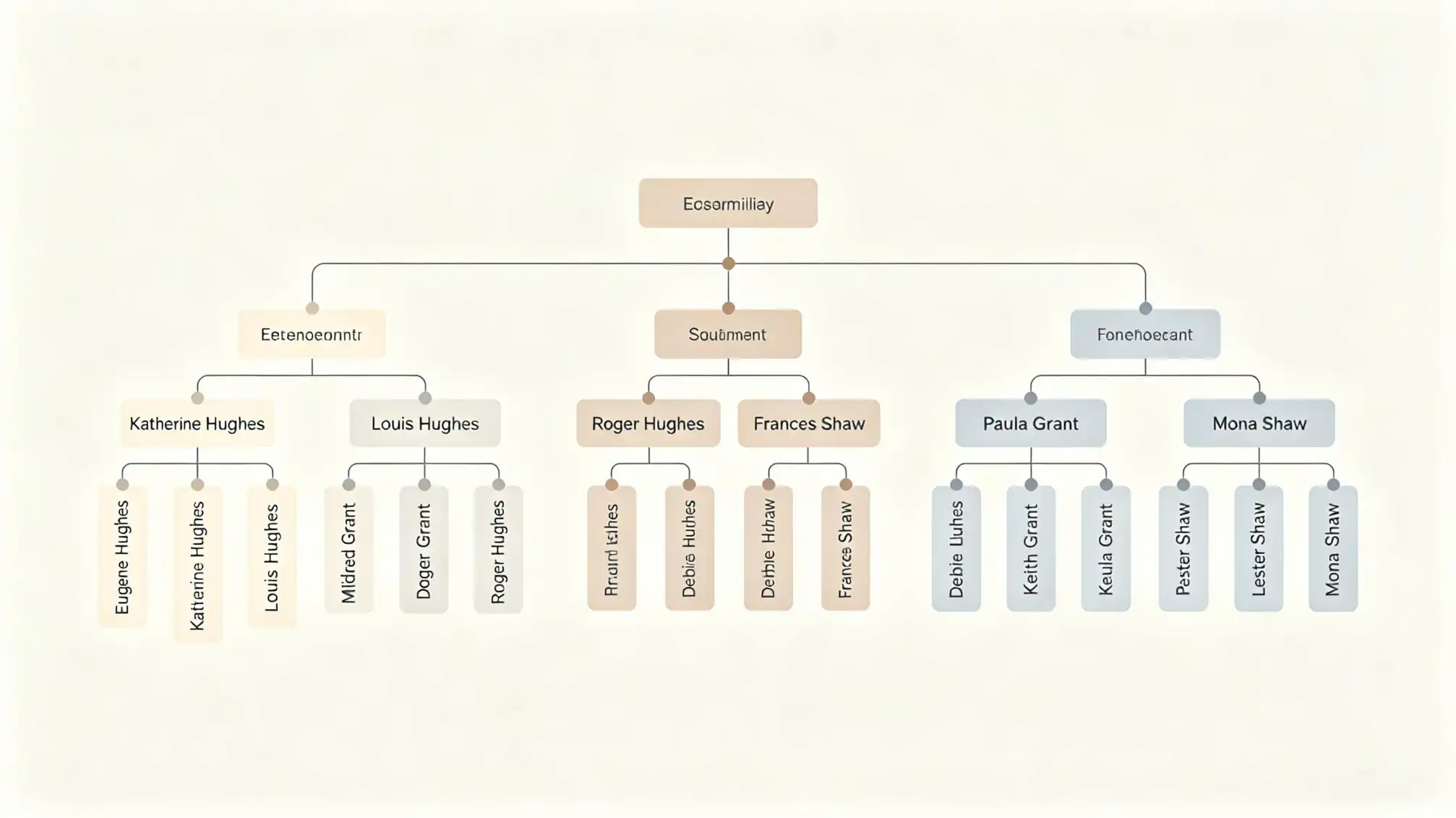
{"title":"What an Online Family Tree Changes for Your Family Work","metaTitle":"Online Family Tree: What Changes for Your Family History","metaDescription":"Compare digital family tree tools with confidence. See how an online family tree prevents duplicate work, keeps attached, and stays portable if you move.","summary":" people comparing digital family tree tools are not shopping for features — they are trying to avoid repeating research they have already done. This guide looks at what an online family tree genuinely changes: how duplicates get caught, why evidence stays attached to a person instead of a page, how relatives contribute without rewriting everything, and whatability and access control should look like before you commit. It closes with a short comparison checklist and practical steps you can act on today.","contentHtml":"<h1>What an Online Family Tree Actually Changes for Your Family Work</h1>\n<p>Most people who start comparing digital family tree tools are not really shopping for features. They are trying to solve a quieter problem: research keeps getting lost. A name is written on a scrap of paper, a census record is saved to a phone, a cousin has a photo nobody else can find, and three years later nobody remembers which version was correct. An <strong>online family tree</strong> is valuable less because it is digital and more because it changes how that information behaves over timep>\n<p>This article looks at what actually shifts when you move your genealogy from folders, binders, and scattered notes into a shared online structure — and what to check before you pick a tool.</p>\\n<h2>Duplicates Are the Silent Cost of Paper Research</h2>\n>Every family historian eventually hits the same wall: the same ancestor entered twice, with two slightly different birth years and two separate sets of notes. On paper that is annoying. Across a decade of research it is expensive, because you may spend an afternoon chasing a record you already found and dismissed.</p>\n<p>A well-built online family tree treats people as records rather than lines on a chart. When you add a person, the tool can flag a possible match before you create a second entry. When you edit a date, the change lives in one place. That single structural difference is why family history work in a digital tree tends to accelerate after the first few months — you stop paying the duplicate tax.</p>\n\n<h2>Evidence Stays Attached to the Person, Not the Page</h2>\n<p>The most common mistake in genealogy is separating conclusions from evidence behind them. A paper chart shows a name and a date; the supporting census image, obituary, or baptism record lives somewhere else entirely. Years later, the conclusion survives but the reasoning does not.</p>\n<p>In a good online family tree, sources, citations, and media attach directly to the person and the specific fact. That means:</p>\n<ul>\n<li>You can see instantly whether a birth date is documented or estimated.</li>\n<li>Conflicting evidence can sit side by side instead of being silently overwritten.</li>\<li>Anyone reviewing your work can follow the same trail you did.</li>\nul>\n<pThis is the difference between a family tree that looks complete and one that can survive scrutiny from another researcherp>\n\n<h2>Relatives Can Contribute Without Rewriting Your Work</h2>\n<p>Family history is rarely a solo project for long. Someone has the photographs, someone else remembers the nicknames, and a third person knows which branch emigrated first. The problem with sharing a PDF or a printed chart is that contributions come back as messages, and you become the permanent data-entry clerk.</p>\n>An online tree lets relatives add memories, photos, and corrections directly — ideally with review or suggestion options so nothing changes silently. This is where the practical benefit becomes obvious: you are not just storing a tree, you are running a small collaborative archive that gets richer each time the family gathers.</p>\nfigure>\n < src=\"https://2.familylove.love/static/seo/members4.webp\" alt=\"Family members reviewing and adding records to an online family tree together\" />\n <figcaption>Sh access with relatives turns a private chart into a living record that grows with each contribution.</figcaption>\n</figure>\n\n<h2>Access Control Is a Feature, Not an Afterthoughth2>\n<pGenealogy data is personal. It often includes living people, addresses, and details families have not agreed to publish. When comparing tools, look past the chart styling and ask three questions:</p>\n<uln<li>Can I keep living individuals hidden from public view?</li>\n<li>Can I invite someone as a viewer rather than an editor?</li>\n<li>Can I control what is shared, and revoke it later?</li>\n</ul>\n<p>A that only offers \"public\" or \"private\" with nothing in between will eventually force an uncomfortable decision. Granular permissions are one of the clearest signals that a platform was designed by people who understand real family research.</p>\n\n<h2>Portability: You Take the Tree With You?</h2>\n<p>No comparison of <strong>family tree</strong> software is complete without this question. You should be able to export your data in a standard format such as GEDCOM, and ideally download your attached media and source notes as well. If a platform makes export or lossy, you are not building an archive — you are renting one.</pn<p>Portability also protects your work from the ordinary risks of any online: a change in pricing a discontinued product, or a in direction. Being able to leave is what makes it safe to commit.</>\n\n<h2>A Short Comparison Checklist</h>\n<p>Before commit to a tool, test it against these practical points:</>\<ul>\n<listrong>Duplicate detection:</strong> it warn you before creating a likely duplicate person?</lin<li><strong>Source citations:</strong> can you attach evidence to a specific fact, not just a profile?</li>\<li><strong>Collaboration model:</strong> can relatives suggest changes without overwriting your conclusions?</li>\n<li><strong>Privacy tiers:</strong> are living people protected by default?</li>\n<li><strong>Export:</strong> is GCOM export available, and does it include notes and sources?</li>\n><strong>Media handling:</strong> can you store photos and documents alongside the people they belong to?</li>\n<li><strong>Ease of entry:</strong> can you add ten people in ten minutes, or does every field need a decision?</li>\n</ul>\n<p>If a tool passes six or seven of these, it will serve most family historians well. If it fails on export and privacy, keep looking regardless of how attractive the are.</p>\n\n<h2>Where the Tree Fits Into Your Routine</h2>\n<p>The real advantage of an online family tree appears in ordinary weekly use, not in a single dramatic migration. Twenty minutes after a records search, you add the source while it is still in front of you. A relative mentions a date at dinner — you check it in the tree instead of writing it on a napkin. Over a year, that habit compounds into a documented <strong>family history</strong> rather than a folder of good intentions.</p>\n<p>When you are ready to set up profiles and start inviting relatives, you can begin from the <a hrefhttps://www.familylove.love/family\">family page</a> and build outward branch by branch.</p>\n\n<h1>Practical Steps</h1>\n<ul>\n<li><strong>Start here:</strong> open the <a hrefhttps://www.family.love/family\">FamilyLove family page</a> to create your tree structure and invite the relatives who hold the and stories.</li>\n<li><strong>Need help or guidance?</strong> Visit the <a href=\"https://www.flove.love/docs\">documentation and guides</a> setup instructions, privacy settings, and export options before you import existing research.</li>\n</ul>","images":["https://r2.familylove.love/static/seo/members4.webp"]}
SEO Guide
Why an Online Family Tree Makes Family History Easier
{"title":"What an Online Family Tree Changes for Your Family Work","metaTitle":"Online Family Tree: What Changes for Your Family History","metaDescription":"Compare
Related Guides
How to Preserve Family Memories in a Shared Family SpaceGrandparents Family History: Questions That Actually WorkFamily Photos: A Practical Plan to Save Your Family ArchiveGrandparents Family History: A Gentle Interview GuideKeeping Family Photos Alive: A Guide for Family HistoryMy Family History: Turn Stories Into a Family Tree