How to Build a Family Tree Without Losing the Stories Behind the Names
Most people begin a family tree with a blank chart and a vague memory of a grandparent's birthplace. The more useful approach is to start with the people you can still call, email, or visit. That is how to build a family tree that reflects real relationships, not just names copied from an old document.
This workflow begins with parents and grandparents, then extends outward to ancestors with evidence, context, and a system your relatives can understand.
Start With Living Relatives, Not Old Records
Before you search archives, interview your parents and grandparents. They are the bridge between your generation and the past. Ask open questions and let them talk. A detail that seems unimportant, such as a nickname or a family business, may later explain why a record is difficult to find.
Questions that unlock a branch
- What are the full names of your parents, including maiden names?
- Where was each person born, and where did they live as a child?
- Who were your siblings, and what happened to each of them?
- Did anyone change a surname, use a nickname, or move between countries?
- Which family stories are repeated, and which details are still uncertain?
Write down answers exactly as spoken, then mark unclear items. Ask permission before recording or publishing details about living people. Privacy matters, especially with addresses, birth dates, and health information.
Draw a Three-Generation Skeleton First
Build the first three generations before chasing distant ancestors: your siblings, parents, grandparents, and perhaps great-grandparents if names are known. Keep it simple. A rough chart is easier to correct than a complex database.
Use a pencil and paper or a digital tool. Put known facts in place and mark gaps with a question mark. Consistent spelling, date format, and place names prevent duplicate people. This step also shows where parents and grandparents connect through marriage, adoption, step-relationships, or guardianship.
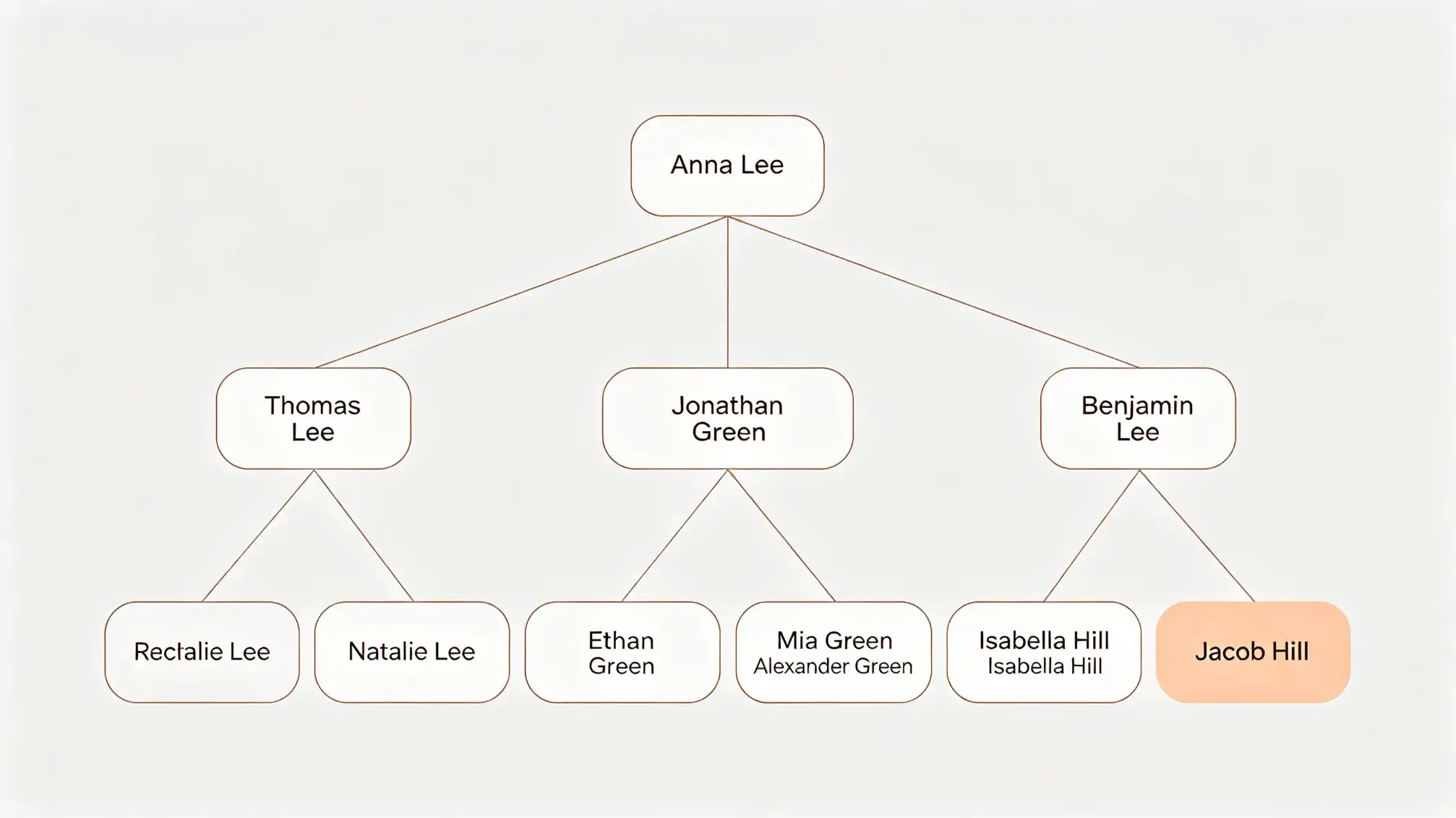
Choose the chart that matches your question. A pedigree chart follows direct ancestors; a family group sheet records parents, siblings, spouses, and children. For a tree that includes parents, grandparents, and relatives, family group sheets are often more practical because they hold context and collateral branches.
If you want a shared place to keep relatives organized while you interview and verify, use the family directory at https://www.familylove.love/family. It can act as your working index, while your chart or research file holds sources and notes.
Interview Grandparents for Context, Not Just Dates
Dates alone produce a skeleton. Stories tell you where to look next. Ask grandparents about migration routes, occupations, military service, religious ceremonies, family businesses, and neighborhoods. Nicknames, godparents, witnesses, and neighbors may appear in records under names you would not have guessed.
Record conversations with permission. Take notes during the call and clean them up the same day. A short voice memo can preserve tone and pronunciation, but keep it private unless everyone agrees. After the interview, send a summary and ask for corrections. This builds trust and improvesaccuracy.
Turn stories into research clues
Listen for specific details: a village name, a ship, a street, a trade, a church, a family Bible. Write each clue in a research log with the date and the person who shared it. Label it as a lead, not a fact. When you later find a record, connect it back to the interview.
Verify Before Adding Another Generation
Family trees become unreliable when one hint is accepted as proof. Before adding a parent or grandparent to a branch, look for at least two matching identifiers, such as name plus birth date, place, spouse, or parents' names. Use civil registration, church records, censuses, obituaries, newspapers, gravestones, and probate records.
Keep a research log that records what you searched, where you searched, and what you found or did not find. Negative results are useful: they stop you from repeating the same search and help you explain why a conclusion is still uncertain. Avoid copying unsourced trees from other websites. Treat online trees as clues, not evidence.
Common traps with parents and grandparents
- Maiden names, married names, and nicknames used in different records
- Same-name cousins living in the same town
- County or country borders that changed over time
- Adoption, step-parenting, and guardianship not reflected in official records
When records disagree, note every version and consider who supplied the information. An original record created close to the event is usually stronger than a later summary. Do not erase a conflicting fact; explain it in a note so future relatives can follow your reasoning.
Organize Relationships So the Tree Stays Useful
Set simple standards early. Use one date format, one place format, and one naming pattern. Attach a source to every fact you add. Separate confirmed facts from unverified family stories. Add photos with captions, dates, and permission. Back up your file in two places and export a copy regularly if your software supports it.
A basic filing system that works
- Create one folder per family branch or surname.
- Name files with date, record type, person, and place.
- Keep a master to-do list of missing records and interview questions.
- Store private living-person details separately from shareable ancestor information.
Include non-biological relationships when they are part of your family's story. A family tree is a record of connection, not a purity test. Label relationships clearly so relatives can understand how everyone fits together.
Make the Tree Collaborative Without Losing Control
A family tree improves when relatives contribute memories and photographs. Share a read-only chart first, then invite a small group to add information. Set simple rules: add a source, mark uncertain facts, and ask before publishing details about living people. A shared index makes it easier for parents, grandparents, and cousins to spot errors.
Use family gatherings to review a printed chart. Ask targeted questions rather than broad ones. For example, bring a list of missing birthplaces and ask who remembers each place. Keep a needs-confirmation list and update contributors when a branch is verified. This turns the tree into an ongoing family project instead of a one-time file.
Keep Growing One Branch at a Time
Genealogy can expand endlessly. Protect your progress by working one branch or one research question at a time. Start with the direct line, then add siblings because they often lead to parents' records. Set a timer, stop when you have recorded the source, and back up before you close the file.
Review the tree monthly. Check for duplicate people, missing sources, and inconsistent places. Add new interviews while older relatives are available. The best family tree is not the largest one; it is the one your relatives can understand, trust, and continue.