Building Your First FamilyTree: A Clear Path From Blank Page to Documented Lineage
Most people begin a family tree the same way: with a name, a half-remembered story, and a sudden curiosity about where everyone came from. What usually stops them is not a lack of interest but a lack of method. Within a few evenings the dining table is covered in scribbled notes, three different websites are open, and two cousins have given contradictory dates for the same grandmother.
A family tree is not a scrapbook of guesses. It is a structured record of evidence, and the structure is what makes it useful for the next generation. The approach below is designed for first-timers: it keeps the work small enough to finish, rigorous enough to trust, and flexible enough to grow for years.
Start With One Question Instead of a Whole Pedigree
The instinct is to map every branch at once. Resist it. A first family tree should answer a single, answerable question — for example, "Where was my maternal grandfather born, and who were his parents?" One question produces a focused search, and a focused search produces results you can actually confirm.
Begin by filling in what you already know without any research at all. Take a blank three- or four-generation chart and enter names, approximate dates, and places for yourself, your parents, and your grandparents. Mark anything uncertain with a question mark rather than leaving it blank or writing a guess as fact. This chart becomes your baseline: everything you add later must connect to it.
From there, choose a single line to explore first. Many researchers start with a surname that is uncommon in their region, because fewer people share it and records are easier to isolate. Whatever you choose, write down your starting question and the date you began. That one sentence will keep you oriented when the research inevitably branches.
Capture Living Memory Before You Touch the Archives
Living relatives are the most perishable source you have. Documents sit in archives for centuries; a 92-year-old aunt's memory of a christening does not. Interview family members early, and treat those conversations as formal research sessions rather than casual chats.
A few practical habits make interviews far more productive. Ask open questions — "What do you remember about your father's work?" rather than "Was he a miner?" — and let silences run a little longer than feels comfortable. Record the conversation with permission, or take notes verbatim where possible, then transcribe the key points within a day or two while the context is fresh. Always ask the follow-up question that beginners skip: "How do you know that?" The answer tells you whether you are hearing a firsthand memory, a family story repeated for decades, or a documented fact.
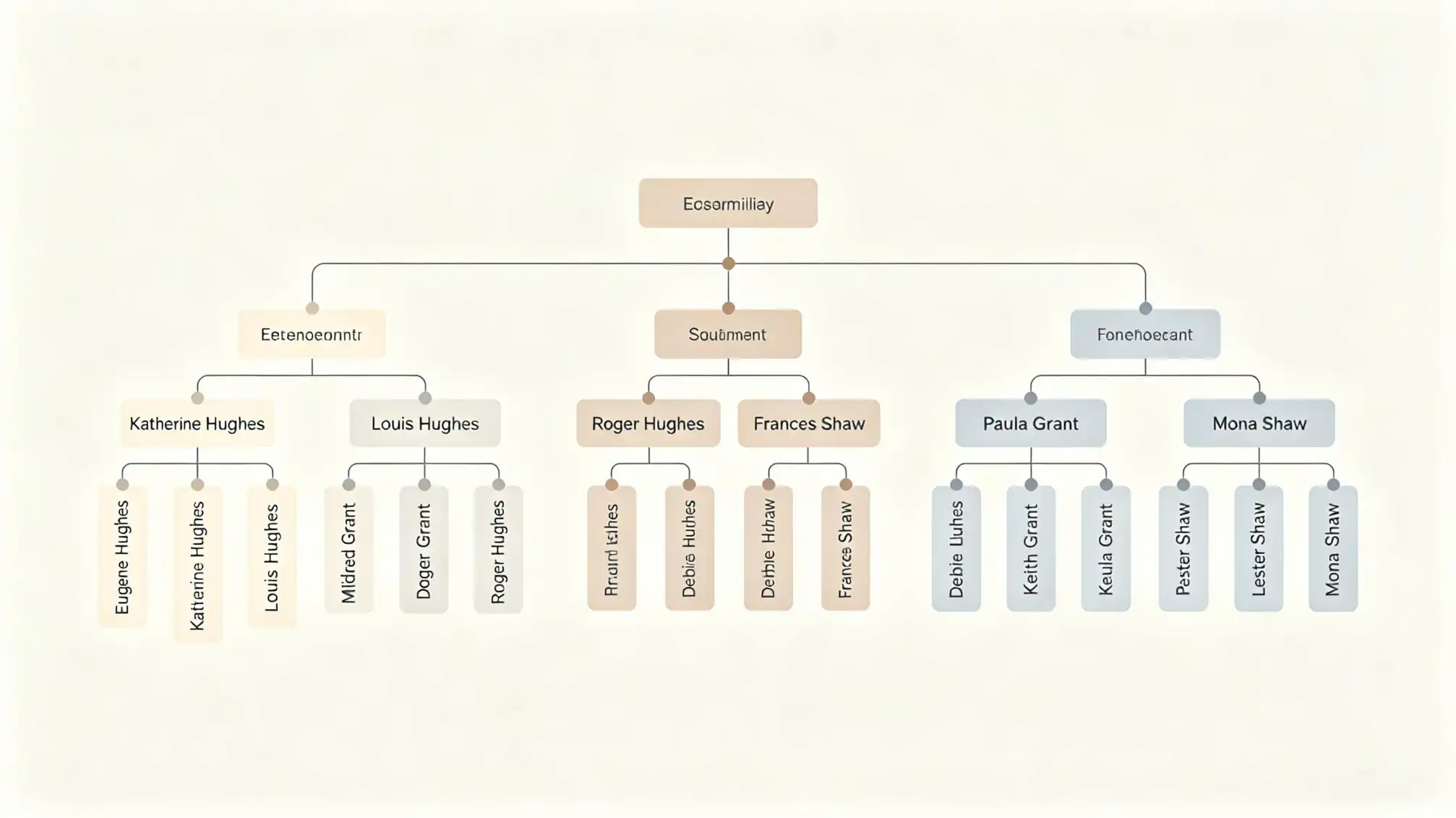
As the number of people you track grows, keep their details in one organised place rather than scattered across notebooks and message threads. Creating a profile for each relative — with dates, places, and the source of each detail — is the discipline that separates a reliable family tree from a pile of anecdotes. You can set up and manage individual family member records through your family member profiles so that every new fact has a home.
Choose One Recording System and Commit to It
Genealogy software, a spreadsheet, and a paper binder can all work. What does not work is using all three at once and hoping they stay in sync. Pick one primary system within the first week and let everything else feed into it.
- Paper charts suit people who think visually and want a wall-sized overview, but they become unwieldy past four generations.
- Spreadsheets offer total flexibility and easy sorting, and are a reasonable starting point for a few dozen people.
- Dedicated genealogy software or platforms handle relationships, sources, and citations properly, and scale without breaking.
Whichever you choose, adopt three rules immediately. Name every digital file consistently — Surname_Firstname_1932_birth_certificate.jpg — so a document can be identified without opening it. Attach a source to every fact you enter, even if that source is simply "interview with Aunt Mary, 14 March." And keep an automatic backup in a second location, because a family tree that exists in only one place is one accident away from not existing at all.
Verify Before You Publish
Family history is full of confident errors: two people with the same name merged into one, a birth year copied from a memorial plaque rather than a register, a surname spelled the way a clerk guessed at it. Beginners inherit these mistakes from published trees and then pass them on.
Treat any online tree, no matter how complete, as a set of leads rather than evidence. Verify each link in your chain against a contemporaneous record: a civil registration, a baptism, a census entry, a marriage licence, a probate file. Where records conflict, note the conflict rather than silently choosing the more convenient date. And apply the discipline of proof to each generation before climbing to the next — a confidently documented four generations is worth far more than a sprawling, unverified twelve.
Common beginner traps worth avoiding
Assuming a name is unique in a small parish; accepting a date that appears on a descendant's grave marker but nowhere else; and reading a relationship word such as "cousin" in an old will with modern assumptions. Slow down at these points — they are where the real discoveries tend to hide.
Handle Sensitive Family Stories With Care
Every family tree eventually meets something difficult: an adoption, an estrangement, a death that was never discussed, a second marriage nobody mentioned. Discovering these is normal, but how you record and share them matters.
Keep living people's personal details private in anything you publish or share online, and ask before adding sensitive information about relatives who are still alive. Record what the evidence supports, note uncertainty explicitly, and resist the urge to resolve a family silence on your own. If a relative asks you to leave something out, the relationship is usually worth more than the data point.
Build a Rhythm You Can Sustain
Family history is a long project, not a weekend task. Protect it with a routine rather than a burst of enthusiasm: thirty focused minutes a week, one research question at a time, and a short note at the end of each session recording what you searched, what you found, and what to try next. That note is the single most valuable habit in genealogy — it prevents you from repeating dead-end searches and makes a return after a long gap effortless.
Review your tree every few months for gaps, unresolved conflicts, and missing sources. Each pass will suggest the next question naturally, and the tree will grow in a direction you can defend.