Family Tree Foundations: A Beginner's Roadmap to Confident Family History Research
Starting a family tree can feel like entering an enormous library without a catalogue. You do not need to know every branch before you begin. A reliable first family tree is built from the foundation up, one verified piece at a time. This guide focuses on the practical habits that make a family tree trustworthy: what to collect, how to record it, how to work with relatives, and how to keep your family history research organized as it grows.
Start with the information you already hold
Capture the known generation first
Before you open a genealogy website, create a simple inventory of what your family already knows. Write down full names, birth and death dates, marriage details, places lived, occupations, religious affiliations, and migration stories for yourself, your parents, and your grandparents. Gather birth certificates, marriage licenses, photographs, obituaries, military papers, and family letters. These home sources are not just starting points; they often contain details that online indexes miss.
At this stage, the goal is collection, not proof. Note gaps and disagreements in a separate research list. If two relatives give different dates for the same event, record both versions and plan to verify them later. You can also set up a shared workspace so relatives can contribute without endless email threads. A practical option is to create a shared family space on Family Love's family page and use it as your collection point, while keeping your final conclusions in your chosen family tree system.
Decide what your family tree will include
Choose a clear scope
One common mistake is trying to include every cousin, in-law, and distant ancestor in the first week. A focused family tree is easier to verify and extend. Decide whether your first project will trace your direct ancestors for four or five generations, document one surname, or collect stories for an upcoming reunion. Write the scope down. It will keep you from disappearing down interesting but unrelated branches.
Also choose your recording method. Paper charts are excellent for beginners because theyforce you to simplify. Genealogy software or a well-structured spreadsheet is better for source notes, photographs, and research logs. Whichever method you choose, commit to one place for your master family tree and avoid scattering vital details across notebooks, phone notes, and chat messages.
Work backward, one generation at a time
Genealogy is a backward-moving discipline. Start with yourself, then your parents, then your grandparents, and confirm each parent-child link before moving to the next generation. It is tempting to jump to a famous ancestor or a dramatic family legend, but unverified leaps create tangled branches that are difficult to repair later. The safest way to learn how to build a family tree is to master this backward step before adding distant relatives.
For each person, ask a practical question: what record would have been created at that event, and where would it be kept? A birth may appear in a civil registration, a church baptism, a newspaper announcement, or a family Bible. A marriage may be recorded by the state, a religious institution, or both. Let the record type guide your search rather than relying on name searches alone.
Interview relatives with a clear purpose
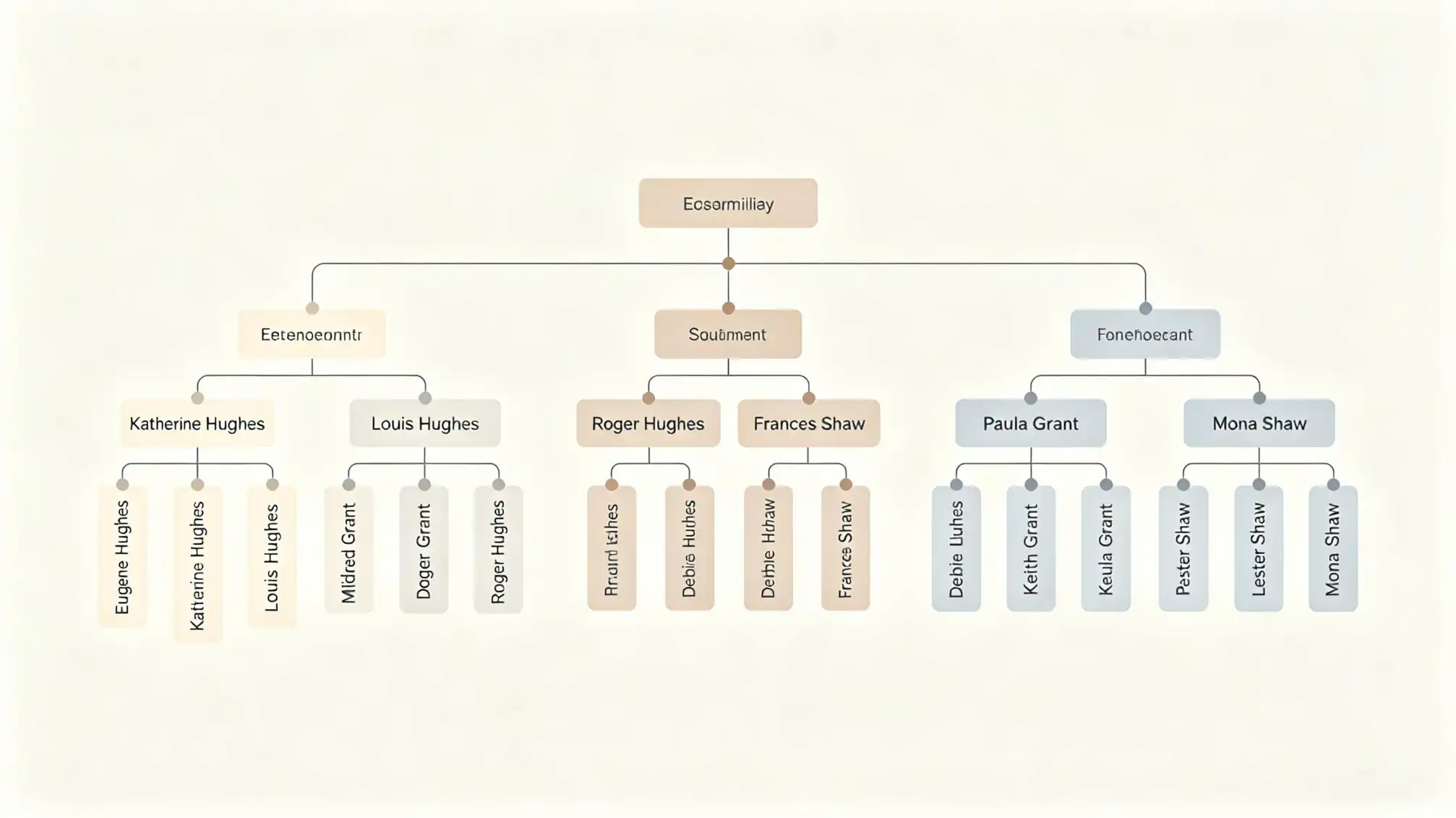
Family interviews are among the richest sources in family history, but they work best when they are focused. Prepare a short list of questions about full names, nicknames, places of residence, occupations, migrations, religious ceremonies, military service, and family stories. Ask for documents and photographs, and offer to scan or photograph items rather than keeping originals. With permission, record the conversation so you can listen again instead of racing to write everything down.
Write up your notes within a day, while details are fresh. Label each interview with the date, the speaker, and the questions asked. Treat memories as leads, not final proof: an older relative may recall a family story accurately in spirit but misremember a date or place. Mark those details as reported information until you can confirm them with records.
Attach a source to every fact
Every name, date, place, and relationship in your family tree should have an evidence trail. A source citation does not need to be complicated, but it should answer who created the record, what the record is, when it was created, where it is held, and how you accessed it. If you used an online index, try to view the original image or order the underlying record. Indexes are finding aids, and transcription errors are common.
Record negative searches too. If you checked a census year and found nothing, note the search details and date. That note may save you from repeating the same search months later. Keep facts, inferences, and family stories separate in your notes. A useful habit is to add a confidence level to each conclusion: proven, probable, possible, or unresolved. This small discipline turns a collection of names into credible family history.
Keep names, dates, and places consistent
Decide on conventions early and apply them consistently. Use a woman's maiden name in the main name field, and place married names in notes or alternative-name fields. Choose one date format, such as 12 Mar 1954, and avoid ambiguous numeric formats. Record places in a hierarchy, from town or city to county, state or province, and country. Note spelling variants in the person's notes rather than creating duplicate entries for every spelling you encounter.
Consistency matters because family trees grow quickly. A clean structure makes it easier to spot duplicate people, missing generations, and impossible dates. It also makes your research easier to share with relatives who may want to contribute corrections or additional documents.
Use online databases as finding aids, not final answers
Online genealogy services are valuable for indexes, digitized records, and connecting with researchers. Treat them as tools that point you toward original sources. Search broadly first, then narrow by place and date. Keep a research log of databases, search terms, and results so you can repeat or refine a search later. If a record image is available, read it yourself rather than relying only on the index.
DNA matches can be useful clues, especially when documentary records are scarce, but they are not proof on their own. Verify shared ancestors with records and use DNA as supporting evidence. Be thoughtful about privacy, particularly for living relatives, and obtain consent before publishing details about them online.
Create a simple research routine
Family tree projects stall when they become overwhelming. A weekly routine of thirty to sixty minutes is more effective than occasional marathon sessions. Choose one research question, one person, or one record set per session. Add sources as you go, update your research log, and back up your family tree file. End each session by writing the next three tasks so you know exactly where to resume.
Review your tree every few weeks for duplicate entries, missing sources, and inconsistent place names.Share specific questions with relatives rather than sending a general request for information. Focused questions produce better answers and keep your family history moving forward.
Know when to seek expert help
Some records require local knowledge, language skills, or access to archives that are not online. Local libraries, historical societies, genealogical groups, and professional researchers can help you interpret records, navigate privacy restrictions, or locate a difficult ancestor. Ask for help with a specific record set or research question rather than a broad request to find your family tree. A clear question usually produces a clearer answer.