{
"title": "Family Guide for Beginners: Trace Your Ancestors with Confidence",
metaTitle": "Family Tree Guide for Beginners: Trace Your Ancestors",
"metaDescription": "Learn what a family tree is how genealogy research works, and how beginners can trace ancestors with accurate records, sources, and family stories.",
"summary": "A clear beginner's guide to family trees, genealogy research, and the practical habits that help you trace ancestors accurately and preserve family history.",
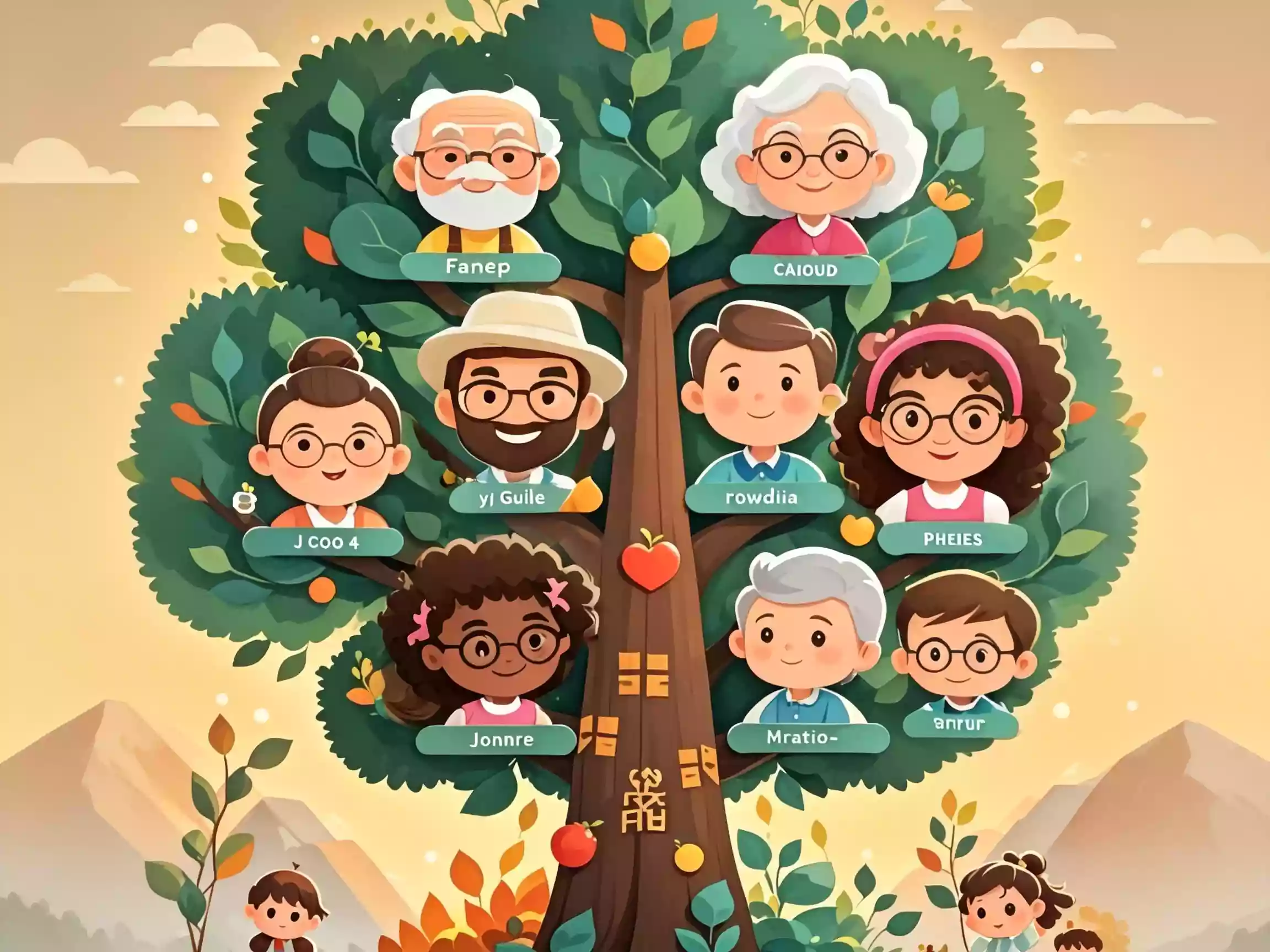
"contentHtml": "<h1>Family Tree Guide for Beginners: Trace Your Ancestors with Confidence</h1>\n<p>A family tree is often introduced as a simple, but it is really a research tool, a family story, and a historical record rolled into one. For beginners exploring family history, the first goal is not to fill every branch. It is to understand how tree works, what belongs in it, and how to build it without losing track of the people behind the names.</p>\n<p>If you have wondered where your ancestors came from, why they moved, or how your family became the one you know today, a family tree gives you a place to begin. It turns curiosity into a structured investigation and helps you preserve what you learn for the next generation.</p>\n<h2>What family tree actually records</h2>\n<p>At its core, a family tree maps relationships across generations. You appear at one point, your parents sit one generation back, your grandparents sit two generations back, so on. Each person is usually linked to key facts: birth, marriage, death, residence, occupation, and the places where those events happenedp>\n<p>A useful tree does more than list names and dates. It records sources, notes, uncertainties, and family stories. That distinction matters because genealogy is not just collecting names; it is proving how people connect. A birth certificate, census entry, marriage record, or immigration document can confirm a relationship that a family story only hints at.</p>\n<figure><img='https://r2.familylove.love/static/seo/family_tree.webp' alt='A family tree chart showing across several generations' /><figcaption>A family tree becomes more reliable when every branch is supported by records, not just assumptions.</figcaption></figure>\n<h2>Why family history matters to beginners</h2>\n<p>Family history gives personal context to history. When you learn that an ancestor worked in a textile mill, served in a war, migrated across an ocean, or raised children during an economic downturn, historical events stop being abstract. They become part of your family's lived experience.</p>\n<p>There is also a practical benefit. Researching ancestors teaches you to evaluate evidence, compare records, and ask better questions. Those skills make every new discovery more trustworthy.</p>\n<ul>\n<li><strong>Identity:</strong> Family history can explain inherited traditions, surnames, and cultural ties.</li>\n<li><strong>Connection:</> A shared tree gives relatives a common project and a reason to talk.</li>\n<li><strong>Preservation:</strong> Memories fade, documents get lost, and older relatives may not always be available to ask.</li>\n</>\n<h2>Genealogy and family trees: how the terms differ</h2>\n<p>Genealogy is the process researching family relationships. A family tree is the structure that holds results. Think of genealogy as the investigation and the family tree as the case file. You can have a beautiful chart with weak research it, or a plain notebook with excellent proof. The second option is far valuable in the long run.</p>\n<h2>How start building yours</h2>\n<h3>Begin with living memory</h3>\n<p>Start with yourself work backward. Write down what you already know: full names, nicknames, birthplaces, approximate dates, marriages,ces, and migrations. Then interview older relatives. Ask open questions such as 'What do you remember about your grandparents?' and 'Where did the family live they moved here?' Record the conversations if you can, and note who provided each detail.</p>\n<h3>Choose one branch at a time</h3>\n<p>New researchers often try to follow every surname at once. That leads to confusion. Pick one branch, perhaps your maternal grandmother's line, and focus on it until you hit a clear stopping point. Then move to another branch. This approach keeps your family tree organized and makes missing records easier to spot.</p>\n<h3>Write down sources immediately</h3>\n<p>For every fact you add, where it came from. A census record, a family Bible, a death certificate, or an interview all count as sources. Include the date you accessed an online record and the collection or archive name. Future you, and any relative who continues the research, will be grateful.</p>\n<h3>Keep a simple research log</h3>\n<p>A research log can be as basic as a notebook or spreadsheet. List the question you are trying to answer, the records you searched, the results, and the next step. The log prevents repeated searches and helps you see patterns across generations. It also makes your family history more transparent when you share it with others.</p>\n<h2>What a strong family tree looks like</h2>\n<p>A strong family tree is clear, consistent, and honest about gaps. It uses a standard format for names and dates, separates facts from theories, and links each person to documents or notes. It include photographs, obituaries, letters and audio recordings, but those items support the research than replace it.</pn<h3>Choose a format that fits your habits</h3>\n<p>Some beginners prefer paper charts they can spread across a table. Others genealogy software or online platforms that sync with record collections. The best format is the one you will actually update. Start simple, then expand as your confidence grows.</p>\n<p>You can also use a family tree to organize living relatives, not just ancestors. A shared family page can hold, memories, and updates, making it easier to collaborate with cousins and siblings. If you want a practical place to bring those pieces together, you can <a href='httpswww.familylove.love/family'>explore family profiles and shared memories here</a> and invite relatives to contribute what they know.</p>\n<h2>Common beginner mistakes to avoid</h2>\n<ul>\n<li><strong>Copying without checking.</strong> Online trees can be useful clues, they are not proof. Verify every relationship with at least one reliable source.</li>\n<li><strong>Chasing famous ancestors first.</strong> Confirm your direct line before exploring exciting side branches.</li>\n<li><strong>Ignoring spelling variations.</strong> Names were often written phonetically, abbreviated, or translated. Search broadly before deciding a record does not exist.</li>\n<li><strong>Forgetting maiden names.</strong> In many cultures, women were recorded under a maiden name in marriage and death records. That detail can unlock an entire branch.</li>\n<li><strong>Stopping at dates.</strong Dates identify people, but stories explain them. Add occupations, addresses, migration routes, and family traditions when you can.</li>\n</ul>\n<h2>Turning names into a family narrative</h2n<p>The most rewarding family trees do not just branch; they speak. A date tells you that an ancestor was born in1888. A story tells you that she left home at seventeen, worked in a city bakery, and sent money back to her younger siblings. Both facts matter. One gives structure, the other gives meaning.</p>\n<p>As your research grows, revisit your tree regularly. Add new sources, correct old assumptions, and label uncertain information clearly. Over time, your family tree becomes more than a diagram. It becomes a record of how your ancestors lived, moved, struggled, and endured.</p>\n1>Practical Steps</h1>\n<ul>\n<li><a href='https://www.familylove.love/family'>Start or organize your family profile and invite relatives to share memories</a></li>\n<li><a href='httpswww.familylove.love/docs'>Visit the help and guidance docs for step-by-step research support</ali>\n</ul>",
"images": [
"https://r2.familylove.love/static/seo/family_tree.webp"
]
}