{
"title": "How Recording a Life Story Turns Family Memory Into Living History",
"metaTitle": "Recording a Life Story: Preserve Family History",
"metaDescription": "Recording a life story keeps memory from fading. Learn how one person's story strengthens your family tree, genealogy, and family history for generations.",
"summary": "Memory fades gradually, and with it the details that make a person vivid to later generations. This beginner-friendly guide explains why recording a life story matters, how it strengthens your family tree and genealogy research, and how to start with one relative and one question. It also covers the common places beginners get stuck and the small habits that keep a family history growing.",
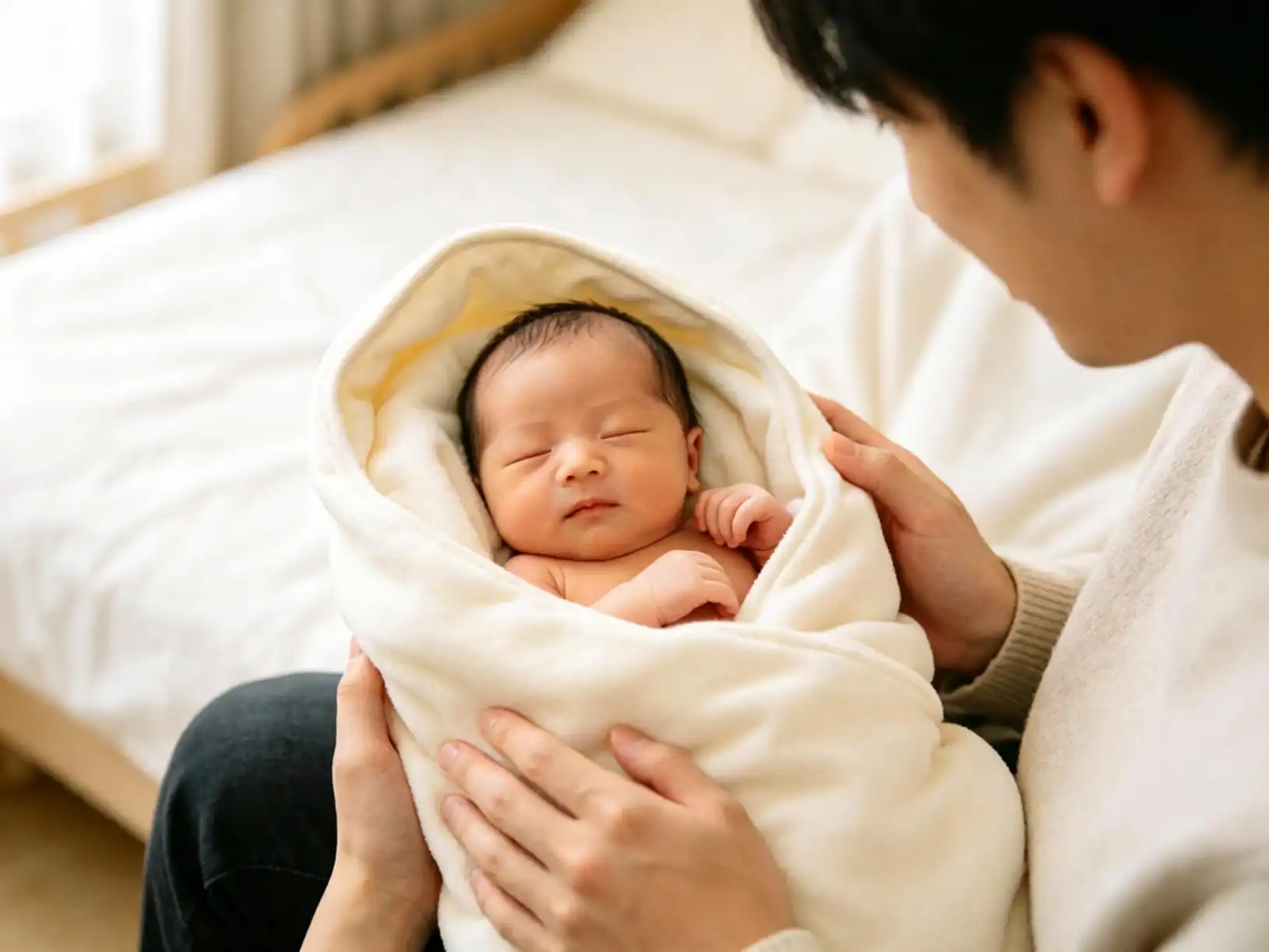
"contentHtml": "<h1>How Recording a Life Story Turns Family Memory Into Living History</h1>\n\n<p>A life story almost never disappears all at once. It fades in small pieces: a phrase no one repeats, a face that loses its name, a journey that becomes a single line on a form. Within two or three generations, most of what made a person vivid is gone — not because anyone was careless, but because nobody wrote it down.</p>\n\n<p>If you are just beginning to explore a parent's or grandparent's past, the goal is not to build an archive. It is to keep one person recognizably human for the people who come after them. That is a small enough task to begin this week.</p>\n\n<h2>Memory Is Not a Storage System</h2>\n\n<p>We treat memory like a filing cabinet, but it behaves more like weather. Details that feel permanent today — the sound of a grandmother's laugh, the order of events in a family story, the reason someone left a hometown — soften with every retelling. Sometimes they change outright.</p>\n\n<p>This is why so many families discover contradictions in old accounts. Two siblings remember the same childhood differently, and neither is lying. Memory is reconstructive: each time a story is told, it is rebuilt from fragments, shaped by what happened since, and trimmed for the audience in the room.</p>\n\n<p>A recorded life story does not settle every argument, but it captures a version while the person is still here to explain it. It also protects details that no document will ever hold — how a kitchen smelled on a Sunday, which sibling was the peacemaker, what a mother worried about at night. That alone is worth the effort.</p>\n\n<h2>Begin Where the Story Itself Begins</h2>\n\n<figure>\n<img src=\"https://r2.familylove.love/static/seo/born.webp\" alt=\"A newborn's first moments, the starting point of a life story\">\n<figcaption>Every life story has an origin scene: a place, a date, and the people who were already waiting there.</figcaption>\n</figure>\n\n<p>Beginners often start in the middle — with the career, the move, the war years — because those are the parts that get told at dinner. the strongest interviews start at the beginning. Ask where the person was born, who was in the room, what language was spoken at home, and which siblings came before or after them. Those small details anchor everything that follows and often unlock memories nobody has asked about in decades.</p>\n\n<p>You do not need a formal questionnaire. Three or four open questions about the first years of a will usually carry an hour of conversation, and the earliest chapters tend to contain the richest material: nicknames, childhood illnesses, the job, the first time someone left home.</p>\n\n<h2>What a Recorded Life Story Gives Your Familyh2>\n\n<ul>\n<li><strong>Continuity.</strong> Children who know where their family came from to carry a steadier sense of identity. A life story makes that inheritance concrete rather than vague.</li>\n<li><strong>Context for the family tree.</strong> Names and dates on a chart are a skeleton. The story supplies the muscle: why people moved, why a branch drifted apart, why certain traditions survived and others vanished.</li>\n<li><strong>Evidence for genealogy researchstrong> A remembered detail — a village name, a trade, a midwife's name — can be the clue that breaks through a record wall years later.</li>\n<li><strong>A voice, not a name.</strong> Written accounts preserve not only facts but phrasing, humor, and priorities. Future readers hear a person, not a summary.</li>\n<listrong>A reason to talk now.</strong> The interviews themselves change relationships. Asking is a form of attention, and most relatives respond to it more warmly than expected.</li>\nul>\n\n<h2>Genealogy Gives You Dates; a Life Story Gives You Reasons</h2>\n\n<h3>Documents answer \"what\" — interviews answer \"why\"</h3>\n\n>Genealogy, family history, and oral storytelling are not competing hobbies; they are three views of the same subject. A record tells you that an ancestor emigrated in 1911. A recorded account tells you why, what they packed, who they left behind, and whether they ever expected to return.</p>\n\n<h3>Where the two meet</h>\n\n<p>As you gather material, it helps to organize it somewhere that grows with you rather sitting in a notebook you may never reopen. Many families begin by <a href=\"https://www.familylove.love/family\">building a shared family space</a> where photographs, notes, and recordings sit together, so a life story connects naturally to the wider family tree and to the ancestors you are still tracing.</p>\n\n<h2>Where Beginners Quietly Get Stuck</h2>\n\n<ul>\n<li><strong>Waiting for the perfect question.</strong> There is no perfect question. A \"Tell me about the house you grew up in\" outperforms any elaborate script.</li>\n<li><strong>Trying to cover a whole lifetime at once.</strong> Marathon interviews exhaust everyone. Twenty focused minutes, repeated often, produces far more than one long session.</li>\n<li><strong>Treating facts as the finish line.</strong> Dates matter, but the texture — sounds, smells, routines, small frustrations — is what future generations cannot reconstruct on their own.</li>\n<li><strong>Assuming it is too late.</strong> Even a few recorded memories, or recollections of someone who has passed, preserve more than silence does.</li>\n<li><strong>Keeping the project private.</strong> Notes that never leave one person's folder tend to stall. Stories circulate or they stop.</li>\n</ul>\n\n<h2>Small Habits That Keep a Life Story Growing</h2>\n\n<ul>\n<li> audio whenever it is offered, even if the setting is imperfect.</li>\n<li>Ask about ordinary days, not only milestones.</li>\n<li>Label photographs with names, places, and approximate years the moment you receive them.</li>\n<li> your notes up within two days, while context is fresh.</li>\n<li>Share what you collect, so the story stays alive in other people's memory too.</li>\n</ul>\n\n<h2> Person's Story Is Also Your Family's Story</h2>\n\n<p>Recording a life story is usually framed as a gift to the past. In practice, it is a gift to the future — and to the present. Conversations change relationships. Questions you never asked become answers your children will not have to hunt for. An ancestor's choices stop looking random and start looking like decisions.</p>\n\n<p>You do not have to do this perfectly, or all at once, or alone. You only have to start with one person and one question.</p>\n\n<h1>Practical Steps</h1>\n\n<ul>\n<li>Choose one living relative and begin with a <a href=\"https://www.familylove.love/family\">shared family record</a> where you can store their earliest memories, photographs, and audio as the story grows alongside your family tree.</li>\n<li>For a clearer, step-by-step process covering what to ask, how to record it, and how to preserve it for later generations, use the help and guidance at <a href=\"https://www.familylove.love/docs\">https://www.familylove.love/docs</a>.</li>\n</ul>",
"images": [
"https://r2.familylove.love/static/seo/born.webp"
]