Genealogy for Newcomers: Build Your Family Tree One Verified Fact at a Time
Most people begin genealogy the same way: with a name, a date, or a half-remembered story that nobody in the family can quite explain. That single scrap of information is enough. What matters is not how dramatic your ancestors were, but how carefully you document what you learn. A well-sourced family tree with ordinary people in it is worth far more than a dramatic one built on guesswork.
This guide is written for the person who has never opened a research file before. It explains what family history research actually involves, how to sequence your first steps, and how to keep your findings accurate enough that future generations can trust them.
What Genealogy Actually Involves
Genealogy is often confused with collecting names. In practice, it is closer to detective work with a paper trail. You are trying to establish identity and relationship: was this John the same John who married in a neighbouring county in 1861? Was that census entry your great-grandmother or a cousin with the same name?
Good research rests on three habits:
- Working backwards. You move from what you know to what you don't, rather than starting with a distant ancestor and hoping the links hold.
- Citing sources. Every date you record should have a note explaining where it came from.
- Separating fact from family lore. Stories are valuable clues; they are not evidence until confirmed.
Understand these three habits and you are already ahead of most beginners.
Start With the Family You Can Still Ask
The richest archive available to you is often sitting across a kitchen table. Living relatives hold names, nicknames, migration routes, occupations, and the small details that never appear in official records — the reason a family left a village, the trade a grandfather practised, the photograph nobody labelled.
Approach these conversations with structure. Ask open questions rather than yes-or-no ones, and let silence do some of the work. Useful prompts include: Where were you born, and what do you remember about that house? Who were your grandparents, and what did they do for a living? Was anyone in the family known for something unusual?
Record the conversations if your relative is comfortable with it, and write up your notes the same day while context is fresh. Ask permission before sharing anything publicly — living people deserve privacy, and trust is difficult to rebuild once it is lost.
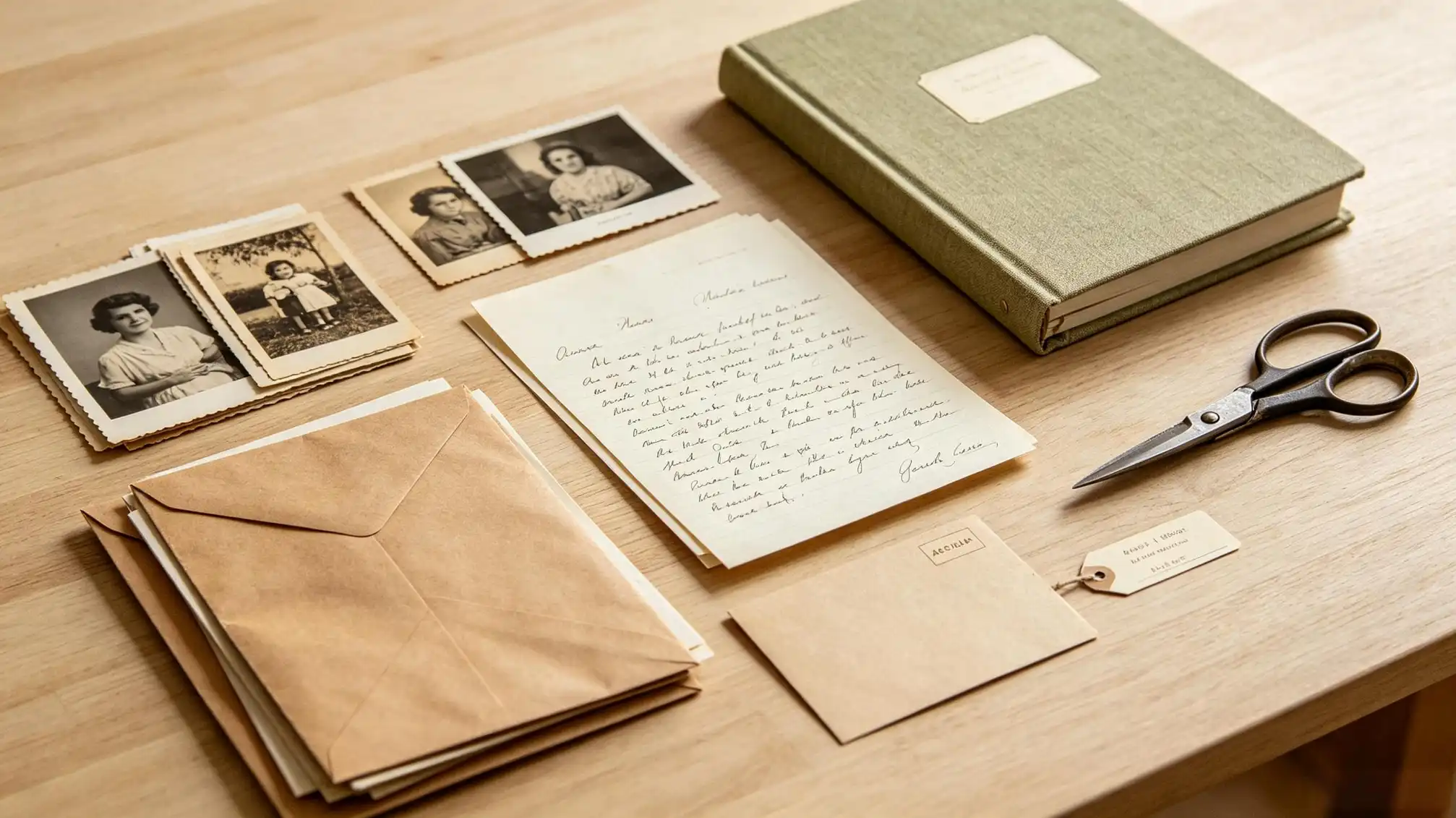
Build Your Family Tree in Layers
A family tree does not need to be complete to be useful. Begin with a simple structure: yourself, then parents, then grandparents. Add siblings where you can, because siblings frequently appear as witnesses on documents and can help you distinguish between two people with the same name.
For each person, record three things at minimum:
- Full name, including maiden names and variants in spelling.
- Key life events — birth, marriage, death, and where each occurred.
- The source for each event, noted in plain language.
Resist the temptation to merge your tree with a stranger's online tree simply because the names match. Someone else's research is a lead, not a conclusion. If a branch of your family has already been documented, treat it as a map to verify rather than a shortcut to copy.
Learn to Read Records Like a Researcher
Once your living sources are exhausted, you move to the written record: civil registration, census returns, parish registers, immigration lists, military files, and newspapers. Each type of record was created for a specific administrative purpose, and that purpose shapes what it does and does not tell you.
Two principles will save you years of confusion. First, always prefer the original or a clear image of the original over a transcript or an index — indexing errors are common, especially with unfamiliar handwriting. Second, read records in context by examining the whole page or household, not just the line you care about. Neighbours, witnesses, and lodgers often turn out to be relatives.
Expect inconsistencies. Ages drift between censuses, spellings shift, and birthplace details vary. Note the discrepancies rather than smoothing them over; they are often the clue that separates two same-named individuals.
Organize as You Go
Research that isn't organized becomes research you repeat. Decide early on a simple system and stay with it: a consistent file-naming pattern, a folder per surname, and a running research log that records what you searched, when, and what you found — including the searches that produced nothing, because those prevent wasted effort later.
Back up everything in at least two places, and keep digital scans of original documents alongside your notes. If you want to see how other families present their discoveries and the stories behind them, browsing shared family stories can give you a clear sense of what a well-told, well-evidenced family narrative looks like.
Mistakes That Catch New Researchers
- Chasing a famous ancestor. Build the documented line first; the notable connection either appears or it doesn't.
- Trusting a single source. Confirm important relationships with at least two independent records.
- Ignoring spelling variants. Before assuming a record doesn't exist, search phonetic and abbreviated versions of the name.
- Skipping the collateral lines. Aunts, uncles and cousins frequently unlock a brick wall in the direct line.
Progress in genealogy is rarely dramatic. It accumulates — one confirmed relationship, one correctly cited record, one conversation recorded before it is lost. That steady accumulation is what turns curiosity into a family history your descendants can actually rely on.