Family History Questions That Turn a Short Chat Into a Real Story
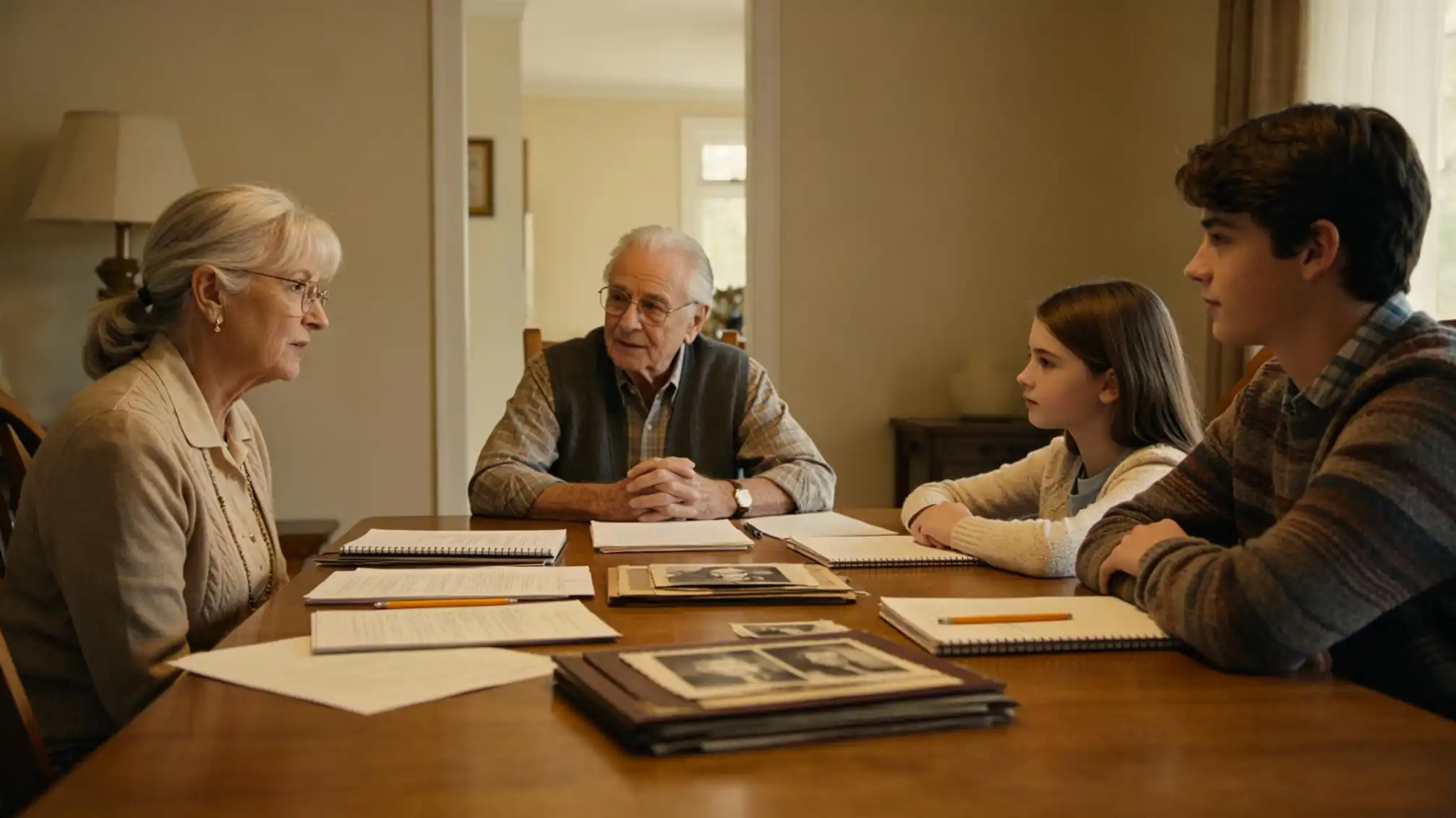
Ask a relative "tell me about your childhood" and you may get a shrug. Ask "what did your mother cook on Sundays, and did you actually like it?" and you'll often get an hour. The questions you choose decide whether you walk away with a family history or a few dates scribbled on the back of an envelope. The set below is built for the second outcome.
Why the Wording Matters More Than the List
Most interview attempts fail for the same reason: they use questions that can be answered with one word. "Were you happy as a child?" is a yes or no. "What did a happy afternoon look like in your house?" is a doorway.
Three habits fix this fast. First, anchor the question in something sensory — food, sound, weather, a smell, an object. Second, ask about people rather than eras, because memories attach to faces. Third, expect to ask one main question and then three follow-ups. The first answer is the headline; the follow-ups are the article.
Warm-Up Questions for the First Ten Minutes
Nobody opens up on demand. Start with low-stakes prompts that are easy to answer and quietly build momentum.
- What's the earliest thing you can remember, before you started school?
- What did the street you grew up on sound like in the evening?
- Who was your best friend, and how did you meet?
- What was your favorite meal as a kid, and who made it?
- What's a small thing that makes you think of your mother or father?
These do double duty: they warm up the conversation, and they hand you details you can return to later. That best friend's name will come back when you ask about school.
Questions About the House and the People In It
Home is where most early family history lives, and it's usually described in objects rather than dates.
- Walk me through the house you grew up in — which room did everyone end up in?
- What was on the kitchen table on a normal weeknight?
- Who ruled the household, and who was the soft touch?
- What chores were yours, and what happened if you skipped them?
- What did your parents argue about, or what did they never discuss?
- Was there a family rule that made no sense to you then but does now?
That last one is gold. Rules reveal values, and values explain decisions your relatives made decades later.
Questions About Grandparents and Earlier Generations
Your parents and grandparents are the bridge to people you never met. Ask about them while the memories are still reachable.
- What did your grandparents look like to you as a child — not their features, but their presence?
- What did your grandmother smell like, and what was she always doing with her hands?
- What did your grandfather say that everyone in the family still repeats?
- Which stories about them did you hear so often you could tell them yourself?
- Was there anyone in the family nobody talked about? What did you understand as a kid?
- What do you wish you had asked them before they died?
That final question often produces the most honest answer of the whole interview, and it usually reveals the next person you should call.
Questions About Work, Money, and Hard Seasons
Practical life shapes family history more than milestones do, but it's the area people skip because it feels intrusive. Ask plainly and let your relative set the depth.
- What was your first job, and what did the pay actually buy?
- What was the tightest year for money, and how did the family get through it?
- What did you learn to fix, grow, or make yourself because there was no other option?
- What decision changed the direction of your life — and did you know it at the time?
- What did people in the family do when someone was sick, broke, or in trouble?
Questions About Love, Weddings, and Family Legends
Every family carries at least one story that gets retold at gatherings. Pin down the version your relative actually witnessed.
- How did you meet, and what was your first impression — honestly?
- What did your wedding day look like, including the parts that went wrong?
- Which family story do you think has been exaggerated over the years?
- What's the strangest piece of family lore you've ever heard, and who started it?
- What tradition from your side of the family do you hope survives?
The Follow-Up That Unlocks Everything
When your relative finishes an answer and goes quiet, resist the urge to move to the next question. Instead, try one of these:
- "What happened next?"
- "Where were you standing when you heard that?"
- "How did that change things for the family?"
- "Who else was there that day?"
Three follow-ups per answer is the sweet spot. It gives you detail without making the conversation feel like an interrogation.
Keep the Answers Somewhere You'll Find Them Again
Memory fades faster than anyone expects, including yours. Record the audio if your relative agrees, then write up the highlights within a day while the context is fresh. A shared family space works well for this — you can publish the interview and let cousins add corrections, extra details, and photos in the comments. Stories is set up exactly for that, and it keeps the material in one place instead of scattered across three phones and a notebook.
When the Conversation Gets Heavy
Some answers will land hard. If your relative tears up, don't rush to fill the silence or apologize for asking. Say "we can stop here if you'd like," then let them decide. If they say "I don't remember," offer a specific hook — a year, a place, a person's name — rather than repeating the question. And if they shut a door, note it and move on. You can always come back another day.