Family History Made Simple: A Warm Guide to Capturing the Stories Behind the Names
Nobody sets out to lose their family history. It slips away quietly: a grandparent passes before the questions get asked, a shoebox of photographs has no names on the back, a recipe card sits in handwriting no one living can identify. The good news is that preserving your family history does not require a research degree, an expensive subscription, or a flawless filing system. It requires a starting point small enough that you will actually begin this week.
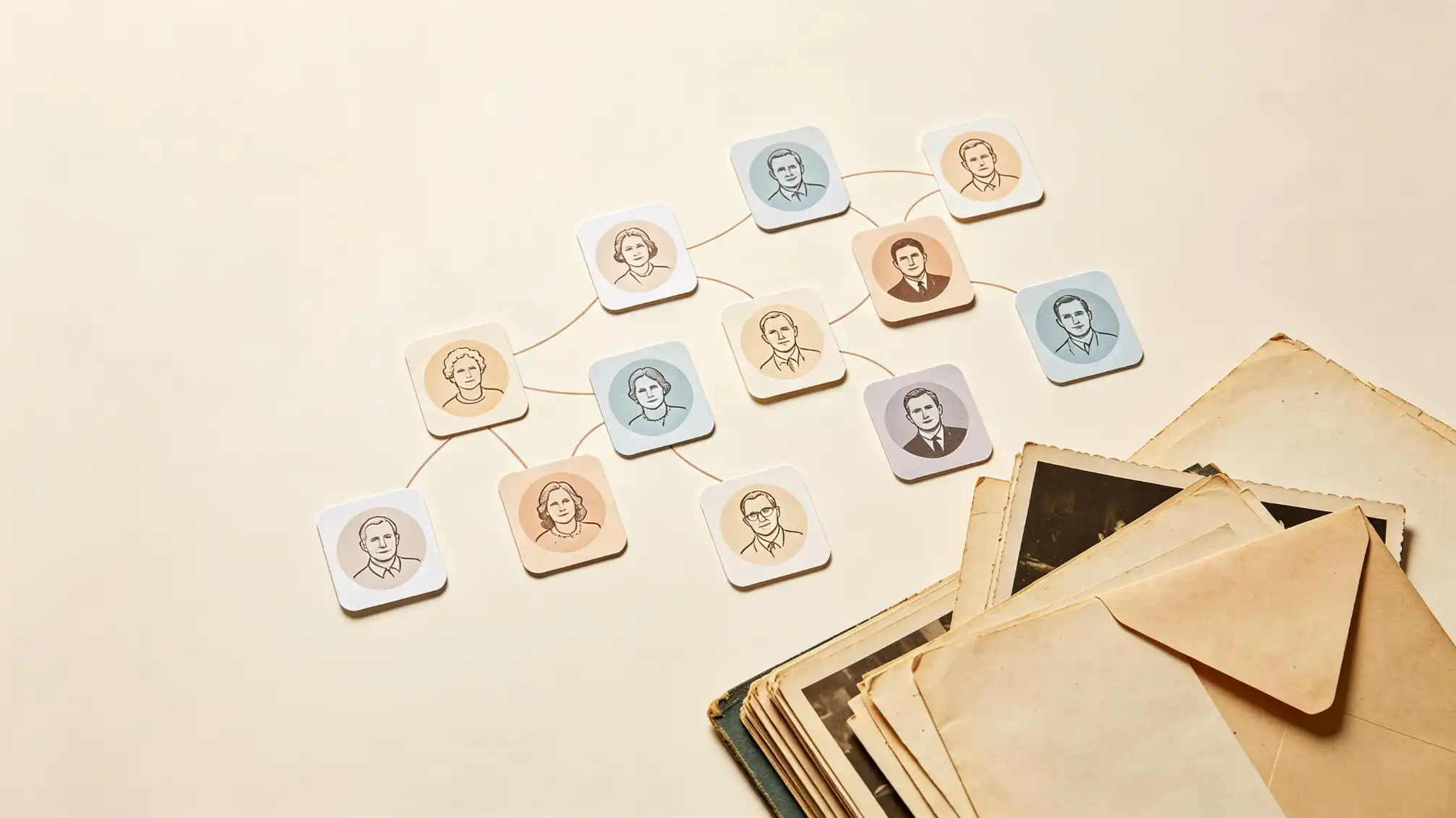
Begin With One Person, Not the Whole Tree
The most common reason family history projects stall is scale. A blank chart with hundreds of empty branches is intimidating; a single conversation is not. Choose one relative — ideally the oldest storyteller in your family, but not necessarily — and ask for one hour. Treat it as a conversation over tea, not an interrogation.
If that person is no longer here, choose someone from the next generation, or begin with yourself. Your own memories of the house you grew up in, the meals your mother cooked, the phrases your father repeated, are family history too. Recording them now means your family stories have a foundation to build on later.
Why "tell me about your life" rarely works
That question is too wide, and most people freeze in front of it. Specific prompts do the heavy lifting. Instead of asking about a whole childhood, ask about one Tuesday afternoon, one kitchen, one holiday. Narrow questions open memory like a key; broad ones keep the door shut.
Ask Questions That Unlock Specific Memories
Bring a short list and let the conversation wander. These prompts work across almost every family and culture:
- What did the street or neighborhood you grew up on sound like in the evening?
- Who cooked in your home, and what was the meal everyone asked for?
- What was the first job you ever had, and what did your first paycheck buy?
- What is something your parents said so often that you can still hear their voice?
- Which relative were you closest to, and what did you do together?
- What was the hardest year you remember, and who helped you through it?
- How did you meet the person you married — or the person you almost married?
- What do you hope your grandchildren understand about our family?
Listen for names, places, nicknames, and occupations. Every detail is a thread that leads to another relative, another document, another branch of the family tree.
Choose a Recording Method That Fits Your Real Life
Perfect equipment is not the goal; captured voice is. A smartphone voice memo recorded in a living room captures more warmth and meaning than a pristine transcript you never get around to typing. If the storyteller is comfortable on camera, video is wonderful because future generations will see expressions and gestures, not just hear words.
A few practical habits protect your work:
- Ask permission first, then explain exactly where the recording will be kept.
- Test the sound for thirty seconds before the real conversation begins.
- Say the date, your name, and the speaker's full name at the start of the file.
- Back up to two places the same day — cloud storage plus a drive or computer.
- Name files with a consistent pattern, such as 2025-03-14_GrandmaRosa_part1.
If a relative lives far away or is uncomfortable with technology, a handwritten letter asking three questions works beautifully. People often write what they would never say aloud.
Write Down the Details While They Are Still Fresh
Within a day of each conversation, spend twenty minutes capturing the facts: full names and how they were spelled, maiden names, birthplaces, immigration dates, military service, trades, and the family tree connections between the people mentioned. Sound matters, but so does accuracy — and memories blur faster than we expect.
You do not need special software to start. A notebook, a spreadsheet, or a free online tool will all work. What matters is consistency. Record the same categories for each ancestor so you can compare and connect them later. If you are unsure where to begin, start with a simple three-generation tree: you, your parents, your grandparents. That foundation makes every future discovery easier to place.
Turn Fragments Into Family Stories Others Can Read
Raw recordings and scattered notes are an archive. Family stories are something else: a short narrative someone can read in five minutes and feel something. Once you have two or three memories about the same person, try writing a single page — one scene, one voice, one moment. Begin in the middle of the action rather than with dates.
For example, instead of "Rosa was born in 1931 and worked in a bakery," write: "At four in the morning, Rosa's hands were already dusted with flour before the rest of the city woke up." The dates can follow. The feeling comes first. When your piece is ready, publishing it where relatives can read it keeps the story alive in a way a private folder never will.
Build a Rhythm That Survives Busy Months
Enthusiasm fades; small rituals last. Pick one anchor that fits your life and protect it. A monthly Sunday phone call with one question prepared in advance. One photograph scanned and labeled each week. Fifteen minutes every Friday to tidy your notes and back them up.
Anniversaries are natural prompts. On the day a relative died or a couple married, share one memory with your family. That habit turns your family history from a personal project into a shared one, and shared projects get finished.
Mistakes That Quietly Stall Family History Projects
- Waiting for the perfect tool or the perfect time to begin.
- Chasing distant records before recording the living voices in front of you.
- Collecting hundreds of documents without labeling any of them.
- Interviewing only once. Memory deepens on the second and third visit.
- Keeping everything private, so no one else becomes a caretaker of the story.
Start small, stay curious, and let the family history grow at the pace of your actual life. The voices you save this year will be the ones your grandchildren thank you for.