How to Build a Family Tree From the Parents and Grandparents You Already Know
Most people stall at the same place: they open a blank chart, see empty boxes for great-great-grandparents they never met, and close it again. The reliable way to start is the reverse. You already hold living, checkable information about three generations, and that is enough to build a family tree that is accurate today and easy to extend tomorrow. This guide shows you how to capture that first layer properly, so every branch you add later rests on facts rather than guesses.
Start With the Generations You Can Still Ask
Distant ancestors demand archives, databases, and patience. Your parents and grandparents demand a phone call. That difference matters more than most beginners realise: the people closest to you can confirm spellings, explain nicknames, and clarify relationships no record will ever capture, such as who was adopted, who remarried, and which cousin was raised as a sibling.
Treat the first two or three generations as your foundation. Once those entries are solid, you have a set of verified names, dates, and places to search against when you move backward. Building outward from uncertainty is how trees end up carrying wrong branches for years.
Gather What You Already Have Before You Draw Anything
Spend one evening collecting rather than designing. Set aside:
- Full names, including maiden names and any later name changes
- Birth dates and birthplaces for each relative
- Marriage or partnership dates, and where they took place
- Death dates and places, where they apply
- Photos, letters, certificates, or family Bible pages already in the house
Scan or photograph anything on paper. Digital copies take minutes to make and save weeks of work later, especially when a single document is the only proof of a grandparent's birthplace or a great-grandparent's original surname.
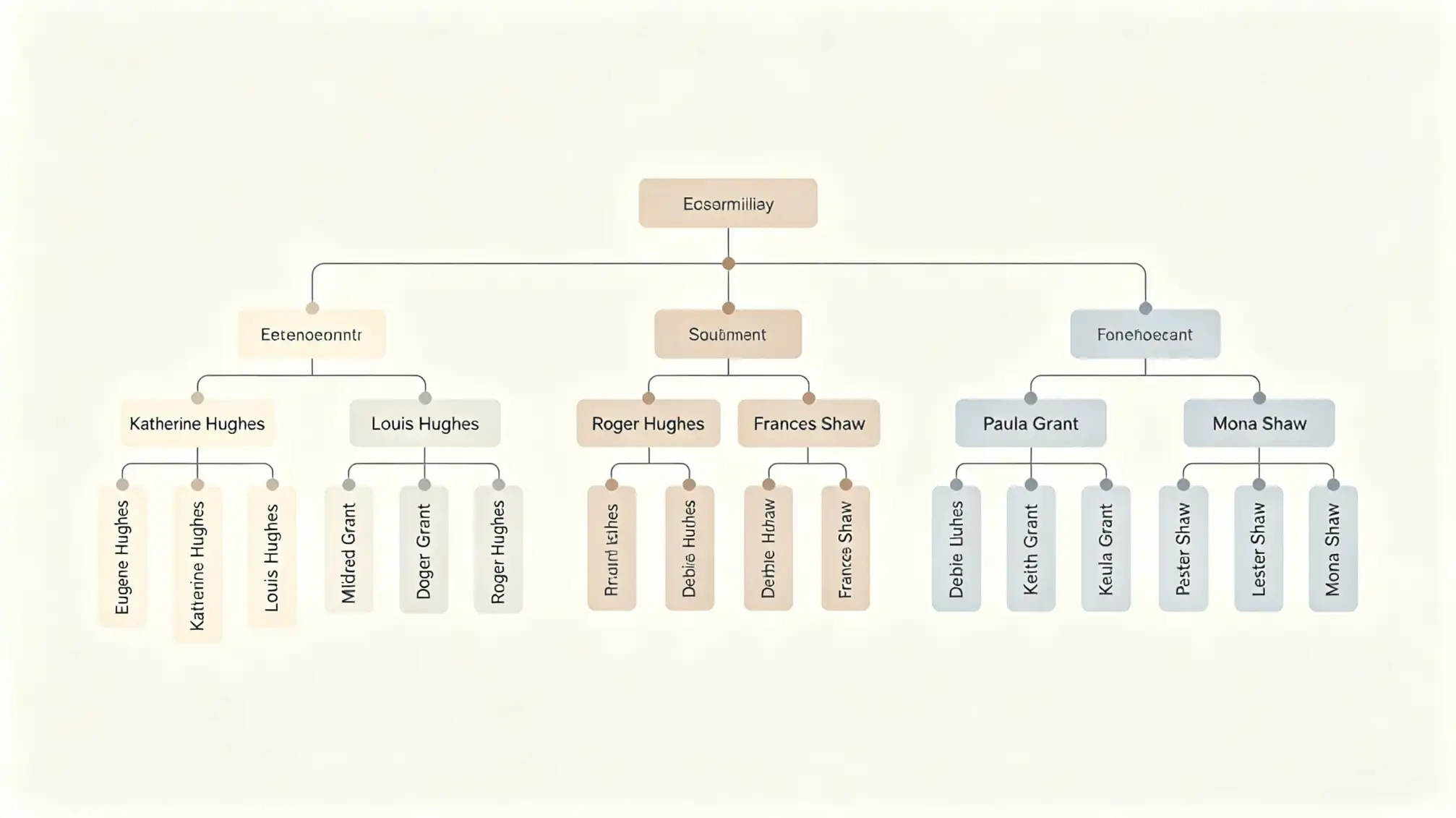
Build the Tree in Three Layers
Layer one: you and your siblings
Place yourself in the centre of the chart, then add brothers and sisters in birth order. Include half-siblings and step-siblings in the position that matches reality; a family tree is a record, not a judgement. This layer is quick, but it also fixes the numbering and layout you will follow for everyone else.
Layer two: parents and their siblings
Add both parents above you, then each of their brothers and sisters to the side. Note spouses or partners, and place first cousins one row below their parents. This is the layer where most people find gaps, such as an aunt's married name or a cousin's exact birth year, so write the question beside the blank and ask later instead of leaving it empty forever.
Layer three: grandparents and great-grandparents
Add all four grandparents above your parents. If great-grandparents are known, add them too, but mark anything you have not yet confirmed. Once this layer exists, you have a working family tree covering several generations on the page and a clear search list for the ones you cannot see yet.
Questions Worth Asking While You Still Can
A short interview produces more than a long search session. Ask open questions and let the conversation wander:
- Where were your parents born, and what work did they do?
- What were your grandparents' full names, including the names they were born with?
- Did anyone in the family change a surname, and do you know why?
- Which relatives lived nearby, and which ones moved away?
Write the answers down the same day. Memory reorganises details quickly, and a note taken within hours is worth far more than one reconstructed a month later.
Record Details, Not Just Names
A list of names is a memory aid; a family tree is a research tool. Each entry should carry, where possible:
- Full birth name and any later names used
- Date and place of birth, marriage, and death
- Relationship type: biological, adoptive, step, or foster
- Source of the information, even if that source is simply told by Grandma in June
Recording the source feels fussy at first and saves enormous time later. When two relatives disagree about a date, the note tells you who to ask again and which document to hunt for next.
Keep Relationships Organised as the Tree Grows
Once you pass twenty or thirty people, a paper sketch stops working. Dates get duplicated, second cousins land in the wrong row, and remarriages create tangles that are hard to untie. A shared structure for the whole family, where each person, partner, and child is linked correctly, keeps the chart readable. If you want a simple way to log those connections as you confirm them, the relationship tools on our family page are built for exactly this kind of ongoing record keeping.
Verify Before You Reach Further Back
Before adding any generation above your known grandparents, test the facts you already have. Match names against birth, marriage, and census records where you can. Three quick checks catch most errors:
- Do the dates make sense? A mother born in 1801 cannot have a child in 1860.
- Do the places connect? Families usually moved along the same roads, not randomly across continents.
- Do two people with the same name appear in the same small town? That is a signal to slow down, not to guess.
Confirmed names make reliable search terms. Unconfirmed ones send you down branches that belong to somebody else's family entirely.
Choose a Format That Can Grow
Pedigree charts show direct ancestors only. Family group sheets show one couple, their children, and their parents. Most people eventually need both. Whatever format you choose, keep a master copy and back it up in two places. Trees are lost far more often to a dead laptop than to bad research.
Mistakes That Cost the Most Time
- Chasing a famous or royal ancestor before finishing your own household
- Accepting an online match without confirming it against a second source
- Leaving maiden names blank, then losing the entire maternal line
- Interviewing relatives once and never following up with new questions
None of these mistakes are fatal. They are simply expensive, because each one adds names you later have to remove and re-check.