Building Your First Family Tree: A Practical Roadmap for Beginners
Most people begin with a single question: who were my grandparents, really? That curiosity is enough to start. A family tree is not a monument you finish in one weekend; it is a working document that grows as you confirm names, dates, and relationships. What follows is a practical path for your first few months — what to collect, how to store it, and how to avoid the mistakes that stall most beginners.
Start With a Goal, Not a Blank Chart
Before you open any app or download a template, answer one question in writing: what should this family tree do for you? Most beginners fall into one of three goals. The first is identifying a specific ancestor — a great-grandfather whose birthplace nobody remembers. The second is documenting living relatives so their stories survive. The third is testing a family legend, such as a claim of famous ancestry or a sudden move across an ocean.
Each goal changes your first moves. Someone chasing a single ancestor should go straight to records. Someone documenting living relatives should start with conversations. Someone checking a legend should prepare to find evidence that contradicts it. Naming your goal keeps you from spending six months collecting names that never answer your actual question.
Step 1: Write Down What You Already Know
Begin with yourself and work backward one generation at a time. For each person, record the details that make them findable in official records later:
- Full name at birth, plus nicknames and later name changes
- Date and place of birth, as precisely as you know them
- Marriage or partnership dates and locations
- Date and place of death, where applicable
- At least one town or city where the person lived
- Occupation, religion, or military service, which often appear in archives
Then move to your parents, your grandparents, and their siblings. Aunts, uncles, and cousins are not filler — they are how you cross-check dates and break through dead ends later. Expect gaps. Mark them clearly rather than guessing, because a confident wrong date is far more damaging to your family history than an empty field.
Step 2: Talk to Living Relatives Before You Search Records
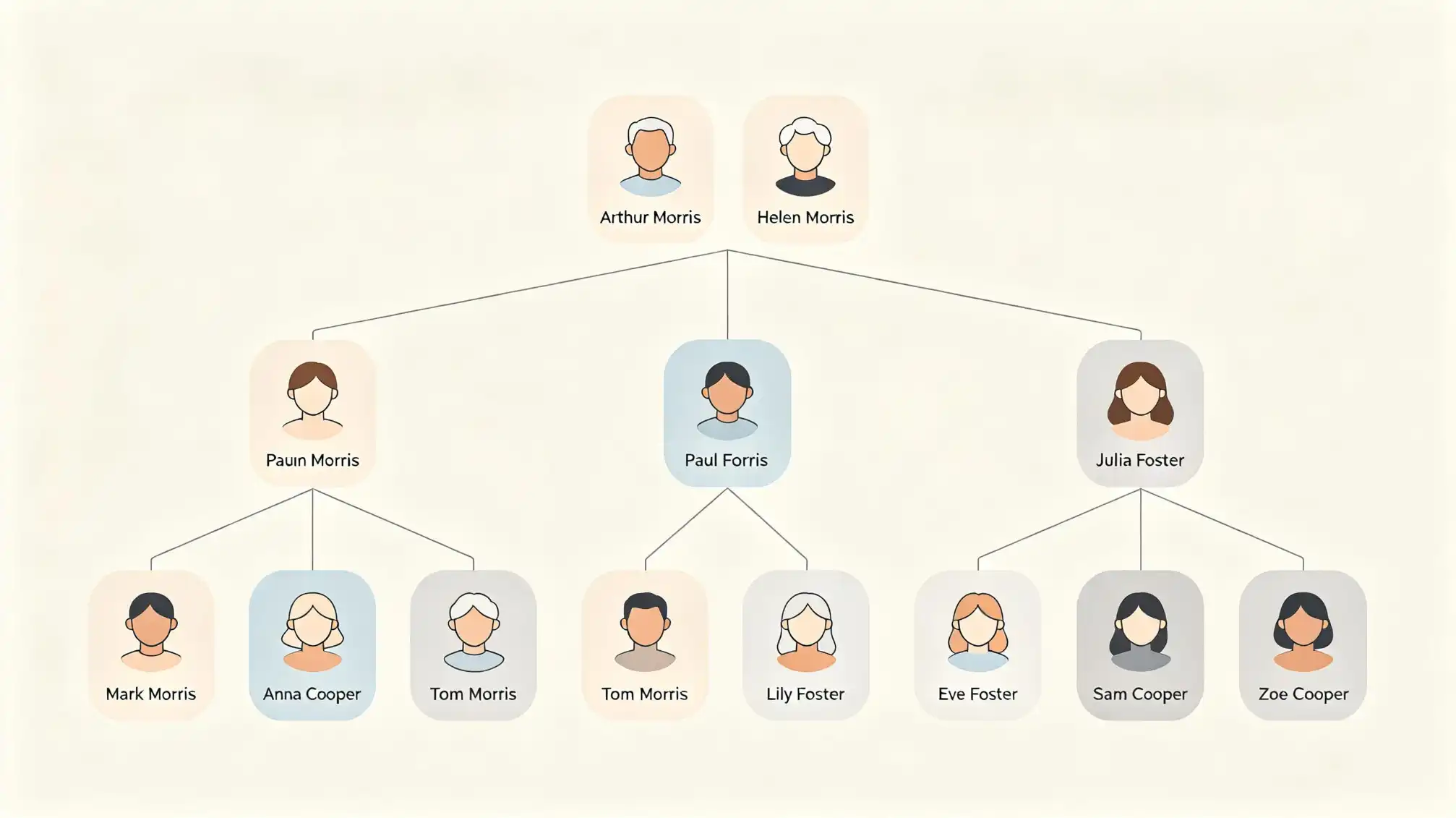
Records tell you what was written down. Relatives tell you what actually happened. Older family members can name a village that appears on no document, explain why a surname changed, or point you to a photograph labelled in handwriting nobody else can read. Treat these conversations as primary research, not small talk.
- Ask open questions: 'What was your childhood home like?' rather than 'Were you born in 1943?'
- Record audio or video, but always ask permission first and explain how you will store it
- Bring old photographs to the conversation and ask who is in each one
- Ask about migration, jobs, health, religion, and family disputes — the context behind the dates
- Note the exact wording people use for places and names, since spelling shifted constantly
Write up your notes the same day. Memory fades fast, and a two-line summary now will save you hours of confusion later. It also helps to ask who else in the family keeps documents, albums, or letters.
Step 3: Verify Before You Attach Anything
This is the discipline that separates a reliable family tree from a hopeful one. A name copied from someone else's online tree is a hint, never proof. Anyone can publish an unverified claim, and those claims spread quickly across the internet.
For every fact you add, ask: what is my source, and how reliable is it? Birth, marriage, and death certificates, census returns, baptism registers, immigration lists, and newspaper notices all carry different weight. Aim for at least two independent sources before you accept a relationship, and record where each fact came from. When two sources disagree — and they will — note the conflict instead of silently choosing the tidier version.
How to Build a Family Tree Without Drowning in Paper
Family history research produces clutter quickly: printouts, screenshots, scanned letters, and handwritten notes. A simple three-layer system prevents the chaos.
- One master tree: a single digital file or platform account that holds your confirmed conclusions
- One source folder: images and documents named consistently, for example '1901-census-smith-john'
- One to-do list: open questions, missing certificates, and relatives still to contact
Keep the master tree clean and let the source folder absorb the mess. If you later doubt a conclusion, you can trace it back to the document that produced it.
Choose a Format You Will Actually Maintain
There is no single correct format. A paper chart on the wall is excellent for seeing structure and sharing with visitors, but it becomes unwieldy past four generations. A spreadsheetis flexible and private, though it offers no relationship diagrams. An online platform adds automatic matching, shared access, and the ability to invite relatives to contribute.
Many beginners use two: an online tree for daily work and a printable chart for family gatherings. Whatever you choose, export a backup regularly. Your family tree represents months of work, and no platform is permanent.
Common Mistakes to Avoid in Your First Year
- Copying entire branches from other people's trees without checking a single source
- Assuming surname spellings stayed constant — they rarely did
- Chasing a famous ancestor while ignoring the ordinary people around them
- Interviewing relatives once and never following up with new questions
- Storing everything in your head instead of writing it down immediately
Keep Relatives Involved
A family tree built alone is fragile. When cousins, aunts, and grandparents contribute, the project gains photographs, corrections, and momentum. Invite the people you interview to add what they remember, and set a simple rule: contributions are welcome, but every new fact gets a source. If you want a shared space where relatives can gather, exchange stories, and keep the project alive between research sessions, you can start a family page and give everyone one place to check in.
Then keep going. Add one verified fact a week, follow one open question a month, and revisit your recordings each year. Slow, steady, sourced research beats a burst of enthusiasm followed by a forgotten folder.