Grandparents Family History: Turning Kitchen-Table Chats Into a Family Treasure
Every family has a version of this moment: someone says, "I wish we'd asked Grandma about that before she passed," and the room goes quiet. Grandparents family history isn't a research project you get to later. It's a conversation you can start this weekend, over tea, with a phone propped against a sugar bowl.
The good news is you don't need a formal interview script. You need curiosity, a little patience, and a handful of prompts that open doors rather than interrogate. Here's a relaxed approach: how to begin, what to actually ask, and how to keep the memories from disappearing into a drawer.
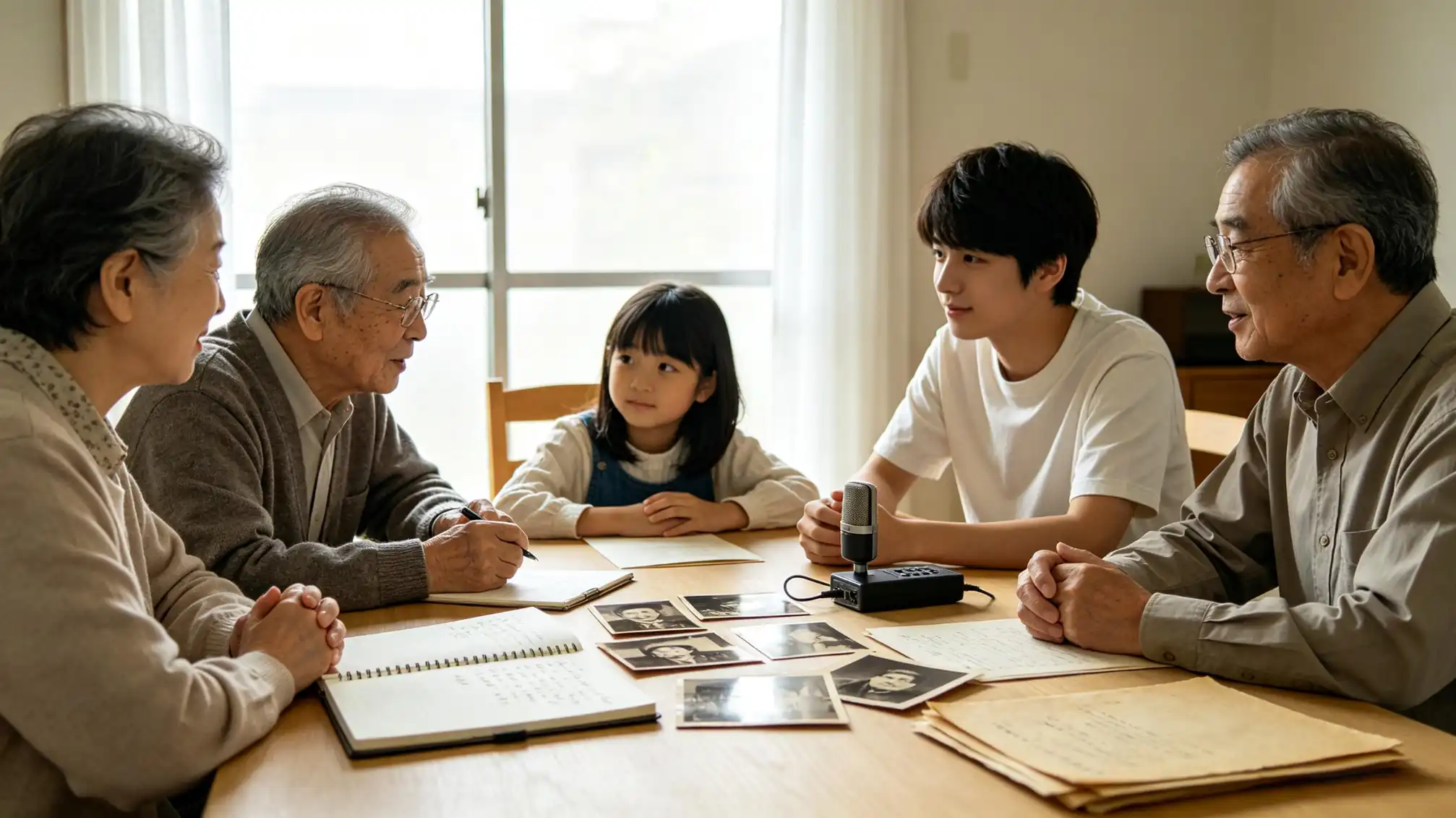
Why the stories matter more than the dates
Genealogy sites are wonderful for names, dates, and census records. But they can't tell you that your grandfather sang while he worked, or that your grandmother's mother hid coins in a flour tin during lean years. Those details are the texture of a family. They explain why your relatives make certain choices, laugh at particular jokes, or get quiet at certain holidays.
When you collect oral history, you're doing two things at once: preserving information and giving your grandparent the rare pleasure of being asked. Most older relatives aren't bored by these conversations — they're honored by them. That alone makes the effort worthwhile.
Begin where memory feels safest
Don't open with "Tell me about your childhood." It's too big, and most people freeze. Start with sensory, low-stakes questions that nudge a door open instead of shoving it.
- What did your house smell like on a Sunday morning?
- What was your favorite meal as a kid, and who made it?
- What sounds do you remember from the street you grew up on?
- What did you do for fun that didn't cost anything?
Smells, sounds, and food pull up vivid memories fast. Once your grandparent is talking, the bigger stories usually follow on their own.
Family history questions that go deeper without feeling like an interview
Once the conversation is warm, you can move toward people and turning points. Phrase these as genuine curiosity rather than a checklist, and let silences sit for a beat — that's often where the best detail arrives.
About relatives and the wider family
- Which relative did you feel closest to, and why?
- What's the funniest thing you remember a family member doing?
- Was there someone in the family everyone told stories about? What made them memorable?
- What family disagreement got passed down, and how was it finally resolved?
About ordinary life and hard seasons
- What did a normal weekday look like for you at ten years old?
- What was the hardest year your family went through, and how did everyone get through it?
- What did your parents teach you that you've never forgotten?
- What did you want to be when you grew up, and how did that change?
About love, work, and change
- How did you meet your partner, and what did you notice first?
- What was your first job, and what did it teach you?
- What invention or event changed your daily life the most?
- What do you hope your grandchildren remember about you?
That last one tends to bring the whole conversation home. Ask it kindly, and be ready to simply listen.
Follow the feeling, not the checklist
If your grandparent's eyes light up about a summer job or a neighbor from 1952, drop your list and stay there. Rabbit holes are where the gold is. One useful habit: whenever a name comes up, ask "Who else was around then?" and "What happened next?" Those two follow-ups can carry an entire hour of family stories without you needing a single new question.
Notice what's avoided, too. If a topic gets a short answer, don't push — mark it and move on. You can always return another day, and some stories need to be offered rather than extracted.
Record it without making it weird
Memory fades, and details shift each time a story is retold. A simple voice recording on your phone is enough. Say at the start, "Do you mind if I record this so I don't forget the details?" Most grandparents say yes, and plenty enjoy it.
A few practical notes:
- Set the phone between you rather than holding it, so it doesn't become the center of attention.
- Say the date, your grandparent's full name, and your own name at the top of the recording.
- Take one photo together afterward, even if it's imperfect.
- Back the file up the same day — cloud storage, an email to yourself, or a shared folder.
If you have relatives in other cities, a video call works nearly as well, and cousins can join in.
Turn the recording into something relatives can actually use
A file sitting on your phone is easy to lose. Write a short summary within a day or two while it's fresh — a paragraph plus three or four quotes is plenty. Add the names you heard and the places mentioned. Over a few conversations, that becomes a genuine archive.
Then share it. Posting a story or two where relatives can read and add their own memories keeps the history alive, and it often sparks corrections, extra details, and new voices you hadn't heard from. You can gather and publish those family stories at familylove.love/stories, which is built for exactly this kind of shared record.
Don't wait for a perfect setup or a professional microphone. The only version of this that fails is the one you keep postponing. Start with one question at the next visit — the rest tends to take care of itself.