How to Build a Shared Family Space That Keeps Your Family Memories Alive
Every family has a drawer. Maybe yours is the kitchen one with the birthday candles and a tangle of old photos; maybe it's a shoebox in the hall closet, or a folder of screenshots nobody has opened in four years. The stories are in there, but they're not alive — and no one gathers around a closed drawer.
Preserving family memories isn't really about storage. It's about creating one spot in the house — and one shared rhythm — where the memories get used, retold, and added to. Here's how to build that shared space, whether your family lives under one roof or across three time zones.
Why a shared space works better than scattered keepsakes
When memories live in seven different places — one sibling's phone, grandma's album, a cloud drive nobody can log into — they stop being a family story and become individual property. A shared space changes the math. It gives the memories a home everyone can point to, and it makes contributing feel as easy as dropping a note on the kitchen counter.
The space doesn't need to be fancy. A wall, a shelf, one shared digital folder, or a single family account can all do the job. What matters is that it's visible, shared, and easy to add to. If adding something takes more than a minute, it won't happen — and a half-finished archive is just clutter with better intentions.
Start with the stories no one else can tell
Family photos are the obvious starting point, and they're wonderful — but photos without context fade into wallpaper. The real gold is the small anecdotes that only your family knows: how your grandmother met your grandfather at a bus stop in the rain, the ridiculous nickname your uncle still uses, the recipe that always gets doubled because someone always sneaks seconds.
Before you digitize a single album, sit down with the oldest storyteller in your family and ask three questions: What was your first home like? What did your parents do for work? What's a day you'd happily live again? Write the answers down in their own words. Those few sentences will make every old photograph ten times more meaningful later.
Record voices, not just faces
A two-minute voice recording of a grandparent telling a story is worth more than a hundred silent pictures. Phone recordings are plenty. Label each one with the date, the speaker's name, and a single line about what's happening — future relatives will thank you for that small kindness.
Give every generation a job
Shared projects survive when everyone owns a piece of them. Try handing out these roles at your next family dinner:
- The Keeper of the Physical: the person who gathers albums, letters, and school drawings into labeled boxes.
- The Scanner: the teenager or tech-comfortable adult who photographs and uploads family photos in batches of twenty.
- The Interviewer: whoever has the patience to ask the older generation questions and write the answers down.
- The Teller: the one who retells the best story at every gathering — the same way, every time. Repetition is how a family history sticks.
Rotate the jobs every few months so nobody burns out, and celebrate when a batch gets finished. A shared pizza after a scanning afternoon absolutely counts.
Make the digital side as warm as the physical one
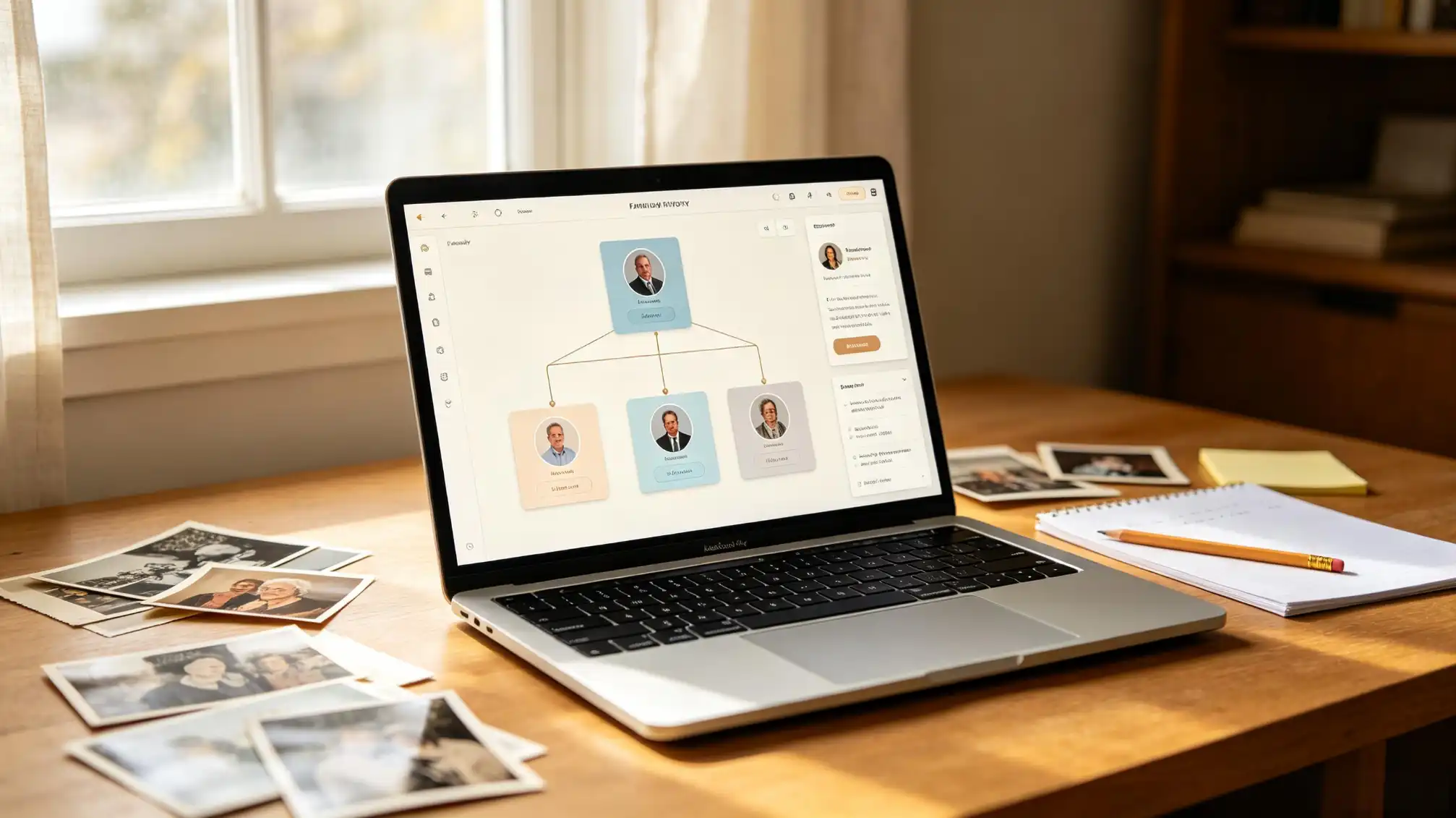
A family tree on a laptop screen can feel cold if it's only names and dates. Fill it with the things that make your family yours: a scanned wedding photo, the story of the first house, the nickname that never made it onto any official document. When the digital archive is full of voices and jokes, younger relatives actually want to open it — and an archive people want to open is an archive that survives.
Let the memories live out loud, not just in storage
Here's the part most families skip: preserving is not the same as displaying. A memory that never gets seen slowly turns back into clutter. So build small moments of display into ordinary life.
Keep one rotating frame on the kitchen counter — the photo changes every month, and whoever changes it gets to tell the story behind it. Put a stack of printed photos on the coffee table during holidays. Let the kids each pick one old picture and guess who's in it. These tiny rituals turn family photos from an archive into a conversation, and conversations are what children actually remember.
Five-minute habits that keep it going all year
- Sunday upload: everyone drops one photo from the week into the shared folder.
- Birthday story: on each person's birthday, someone tells a story about them from before they could remember.
- New Year's question: write one question on a card and collect answers from every generation.
- Holiday scan session: twenty minutes, one box, a pot of tea, no perfectionism.
None of these take long, and that's the point. Consistency beats intensity when you're trying to keep my family history — and yours — alive for decades rather than a single enthusiastic weekend.
Give the memories a home online, too
If your family is spread out, a shared digital home is what keeps everyone connected between visits. Writing the stories down — short, honest, unpolished — is one of the simplest ways to make sure they outlast the people who first told them. You can start by adding a single memory to your family's shared stories page and inviting a relative to post the next one. Two entries become twenty faster than you'd think.
The goal was never a perfect archive. It's a family that still knows its own stories — and still enjoys telling them.