Family History Questions That Get Relatives Talking (Not Just Nodding)
You sit down with your grandmother, press record, and ask, “So, tell me about your childhood.” She smiles, says “It was fine,” and the room goes quiet. Ten minutes later you are both talking about the weather. The problem usually is not your relative — it is the shape of the question. Big, open prompts give people nowhere to stand. Good family history questions are small, specific, and easy to answer out loud, and they are sequenced so that one memory unlocks the next.
What follows is a working method you can use with parents, grandparents, aunts, uncles, and anyone else whose memories you want to keep — plus the questions that tend to open people up quickly.
Start With the Senses, Not the Dates
Facts are easy to look up later; sensory memory is not. Ask about what someone could see, hear, smell, or taste, and the details arrive in a rush: brand names, street sounds, the way a kitchen felt on a Sunday afternoon.
- What did your neighbourhood smell like in summer?
- What sounds did you wake up to as a child?
- What meal can you still taste exactly as it was?
- What was the first song you remember loving?
- What did your bedroom look like, and what was on the walls?
Notice that none of these can be answered with a date. That is the point. Once someone is describing a kitchen or a bedroom, they are back inside the memory, and every question afterwards gets a fuller answer.
Warm-Up Questions That Don’t Feel Like an Interrogation
The first five minutes set the tone for the entire conversation. Keep things light, and let the person talk longer than you planned. Resist the urge to correct details or jump in with the next item on your list.
- What was your full name at birth, and who chose it?
- Who were you closest to growing up, and what did you do together?
- What did a normal Saturday look like when you were ten?
- What were you good at that nobody in the family knows about?
- What did your parents do for work, and did you ever visit them there?
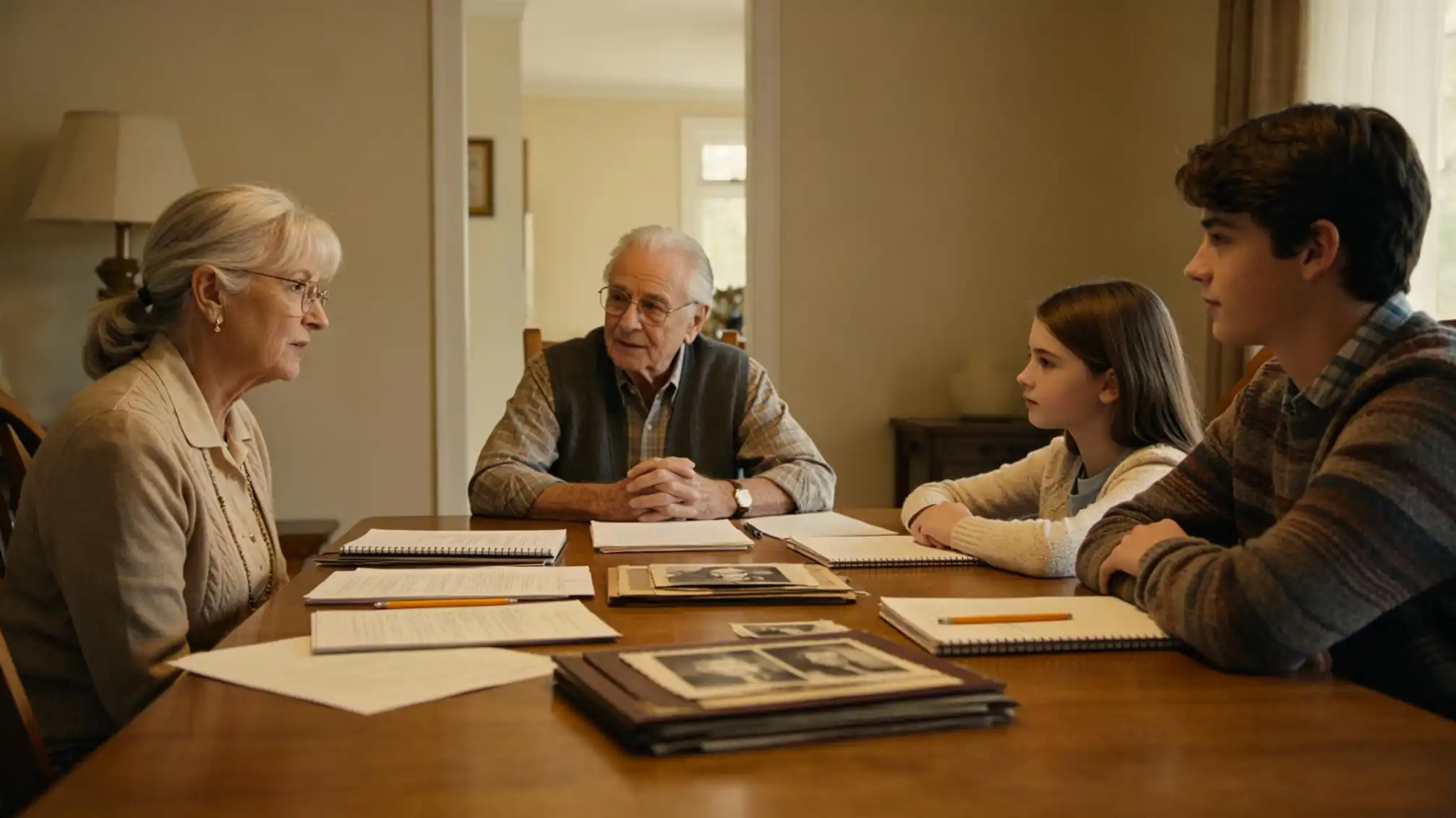
Childhood and the Grandparents You Never Met
This is where family history stops being a timeline and starts being people. Relatives often hold the only living memory of a great-grandparent, so ask for portraits in words, not just names and dates.
What to ask about the older generation
- What did your mother’s voice sound like when she was pleased with you?
- What habit did your father have that everyone in the family copied?
- Which grandparent did you spend the most time with, and where did you go together?
- What was the story everyone repeated at family gatherings?
- Was there a relative nobody talked about? What happened there?
That last one is delicate. Ask it late rather than early, and accept “I’d rather not” without pushing. A skipped question costs you almost nothing; a defensive relative shuts the whole interview down.
Work, Money, and Ordinary Days
Ordinary life is the first thing to vanish from the record. Nobody writes down what they earned, what rent cost, or how they got to work. Those details are gold for anyone trying to picture the past.
- What was your first paid job, and what did you do with the money?
- How did you get to school or work, and how long did it take?
- What did your family do when money was tight?
- What did you own that felt like a luxury?
- What did you worry about at twenty-five that turned out not to matter?
Love, Loss, and the Questions Relatives Avoid
Most people will talk about the hard parts if you offer them a door and then step out of the way. Frame these questions around how they coped, not around the event itself.
- How did you meet the person you married?
- What did your parents think of them?
- What was the hardest year of your life, and who helped you through it?
- What do you wish someone had told you at eighteen?
- What do you want the family to remember about you?
Keep tissues nearby, and stop recording if you are asked to. The relationship matters more than the audio file.
The Follow-Up Is Worth More Than the Question
A list of family history questions is only a starting point. The real material comes from what you say next. Three follow-ups work in almost every interview: “What happened next?”, “How did that feel at the time?”, and “Who else was there?”
Also learn to sit in silence. Count to five before rescuing a pause. People often need a moment to decide whether they are going to say the interesting thing, and if you fill that moment, you never hear it.
Recording, Organizing, and Sharing What You Collect
Use your phone’s voice recorder, set it slightly off to the side rather than between you, and copy the file to a backup the same day. Label each recording with the person’s name and the date. Then, within a week, write two paragraphs of summary while the conversation is still fresh — future-you will not remember which story belonged to which visit.
Sharing is what turns an interview into a family archive. When you are ready to shape raw notes into something relatives will actually read, browse the family stories section for formats and examples you can adapt to your own family.