Before the Details Fade: Building a Family History That Keeps a Life Story Alive
Most family history projects begin the same way: a name, a birth year, a place. It is a sensible starting point, and it is also where many beginners stop. A person's life is not stored in the facts you can copy from a record. It lives in the softer details — the reason someone left a village, the job nobody mentioned, the recipe that was never written down.
If you are just starting out with a relative's life history, the goal of this article is not to turn you into an archivist. It is to help you capture one person's story properly, while the telling is still possible.
Why a Life Story Matters More Than a List of Dates
A family tree answers the question who. A life story answers why. Both matter, but only one of them explains your family's habits, migrations, silences and inside jokes. When you collect only names and dates for your ancestors, you end up with an outline that is technically accurate and emotionally empty.
There is also a practical deadline attached to this work. Memories are not archived the way documents are. They shift slightly each time they are recalled, and the clearest version often exists only while the person telling it is still able and willing to talk. An interview that feels optional this year can become impossible in five.
A third point is easy to overlook: a recorded life story changes how later generations read the records. A census entry listing a farm labourer means something different once you know your great-grandfather walked eight miles to that farm because the family land had been sold.
Start With One Person, Not the Whole Family Tree
The most common mistake beginners make in family history research is trying to cover everyone at once. Spread across six surnames and four generations, attention thins out. Focused on one person, the same effort produces something genuinely valuable.
Choose the person whose memories are most at risk
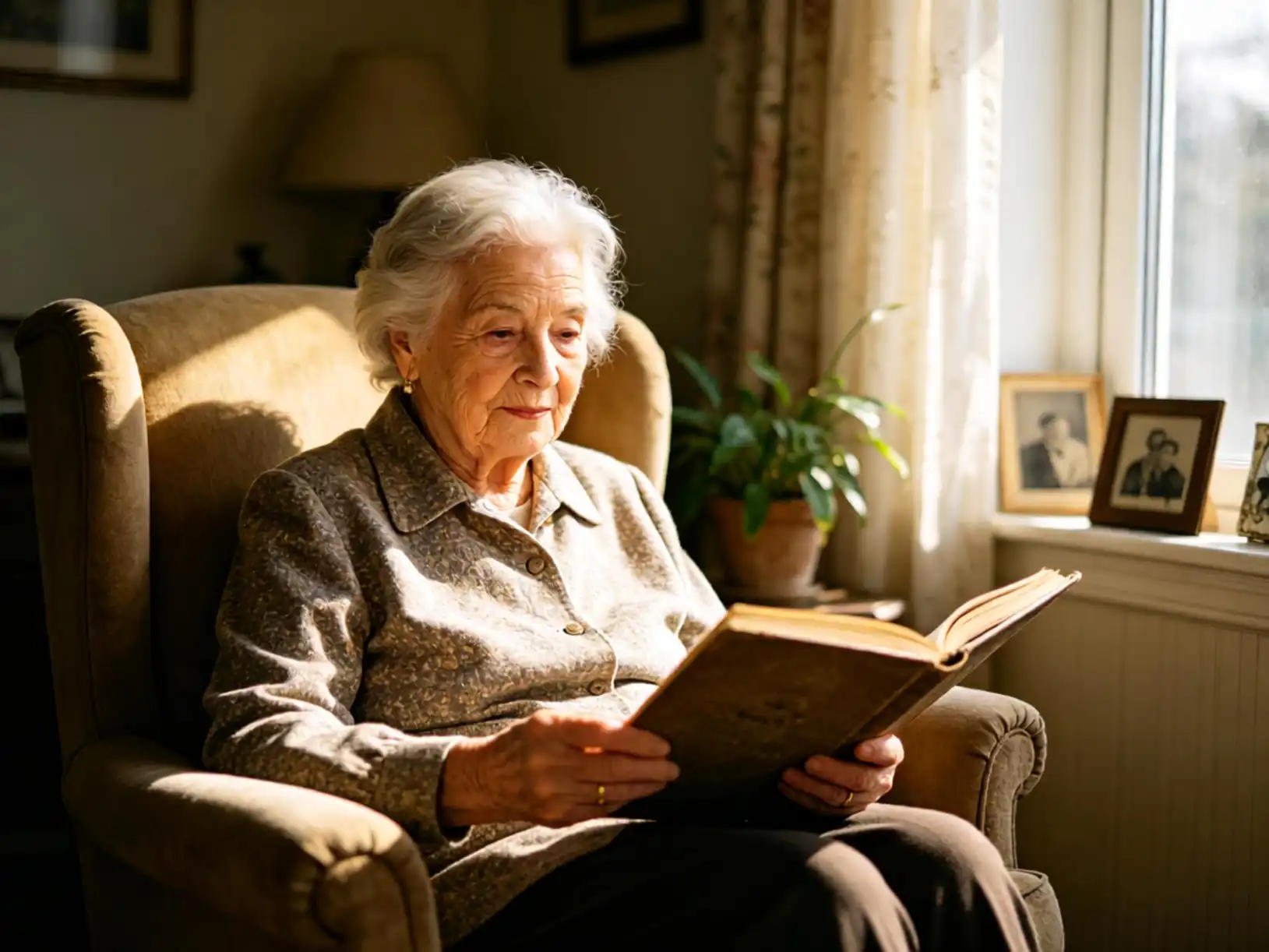
Begin with the oldest living relative you can reach comfortably, especially anyone whose health or memory is changing. If several people qualify, pick the one you can actually sit with — in person or on a call — rather than the one who seems most historically interesting. Access beats interest at this stage.
You do not need to know much before you start. Curiosity is enough for a first conversation, and what you gather will tell you which records to search afterwards.
Let Photographs and Objects Do the Heavy Lifting
Open-ended questions such as tell me about your childhood usually produce a polite summary. Objects produce scenes. A photograph, a ration book, a wedding ring, a tool from a workshop — each one anchors a memory to something specific and concrete.
Ask about the scene, not the fact
When was this taken? gets you a year. What was happening just before this photo? gets you a story. Ask about the weather that day, the food on the table, who was standing just outside the frame, who took the picture, and what happened afterwards. Once a person is inside a scene, details arrive on their own.
Capture the Voice, Not Just the Words
Write down what you can, but record when you are allowed to. A voice carries accent, rhythm, hesitation and humour that transcription flattens. For anyone exploring a family member's life history for the first time, a simple phone recording is enough — no special equipment needed.
Ask permission before recording. Explain what you will do with the file, who will be able to hear it, and whether any part should be left out. Consent is not a formality; it often helps people speak more freely, because they know exactly where the boundary is.
Label every file immediately: full name, date, interviewer, location. Unlabelled audio becomes anonymous within a year, and anonymous audio rarely gets used.
A Simple Structure for a First Life Story Profile
You do not have to produce a book. A profile of roughly 600 to 1,000 words per person is a realistic and genuinely useful unit. Cover these areas and you will have something readable:
- Early years: birthplace, household, siblings, the routine and sound of home.
- Work and money: first job, how the family earned, what changed over the decades.
- Love and family: how partners met, what parenting looked like day to day.
- Hard chapters: moves, losses, illness, migration, war, separation.
- Ordinary pleasures: food, music, hobbies, holidays, small traditions.
- Legacy: what they hoped for the next generation, and what they would want remembered.
Write in plain sentences and quote the person directly wherever possible. Direct quotes, even imperfect ones, carry more weight than a polished paraphrase.
Where This Fits Into Your Genealogy Research
Stories are not a separate hobby from genealogy; they are the layer that makes records legible. Once you know a relative worked at a particular mill, you know which employment records, trade directories or local newspapers to search. Once you know a family moved twice within a year, you know to look for a death, a job loss or a rent increase.
Keep both streams together. Attach the story to the person in your family tree, note which claims come from memory and which come from documents, and flag anything uncertain. Memory is often right about meaning and approximate about dates. Records are often exact about dates and silent about meaning. Together they form a complete picture.
Bring the Family In — Carefully
Stories grow when more than one person contributes. Relatives will correct details you had wrong, add context you did not know, and supply photographs you have never seen. A shared space makes that far easier than passing files around by message. If you want a simple place to gather relatives, stories and photos around the same person, you can start at https://www.familylove.love/family and invite the people who remember.
Two cautions. First, living relatives have the right to ask that something not be published; respect that and note the omission for the future. Second, avoid presenting one version of events as the only version. Families often hold several, and each one is evidence about the family, not just about the past.
What You Gain by Doing It Now
Keeping a person's story alive is not nostalgia. It gives younger family members a longer sense of identity, gives older ones the rare experience of being heard properly, and gives your family history research a spine of meaning that no database can supply. The first interview is always the hardest to schedule. Once it happens, it usually leads to a second, and that is how a family archive begins.