{
"title": "Turning Everyday Moments Into Family Memories You Can Keep Forever",
"metaTitle": "Preserve Family Memories Together in a Shared Space",
"metaDescription": "Learn how to preserve family memories in one shared space — from family photos and stories to your family history. Warm, practical steps every generation can join.",
"summary": "A shared family space turns scattered photos, stories, and odd bits of family history into one living archive everyone can contribute to. This guide walks through simple, warm ways to gather family memories, make family photos useful, build your family history together, and keep the habit going across generations.",
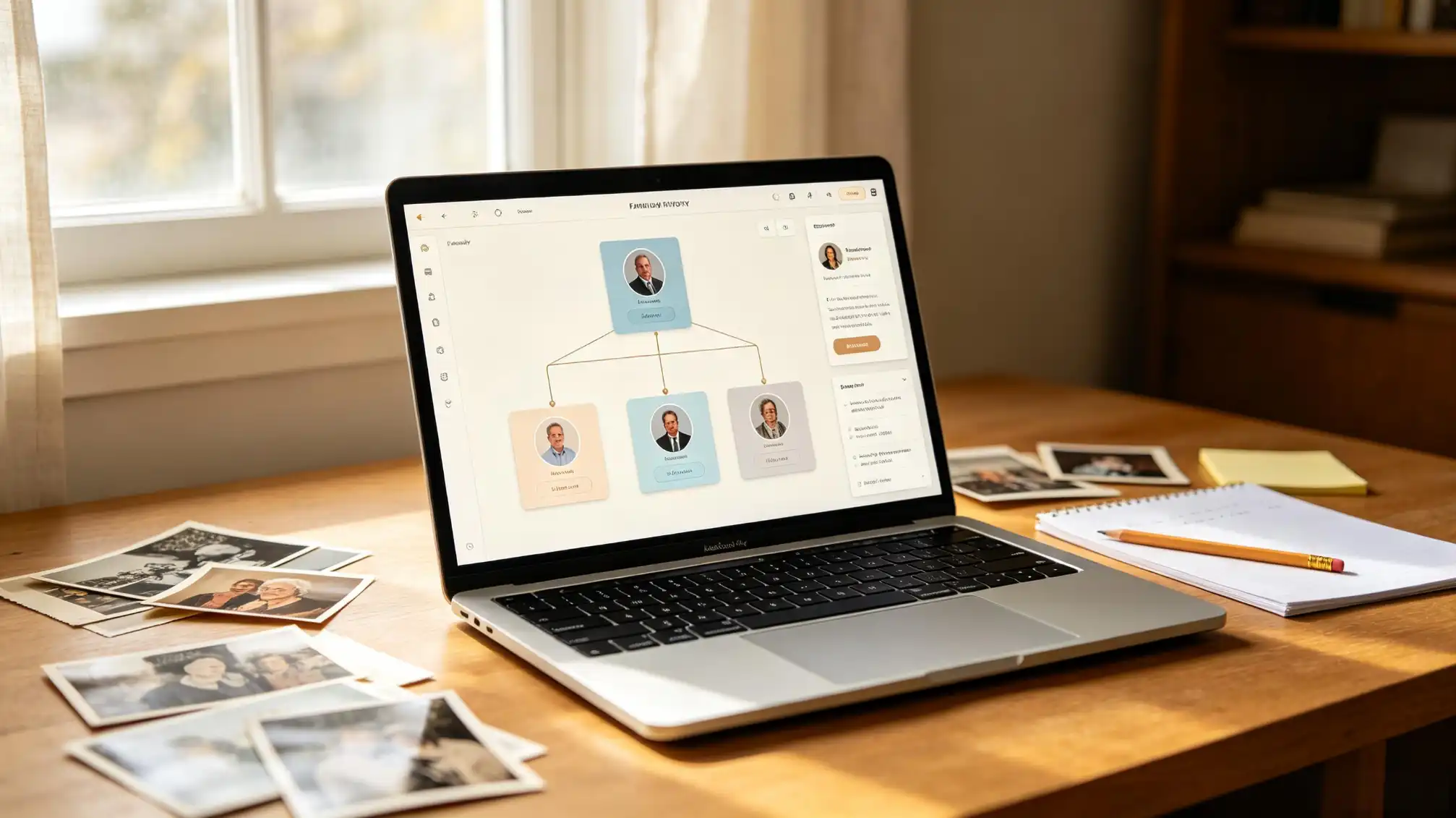
"contentHtml": "<h1>Turning Everyday Moments Into Family Memories You Can Keep Forever</h1>\n\n<p>Every family has a shelf somewhere — a drawer, a closet, a phone full of screenshots — holding pieces of its own story. Photos from birthdays, a grandmother's recipe card, a voice note of a toddler singing. The problem is rarely that we don't care. It's that the memories live in ten different places and belong to no one in particular. A shared family space changes that: one warm, welcoming spot where everyone can add, browse, and pass down what matters. Here's how to build one that stays alive instead of gathering dust.</p>\n\n<h2>Why One Shared Space Beats a Dozen Scattered Ones</h2>\n\n<p>When memories are spread across three phones, two laptops, and a box in the attic, they quietly disappear. Nobody can find them, so nobody talks about them. A single shared space — digital, physical, or both — does three things at once. It keeps everything findable, it invites participation, and it turns remembering into something the family does <em>together</em> rather than alone.</p>\n\n<p>You don't need fancy tools to start. You need one agreed home for the good stuff, and a light touch. Resist the urge to build a perfect archive before you invite anyone in. Families join spaces that feel welcoming, not spaces that feel like homework.</p>\n\n<h2>Begin With the Stories Only Your Family Can Tell</h2>\n\n<p>Documents and dates are useful, but stories are what pull people back. Start by collecting the small, specific things that no one else on earth could contribute: how your parents met, the disastrous camping trip, the phrase your grandfather said every single Sunday, the neighbour who always showed up with too much food.</p>\n\n<p>Ask open questions instead of yes-or-no ones. \"What was your first job like?\" opens a door. \"Did you like your first job?\" closes it. Sit with the oldest relatives while you can, record if they're comfortable, and write down the details within a day — memory fades faster than we expect.</p>\n\n<p>Then give those stories a permanent home. A dedicated stories area is ideal, because narratives get buried when they're mixed in with everything else. You can <a href=\"https://www.familylove.love/stories\">publish and collect family stories here</a>, which keeps each memory in a place relatives can actually find and comment on.</p>\n\n<h2>Make Your Family Photos Actually Usable</h2>\n\n<p>A folder of 4,000 unnamed images is not a family archive; it's a chore. The difference between a photo dump and an heirloom is context, and context takes minutes, not hours.</p>\n\n<h3>Name people, places, and rough dates</h3>\n\n<p>You don't need exact dates. \"Summer 1987, Uncle Ray's house, Blackpool\" is enough for someone to find it in twenty years. Add names whenever you can — future relatives will be searching for people, not for filenames.</p>\n\n<h3>Annotate while the memory is fresh</h3>\n\n<p>The day after a gathering is the best time to caption photos, because you still remember who was standing off to the side and what made everyone laugh. Five minutes then saves hours of guessing later.</p>\n\n<h3>Choose a handful of anchors each year</h3>\n\n<p>Rather than uploading everything, pick ten or fifteen photos that tell the year's story. Fewer, better-captioned images get looked at far more often than a sprawling pile.</p>\n\n<h2>Build Your Family History Together, Not Alone</h2>\n\n<figure>\n<img src=\"https://r2.familylove.love/static/seo/familytreeonlaptop3.webp\" alt=\"A family tree displayed on a laptop screen while relatives work on their family history together\">\n<figcaption>Building a family tree together turns research into a shared family project instead of a solo task.</figcaption>\n</figure>\n\n<p>Tracing your family history can feel like a lonely research project, but it doesn't have to be. Give each person a small, clear piece of the puzzle. One cousin photographs old certificates. An aunt emails the names she remembers from her childhood street. A teenager scans the box of prints in the hallway. Suddenly the work is spread out, and everybody has something to show at the next dinner.</p>\n\n<p>Keep a simple, single place for what you've confirmed, and mark the rest as \"still checking.\" Half-remembered details are still valuable — they're leads, not facts. When someone adds a name, a place, or a date, that tiny update makes the whole picture sharper for everyone else.</p>\n\n<h2>Create Small Rituals That Keep the Space Alive</h2>\n\n<p>Archives die quietly. What keeps a shared space breathing is a rhythm — a reason to open it, add something, and talk about it. Try a few of these and keep the ones your family actually enjoys:</p>\n\n<ul>\n<li><strong>Sunday story drop:</strong> one person posts a memory each week, and everyone else adds a detail in the comments.</li>\n<li><strong>Birthday throwback:</strong> on each birthday, share an old photo of that person and let the family guess the year.</li>\n<li><strong>Holiday scan session:</strong> thirty minutes after a big meal, one person scans a stack of prints while others caption them.</li>\n<li><strong>The one-question dinner:</strong> ask a single question about the past at the table and save the answers afterwards.</li>\ul>\n\n<p>None of these take long. Their power is in repetition — the same small habit, again and again, until it becomes the way your family remembers.</p>\n\n<h2>Let Every Generation Have a Job</h2>\n\n<p>Grandparents hold the stories. Parents hold the photos and the logistics. Teenagers and kids are the ones who know how to record, edit, and make it look good. Give each generation a role that plays to what they enjoy, and the shared space stops being one person's project.</p>\n\n<p>Children especially love being keepers of something. Let them choose the music for a slideshow, or record a grandparent reading a favourite bedtime story. Those contributions often become the memories that matter most decades later.</p>\n\n<p>Finally, back everything up. A shared space is only as reliable as the copies behind it. Keep a second copy on an external drive or a reputable cloud service, and check once a year that it still opens. A little boring maintenance is what lets your family memories survive moves, broken phones, and time.</p>\n\n<p>Start small this week. Add one photo, write one paragraph, ask one question. That's how a shared space becomes a family treasure — one ordinary moment at a time.</p>\n\n<h1>Practical Steps</h1>\n\n<ul>\n<li><strong>Share a memory today:</strong> head to <a href=\"https://www.familylove.love/stories\">FamilyLove Stories</a> and post one story, photo, or voice note — then invite a relative to add their own detail in the comments.</li>\n<li><strong>Need help getting organised?</strong> Visit <a href=\"https://www.familylove.love/docs\">our help and guidance library</a> for step-by-step tips on organising family photos, interviewing relatives, and keeping your shared space safe for years to come.</li>\n</ul>",
"images": [
"https://r2.familylove.love/static/seo/familytreeonlaptop3.webp"
]
}