When you look at an old family photo, you're not just seeing faded faces and vintage clothes — you're seeing a moment that mattered to someone you descend from. Yet those same family photos are often piled in shoeboxes, tucked into album sleeves, or waiting quietly in a desk drawer. The good news is you can take simple steps today to protect those fragile connections. The best family memories deserve more than luck; they deserve a plan.
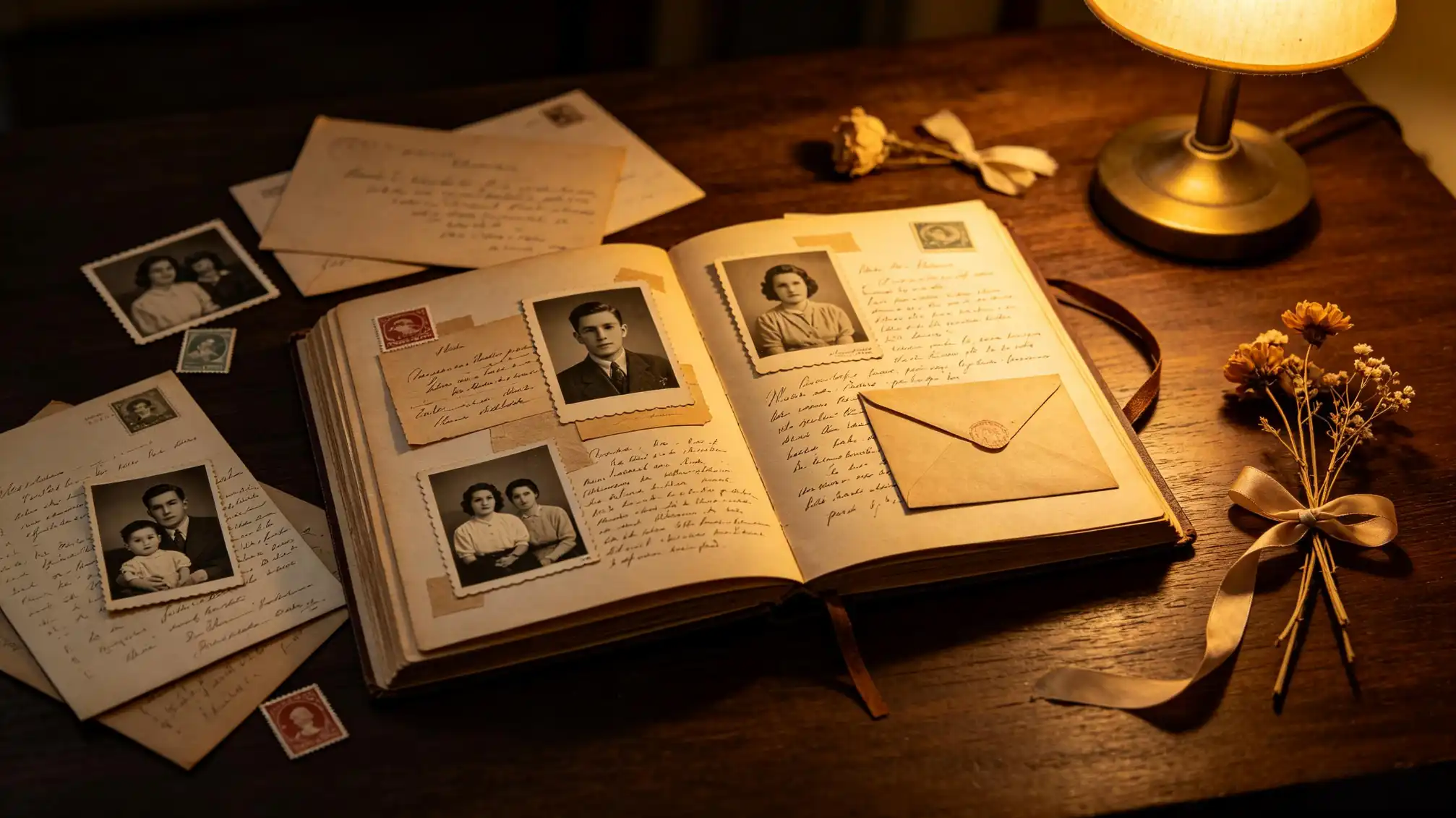
Begin by Knowing What You Hold
Start your preservation project with a gentle inventory. Gather all your family photos in one room — not to overwhelm yourself, but to understand the scale. Separate them into simple groups: portraits, candid shots, holiday gatherings, military, and unfamiliars you cannot identify. As you sort, resist the urge to clean them with household products. Old paper and emulsions are more fragile than they look.
Handle photos by the edges and avoid wearing lotions or sunscreen. If your family photographs are sticky, dirty, or folded, don't try to repair them with tape or glue. Instead, slide them into polyethylene or archival polyester sleeves and set them aside for a professional to assess. Your goal is to preserve the original and the story behind it, not to make it look new.
Create a Catalog That Speaks to Your Family History
The most valuable part of any family photo is unknown until you know who is in it. A person standing alone in front of a car becomes a real ancestor once you write their name on the back — or better, on an accompanying note. Never write directly on the photo with a pen. Use a soft graphite pencil on the back of the photo if it has no visible image bleeding through, or place the photo in an archival sleeve and add a separate label.
Build a simple spreadsheet with columns for file number, year, location, people, photographer if known, and the one-sentence memory that goes with the image. Even a short note such as “Great Aunt Rosa after church, Brooklyn, 1954” turns a physical object into a family history document. You can later use that same catalog to organize your digital scans and share your family memories with relatives whom you may not know yet.
Digitize Your Family Photos With Intention
Scanning is about balance. You want enough detail to create a meaningful digital file without spending years forever behind a scanner. For most printed photos, a resolution of 300 to 600 DPI is enough to produce a clear copy that can be printed again at the same size. For very small photos or those with fine details, go higher.
Choose non-lossy file formats such as TIFF for the master archive, and save JPEG copies for sharing with family members. Each scan should have a clear, consistent file name, for example 1924-Olsen-wedding-001.tif. When you share, use a shared folder or a private family gallery so relatives can download their own copies. This also protects your family history if something happens to your computer.
A backup routine matters as much as the scan. Follow the “3-2-1 rule”: keep at least three copies, store them on two different media types, and keep one copy offsite. Cloud storage is convenient, but don’t rely on a single provider alone. Place a copied drive in a safe box at a relative’s house or in a home safe if you cannot find an alternative.
Know the Signs of Damage Before It Reaches Your Ancestors
Damage does not happen all at once. It creeps in through sticky album plastic, warm attics, moist basements, and direct sunlight. If your family photos are stored in the garage or in a spot that feels damp, move them. Aim for a room that is cool, dry, and consistent in temperature. Avoid basements and external walls where condensation can form.
Watch for fading around the image edges, small yellow or brown spots from mildew, and curling from humidity. When you spot early signs, separate the offending photograph from the rest of your family memories. Replace that old magnetic album cover with an archival box. A good storage box should be acid-free and slightly oversized so photos do not bend.
Pass On More Than the Paper
The hidden value in your family photos will be unlocked when someone tells you the names behind the eyes. If you still have older relatives who can identify people and places, make it a mission to sit with them while you bring your newly organized prints or scans. Let them talk without rushing. Write down their words and add those details to the catalog.
One of the most meaningful ways to preserve those moments is to build a family stories page where oral memories meet your image collection. You can share the entire arc of your family memories with close and distant relatives at https://www.familylove.love/stories as a natural action reference — connecting the photo to the voice that can still speak to the next generation. Ancestors may not be here, but those who remember them are.
Make Copies the Old-Fashioned Way, Too
Digital files are wonderful, but physical copies still have a role in your preservation plan. Many grandparents, aunts, and uncles will never open a shared drive, but they will gather around the kitchen table with a handful of beautiful prints after dinner. Print duplicates of your most important images on good archival paper or through a specialty photo lab. Then use those prints as a way to encourage relatives to name more faces.
Write reminder notes on the back of sturdy copies, not originals, and mail them to cousins who live far away. This small act creates another layer of protection. If your house floods or an online account is lost, a family still holds real family memories in their hands.