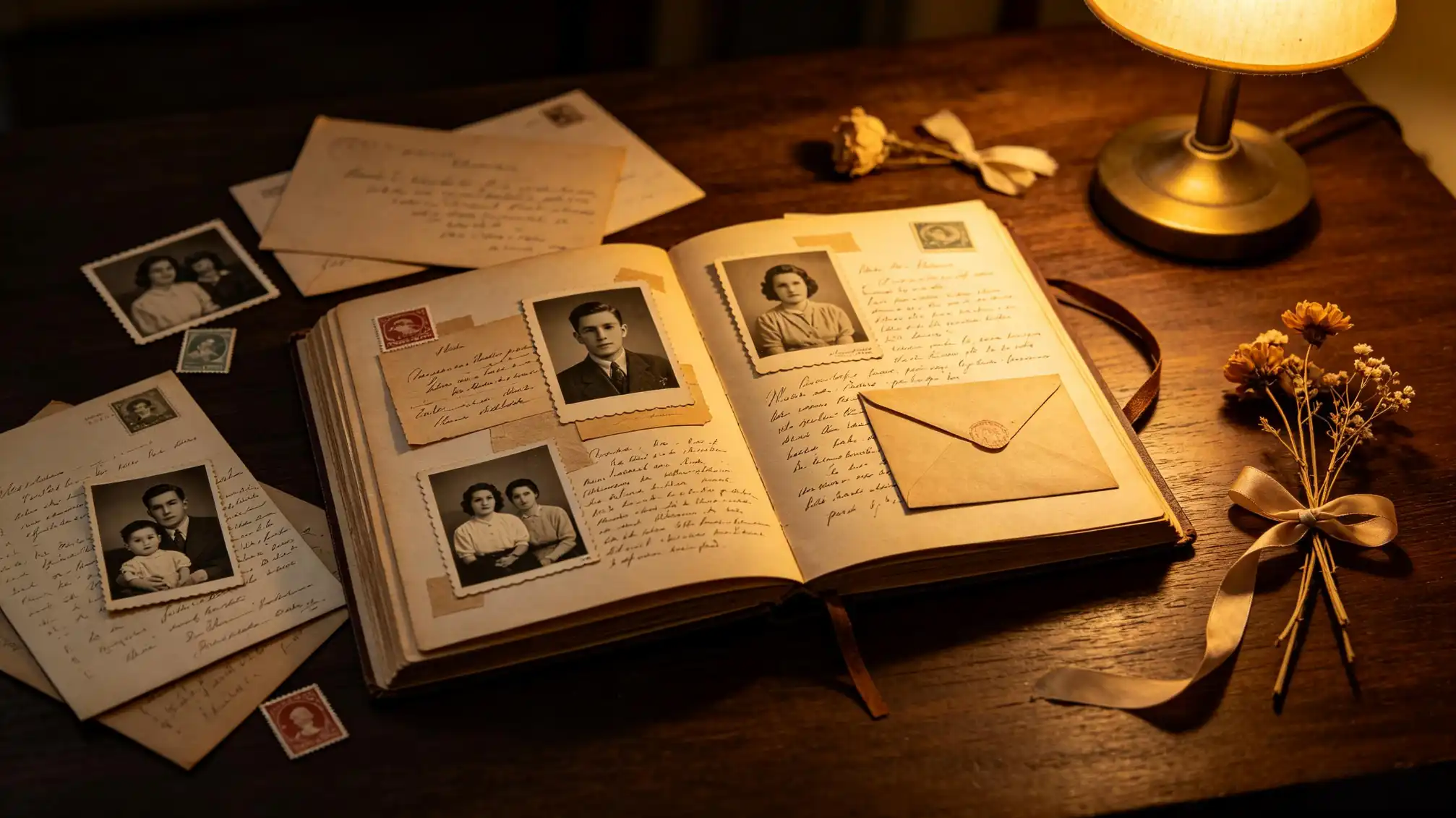
Every family has a shoebox, a drawer, or a faded album where time seems to stand still. Inside, old family photos hold the smiles and Sunday faces of people we only half remember. Keeping them safe is not just about saving paper — it is about passing on family history to the people who will one day ask, “Who was she?”
An old photograph of one ancestor can unlock the family history of a dozen future ones. You don’t need a professional studio or expensive equipment to protect them. You need good habits, a little patience, and the right questions to turn fragile keepsakes into living family memories.
Why Old Family Photos Need a Quiet Kind of Care
Light fades the details that once made your grandfather’s eyes sparkle. Humidity makes prints curl and stick together. Heat turns glossy faces brittle, and a dusty attic can erase the names that someone penciled on the back. Ordinary office folders, rubber bands, and unsealed plastic sleeves often contain acids that slowly eat into the image layer, leaving stains you only notice years later.
When you know how time damages prints, you begin to see why so many family trees have missing faces. The good news is that preservation is mostly about small choices: storing photos in a cool, dry room, handling them with clean hands, and creating digital copies while the originals are still bright.
Begin with the Names Before You Begin with the Frames
You can learn more from old family photos by listening than by scanning. On your next family visit, bring out one or two images and ask the oldest relative to name everyone, even the people in the background. Write down the place, the occasion, and the year on a separate sticky note. Ask about inside jokes, favorite meals, or the reason someone is laughing in that corner of the print.
During these conversations, avoid pressing a pen directly onto the photo. That might feel helpful, but it damages the emulsion. Instead, capture the voice and the scene. As you collect these details, each picture becomes a fuller piece of family history. If the conversation sparks a longer story, use our family stories space to gather voice notes, old letters, and memories from relatives who cannot join you at the table.
A Scanning Ritual That Gives Old Family Photos a Second Life
Scanning is the kindest gift you can give a fragile photograph. Once a print is safely scanned, you can share it widely without handling the original. Always choose a flatbed scanner — not a document feeder with rollers that might crease a worn corner. Place the photo face down on clean glass, close the lid gently, and scan at 300 to 600 dpi. If you plan to crop or enlarge later, 600 dpi gives you room to breathe.
Save the master copy as a TIFF or PNG so no extra digital compression steals detail. Then save a smaller JPEG copy for phone sharing and social media. Scan the back of each photo as well. Handwritten names and dates like “Aunt Marie, 1941, Chicago” are often more precious than the image itself. Clean hands, a soft brush for dust, and a patient finger are all you need to avoid scratching the surface.
Give Physical Originals a Safe Home
After scanning, treat the original print like an artifact. Look for acid-free boxes, archival photo sleeves, and folders made from buffered paper. Avoid magnetic albums that stick to prints, kitchen drawers that warm up every time someone cooks, and garage shelves where moisture changes season by season. A metal cabinet in a closet inside the house is a stronger protector of ancestors than an attic on a summer afternoon.
If you find a stack of old negatives, store them separately in archival paper sleeves and place those sleeves inside a tightly closed plastic container. Many families accidentally separate negatives from prints, then lose the connection between them. Add a small label to the container with the surnames and approximate years included inside. That tiny step saves future historians from endless detective work.
Use File Names That Children’s Children Will Understand
Old family photos become family history when someone who never met you can make sense of them. A digital file named img_001.tif tells future generations nothing. Instead, build a simple pattern such as Year_Lastname_Firstname_Event.tif. For an example, 1938_Meyer_Anna_GrandparentsWedding.tif immediately paints a picture. If you are not sure about the year, write Undated_Meyer_Anna_Wedding.tif and let a younger relative fill in the blank later.
Add a short “Read Me” note in every folder to say who you think the people are, where the photos came from, and which relative helped identify them. This kind of side card is easy to ignore now but priceless in twenty years. It turns scattered family memories into a searchable family history archive that can grow with each generation.
Share Family Photos Without Hurting the Originals
A photo hidden in a safe box protects the print but silences the memory. Make printed copies for each branch of the family, or build a personalized photo book for a grandparent instead of passing around the original album. Digital frames on the kitchen counter also let family photos become part of daily conversation. The more your children see the faces, the more the faces become familiar.
When you decide to share original photos, do it on a stable table with clean, dry hands. Encourage relatives to tell the story behind each picture while they hold it, then return the photo to the sleeve before opening the next one. Do not let the fear of imperfection stop you. An imperfect photo with a remembered voice is worth more than a thousand untouched scans. If you choose a cloud service, organize the folders by surname first, then by occasion, so everyone knows where to look.
Keep Family Memories in Everyday Routines
Family history does not belong only in albums and boxes. Well-cared-for family photos can become a wall at the next reunion, a weekly story time, or a collaborative school project. Teach children to hold photos by their edges and ask them what they notice in the background: an old car, a neighborhood sign, a Sunday dress. Their questions often reveal details older relatives have forgotten to mention.
As you build this archival habit, remember that you are safeguarding something more precious than paper. You are protecting the laughter, the courage, and the ordinary beauty of your ancestors. With a little patience, your old family photos will remain bright enough for the next generation to open and ask, “Who are these people?” Then they will know.