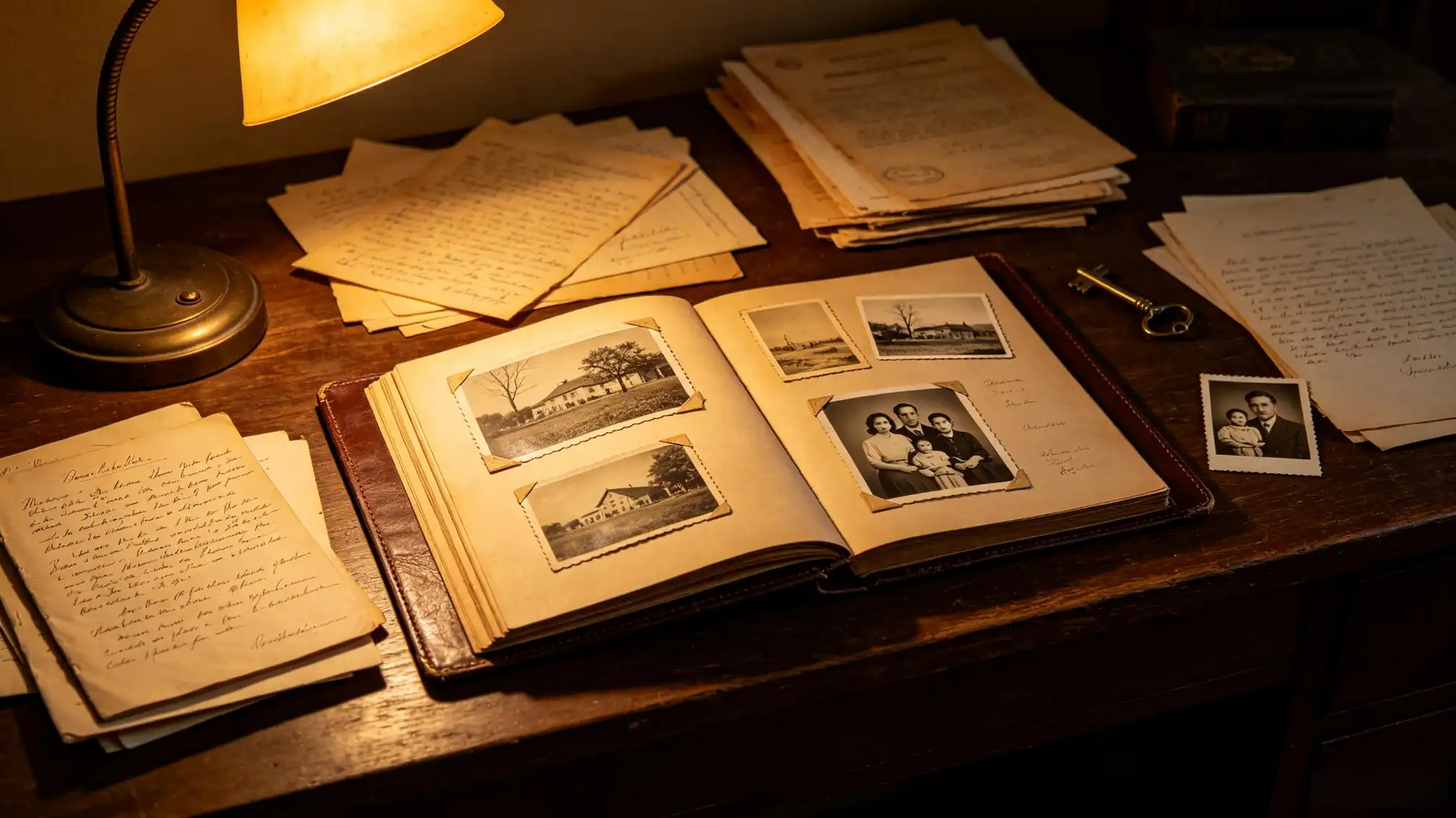
Genealogy can feel like opening a door to a thousand rooms. You might be chasing a surname online at midnight or trying to make sense of an inherited shoebox full of letters. But the most direct way to meet your ancestors is not through random scrolling; it is through evidence. Professional family historians begin with a simple premise: every fact on a family tree must stand on a source.
Begin with a Home Archive
Start at your own house. Before touching public databases, gather everything that mentions a date, place, or relationship. These items are not final proof, but they will tell you which records to request and which relatives to question.
- Family Bibles with birth, marriage, and death entries
- Letters, diaries, and postcards that name hometowns or relatives
- Passports, citizenship papers, and passenger lists
- Military discharge papers and draft registrations
- Funeral cards, mass cards, and obituary clippings
- Photograph albums with labeled names and studio imprints
Make a simple inventory for each item: who gave it to you, what names appear, and where you stored it. This is your home archive. From it you will develop a list of research questions. For example, if a funeral card says your grandfather served in a specific regiment, you know exactly which military records to request.
Interview Family Members While You Still Can
Your oldest relatives carry knowledge that is not written anywhere. Sit with them and ask open-ended questions: What did they call their grandmother? Where were they living during a major event? Which relatives seemed to dislike each other, and why? These details fill in the texture that records cannot supply.
Record the conversation if the person agrees. Afterward, create a short summary with names, dates, and places mentioned. Ask follow-up questions using an old photograph or a letter. This often unlocks memories that direct questions miss. For models of how other families have captured these conversations, browse the family history examples at Family Love Stories. The process is simple: a shared story becomes the starting point for a deeper search.
Build a Citation-Based Family Tree
Type every name into a family tree program or a chart, but do not connect two generations until you can explain how you know the relationship. Move backward one generation at a time. If you have a birth certificate for your great-grandmother and a marriage record that gives her parents’ names, you now have a legitimate bridge to the previous generation.
Core records that anchor a family line
- Birth, marriage, and death certificates
- Census schedules, national or local
- Church registers of baptism, marriage, and burial
- Probate and land records
- Naturalization and immigration documents
For each source, write a short citation: where you found it, the repository or website, the record number, and the date you viewed it. This habit saves you from redoing work and allows other researchers to test the same evidence.
Correlate Evidence Before You Connly
A single piece of evidence is not enough. Two sources may agree on a name but disagree on a birthplace. Let those contradictions guide you. Look at neighbors, in-laws, and witnesses in documents. A marriage record often lists an uncle as a witness; a census page can show a cousin living next door. These peripheral names are frequently the keys that unlock an entire family line.
Use DNA as a Research Tool, Not a Conclusion
DNA tests are popular because they feel precise, but the results are best understood as clues. If you match a second cousin, you can build a shared family tree from a common ancestor. If you match many descendants of a particular surname, you can form a hypothesis and then test it with paper records. DNA rarely tells you exactly how you are related; it tells you where to look. Start with one older relative, preferably from the generation above you, because their DNA contains more information about your direct ancestors.
When You Hit a Wall, Widen the Circle
Most genealogy walls are built from too narrow a focus. If direct records do not reveal your third great-grandfather, study his siblings, his wife’s siblings, and the godparents on his children’s baptism records. Look for land purchases next to people with the same surname. In many cases, a surname changes because of an informal adoption, an orphan court, or a second marriage. Cluster research will show you patterns that no single certificate can explain.
Remember that your family history is not merely a list of names and dates. It is a collection of daily decisions, migrations, hopes, and losses. Once you verify a line, write a short story about it. Name the record that made the connection and explain why the conclusion feels reliable. This makes your research useful to future generations.