Tracing Your Ancestors Step by Step: A Practical Blueprint for Rebuilding Family History
Every family tree begins with a simple question: who were the people who came before me? The urge to know your ancestors is natural, but the research can feel overwhelming once you open a genealogy website and see millions of records. The good news is that professional researchers rarely start with databases. They start at home, with names and dates they can already trust, and they work backward from one generation to the next.
This guide will show you how to trace your ancestors in a clear, repeatable way. You will learn where to look, how to organize what you find, and how to separate solid evidence from family rumor.
Start with What You Already Know
Your own memory is the first archive. Write down every detail you already know about your parents, grandparents, and great-grandparents. For each person, record full legal names, birth dates, birthplaces, marriage dates, and death dates. Even approximate information helps, because it gives you a target when you search official records later.
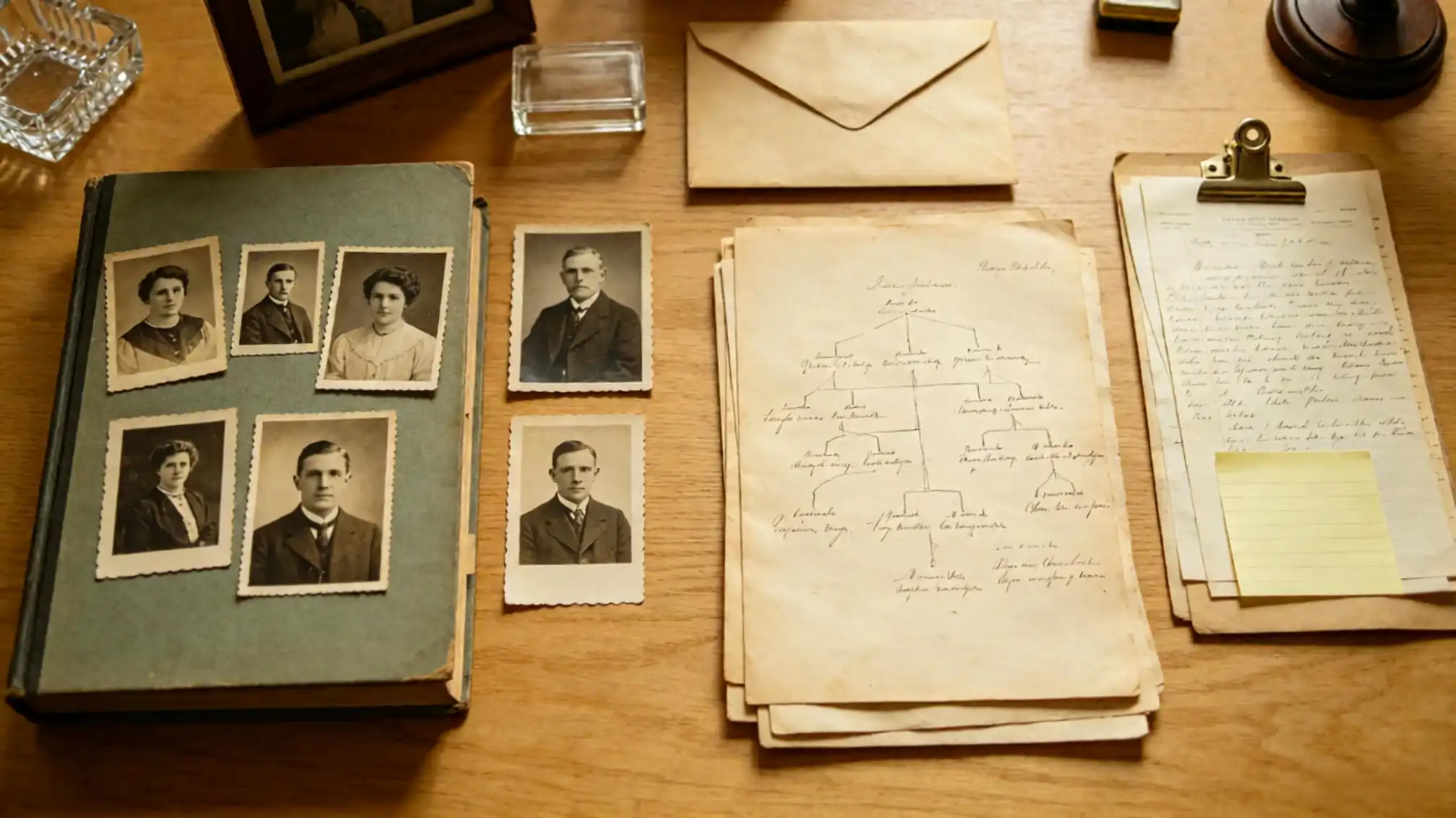
If you have old letters, funeral programs, photo albums, baby books, or family Bibles, go through them item by item. A photograph may have a relative name written on the back. A funeral card may list surviving family members and a burial plot. These small details often become the exact tools you need to locate census records, obituaries, or military files.
Interview Older Relatives Before the Details Disappear
The most valuable source for tracing your ancestors is often the person sitting in the next room. Older relatives hold memories of names and events that may never appear online. Ask open-ended questions such as “What was your mother like as a child?” or “Did anyone in the family immigrate to this country?” Let the conversation move naturally. Names of neighbors, ships, towns, and military units will come out if you give the speaker time.
Record the interview with permission, then create a short transcript. Keep the original audio if you can. Genealogy is not only about facts; it is also about the texture of daily life. Those details cannot be found in a birth register.
Organize Your Findings into a Family Tree
As soon as you collect names, create a simple family tree structure. You do not need special software at first. A spreadsheet with columns for name, date, place, relationship, and source will work. However, a proper genealogy program or online tree tool helps because it links spouses and children and keeps source citations attached to each fact.
Start with your parents, then move to your grandparents, then to your great-grandparents. Work backward one generation at a time. Do not jump backward to a famous surname before you have documented the generations in between. That is how family trees become corrupted.
Use Vital Records to Prove Each Life Event
Birth, marriage, and death certificates are the backbone of official family history research. County clerk offices, state archives, church registers, and civil registration offices all store these records. For each ancestor, try to find a civil certificate that matches every major life event you recorded from memory or interviews.
Remember that record availability varies by place and time. In the United States, state-level vital registration became common in the early twentieth century. For earlier periods, you may need church baptism and burial records, which often predate civil systems.
Work Backward from a Known Event
One of the most effective techniques for tracing ancestors is choosing one confirmed event and using it as an anchor. For example, you know a great-grandmother was born in Poland in 1905. Search for her arrival record, naturalization papers, census entry, marriage certificate, and death record. Each document adds a clue about her place of origin or her parents.
When records offer conflicting information, note the discrepancy and evaluate the source. A gravestone may give an incorrect birth year if the family did not know the true date. A death certificate relies on a grieving family member who may misspell a maiden name. You resolve conflicts by weighing the most reliable original records.
Fill Gaps with Census and Household Records
Census records are remarkably useful for building a picture of your ancestors every ten years. They list household members, ages, occupations, addresses, and relationships to the head of household. In some countries, census records also include immigration year, language, parents' birthplaces, or education status.
Search every census that was taken during the ancestor's lifetime. Compare the entries over time. A new child in the census may reveal an approximate marriage date for the parents. A widowed mother-in-law living with the family may reveal a wife's maiden surname or the family's migration route.
Expand Your Search with Original Documents
Vital records alone will not tell the full story. To truly trace your ancestors, you need land deeds, probate records, wills, tax lists, military pension files, naturalization records, passenger arrival lists, and court documents. These records often mention parents, siblings, and neighbors when no other source does.
Wills are especially powerful. A will may name a deceased wife, married daughters by their married surnames, sons who inherited land, and grandchildren who were minors. Probate records can solve a family researcher's most stubborn problem: two different women with the same married name in the same town.
Verify Every Generation with a Paper Trail
A family tree is only as good as its sources. For each ancestor on your tree, aim to have at least two independent records confirming that person's birth, marriage, and death. If possible, use records created while the person was alive. A death certificate is useful, but a marriage or baptism record is usually more reliable because it was created closer to the event.
Keep a source list for every fact. Write down the archive, collection, certificate number, or website where you found the information. If you cannot verify a story, keep your note in the ancestor's file with a clear label such as “family tradition” instead of presenting it as proven.
Preserve the Family History You Rebuild
Genealogy is not just a list of names. The purpose of tracing your ancestors is to reconnect with the people who shaped your family. Once you verify a generation, write a short biography for each ancestor. Include the dates, places, jobs, migrations, and the stories your relatives shared. Old photographs, recipes, letters, and newspaper clippings make the family history personal.
If you uncover a memorable story or a useful record, consider sharing it with your relatives on the Family Love stories page. Other family members may spot an error or add a detail that takes your research deeper.