Genealogy is one of the most personal forms of history. You are not just collecting names; you are trying to understand why your family moved, how they survived, and who kept their traditions alive. For a newcomer, that can feel exciting and a little overwhelming. The good news is that the core genealogical methods are simpler than they look. You do not need a degree, a paid subscription, or an enormous pedigree chart. You need curiosity, a few good questions, and a practical way to organize what you find.
Begin with the Family Tree You Already Know
Many people imagine genealogy as a search for a famous ancestor or a long-lost branch. In reality, it starts with the people you can list from memory. Take a blank sheet of paper and draw a simple family tree: write your own name, your parents, and your grandparents. Include dates and places if you know them, but leave blanks wherever you have doubts. Those blanks are not problems. They are your research to-do list.
Once that chart exists, you have a visual reminder of the shape of your family. You can also see which relationships need evidence. For example, if you know your grandmother's name but not her maiden name, that gap becomes your first question. This beginner step is valuable because it teaches you to define a research goal before you start looking.
Start by Listening to Your Living Family Members
Before you open any genealogy website, interview your relatives. Older family members hold details that no database can offer: the name of the street where your aunt was born, the church where your grandparents worshiped, or the real reason the family moved across the country. Treat relatives as the first curators of your family history. Their memories are clues, not assumptions.
Open-ended questions often work best. You might ask:
- What do you remember about the house where you grew up?
- What kind of person was your grandfather when he was young?
- Why did our family settle in this part of the world?
- Have you ever heard stories about an ancestor from three or four generations back?
Write down the answers as soon as you hear them. Record the date, the speaker's name, and your relationship to that person. If you want to preserve the fuller memory, consider adding it to the family story collection at https://www.familylove.love/stories. That page is a natural place to store the voices behind your ancestor research.
Look Inside Your Own Home for Ancestor Clues
You do not need to visit an archive on your first day of genealogy. Look through closets, drawers, and old boxes. Family Bibles, letters, report cards, military records, naturalization papers, obituaries, wedding invitations, diaries, and funeral booklets can all reveal dates and relationships. These are the kinds of primary sources that keep family history grounded in evidence.
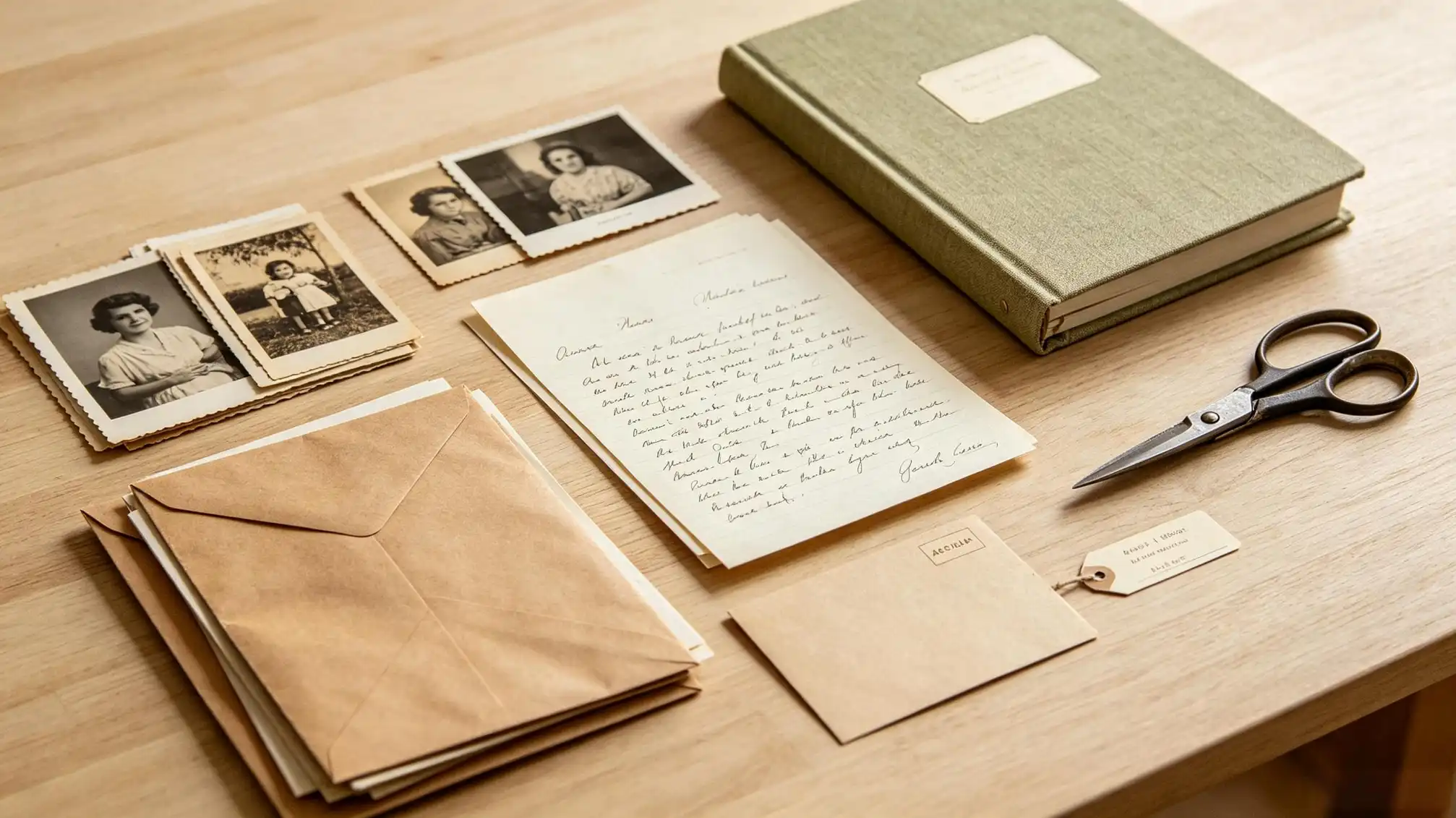
After collecting those materials, label every photograph or document with names, dates, and places whenever possible. If you do not know the identity of a person in a photo, write Unknown and jot down where the object was found. Old photos often carry clues such as a studio address, a faded postmark, or clothing that points to a decade. Those details help later when you search for the next generation of ancestors.
Create a Simple Research Log
Once you begin to search record collections, resist the urge to open many websites at once. Instead, start a research log. A simple notebook works; a spreadsheet is even easier. For every search, write the ancestor's name, the record type you looked for, the website or archive you used, and the result. This single habit will save hours and reduce repeated genealogy dead ends.
Your log should also hold your goal. If you are trying to identify your great-grandmother's parents, write that question at the top of the page. When you find a possible match, ask yourself whether the source proves the relationship or simply shows the same name. In family history, a fact without a source is just a good guess.
Trace Ancestors One Generation at a Time
After you have built a small framework, choose one ancestor and go back one generation at a time. If you have your father's birth date, try to find his parents in the census around that time. Then look for the civil birth and marriage records that confirm the family relationship. Church records, cemetery markers, and probate files can fill in places where civil records do not exist.
Do not skip a generation just to reach a more distant ancestor. One of the most common genealogy mistakes is adding a person because the name and location seem right. Your own research log and source notes will protect your family tree from those errors.
Keep the Human Story at the Center
Genealogy is not a race to see how many names you can list. It is a way to honor the people who came before you, including the ones who left little behind. As you collect evidence, keep asking what those records reveal about daily life. A ship manifest can tell you when an ancestor arrived, but an old letter tells you what they hoped for. The two together create richer family history.