{
"title": "The Family History Questions That Turn a Quiet Relative Into a Storyteller",
"metaTitle":Family History Questions to Ask Older Relatives | FamilyLove",
"metaDescription": "Practical family history questions to ask parents, grandparents, relatives before the stories disappear. Use these thoughtful prompts to start real conversations.",
"summary": "The best way to collect family history is to ask small, vivid questions. This guide gives conversation-ready prompts and simple tips for recording relatives’ stories.",
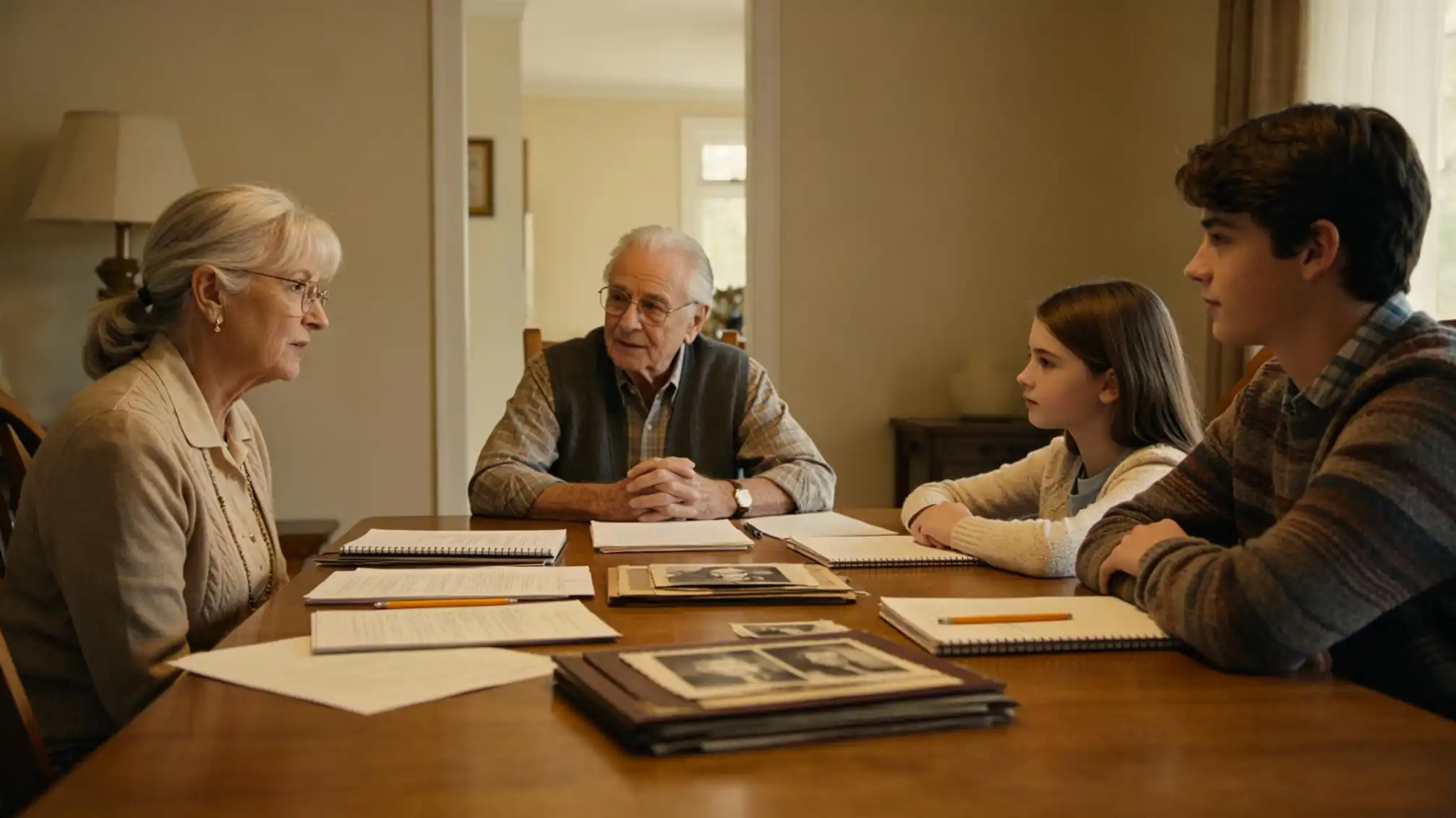
"contentHtml": "<h2>The Secret Behind the Best Family History Questions</h2><p>When you sit down with a parent or grandparent, the easiest question is also the least useful: “So, tell me about your life.” It sounds warm, but it is too big for a person to hold. One week of memories is already more than enough; a whole lifetime is impossible to sum up in a single answer.</p><p>Good family history questions work because they are small and precise. They say: I want to know what your bedroom looked like. I want to know how your mother laughed. I want to know what you were afraid of when you were nine.</p><p>You do not need professional recording equipment or a printed interview form. You need a quiet afternoon, a few openers, and the patience to let someone think without rushing to the next question.</p><h2>Start the House They Grew Up In</h2><p>Memory is often tied to place. The fastest way to open a family story is to ask about the rooms where daily life happened.</><ul><li>What could you see from your bedroom window?</li><li>Where did everyone sit at dinner, and who always arrived late?</li><liWhat sounds drifted into the house early in the morning?</li><li>Which part of the house did you avoid, and why?</li><li>What did the neighborhood smell like after rain?</li></ul><p>If your relative answers with one short sentence, do not panic. Ask a follow-up like “What was the color of the kitchen?” or “Who usually cooked in that kitchen?” The second question is often the one that unlocks a real story.</p><p>For more examples of how ordinary conversations become family treasures, browse the stories page at <a href='https://www.familylove.love/stories'>https://www.familylove.loveories</a>. Seeing how other people chose their questions can make your next visit feel easier.</p><h2>Ask About Their Parents With Care</h2><p>Some of the richest family history comes when you ask grandparents about their own mother and father. These questions can feel tender, so slow down and leave space.</p><ul><li>How did your mother calm herself when she was worried?</li><li>What did your father love to do when he had a day off?</li><li>What did your grandparents worry about most?</li><li>What did your parents want for you that they did not have themselves?</li><li>Who taught your mother how to be a mother?</li></ul><p>Try to avoid questions that sound like a quiz. Instead of asking “Were you close to your father?” ask “What was your father like when he was tired?” The second question gives your relative permission to remember something complicated and real.</p><p>This is also the moment to pay attention to repeated phrases. If your grandmother says, “Your grandfather always said that,” write it down. Those repeated sayings are family values in disguise.</p><h2>Uncover Daily Life Before the Big Events</h2><p>Most family trees list births and marriages. The stories people actually retell are about a first bicycle, a surprise meal, or a winter when everyone slept in one room.</p><ul><li>What did you eat for breakfast before school?</li><li>How was laundry done when you were young?</li><li>What was the first job that made you feel useful?</li><li>What did you and your cousins do when the adults disappeared after lunch?</li><li>What did the inside of your family’s home smell like?</li></ul><p>These questions matter because they do not depend on dramatic events. They help older adults feel that their ordinary days worth remembering. Once you show that kind of interest, they usually begin opening older boxes in their memory.</p><h2>Explore School, Work, and the First Sparks of Love</h2><p>School and work were not just places where time passed. They were where a young person tested what they were capable of.</p><ul><li>Which teacher saw something special in you?</li><li>What subject made you forget to watch the clock?</li><li>What did you do with the first money you earned?</li><li>How did you and your partner meet, and what made you want to meet again?</li><>What did you expect your future to look like when you were fifteen?</li></ul><p>The final question is one of the gentlest ways to understand a full life. It lets your relative talk about the difference between a young dream and later reality without feeling judged.</p><h2>Make Space for Hard Chapters</h2><p>Do not rush to painful subjects. Build trust with lighter memories first. If your parent or grandparent brings up a difficult moment, stay calm and do not interrupt.</p><>Useful questions now are less frequent, but they run deeper:</p><ul><li>What was the hardest year in life, and who helped you through it?</li><li>How did your family handle loss before you were born?</lili>What did you about courage from someone older than you?</li><li>When did you feel most alone?</li></ul><p>If your relative says they would rather not go there, honor that wish. Thank them for telling you as much as they did. Respect is the real foundation of every family history interview.</p><figure><img src='https://r2.familylove.love/static/seo/interviewscene3.webp' alt='Person asking an older relative family history questions while recording the conversation' loading='lazy' /><figcaption>Record the conversation with a simple recorder or phone so you stay fully present.</figcaption></figure><h2>Let Photos and Objects Do Some of the Work</h2><p>An old photograph is often better than any list of questions. Spread a few pictures across the table and ask which one your relative wants to talk first.</p><ul><li>What was happening just before this photo was taken?</li><li>Who was standing just out of the frame?</li><li>Who took this picture?</li><li>How did this object end up in your houseli><li>What did this person teach you without saying a word?</li></ul><p>People are usually more comfortable looking at a photo than sitting under a spotlight. The question becomes about the picture, and the emotions feel safer.</p><h2>Let Them Choose How Their Story Continues</h2><p>Before you pack up the recorder, ask a question that looks forward.</p><ul><li>What do you want future generations to know about the life you?</li><li>What piece of family wisdom should never disappear?</li><li>Which story should I pass on to children and grandchildren?</li></ul><p>These closing questions give your relative a sense of purpose. They are not just answering family history questions; they are choosing will survive. They become the family historian too.</p><p>Record your conversation somewhere visible, then try to forget the is there. Keep your notebook open, nod often, and let the silences breathe. A pause often means the best memory is about to arrive.</p><h1>Practical Steps</h1><ul><li><a href='https://www.flove.love/stories'> real family story examples to see how these conversations unfold naturally.</a></li><li>For more checklists, recording tips, and additional family history questions, visit <a href='://www.familylove.love/docs'>https://www.familylove.love/docs</a>.</li></ul>",
"images": [
"https://r2.familylove.love/static/seo/interviewscene3.webp"
]
}