When people decide to record their family history, they often imagine a perfect family tree stretching back centuries or a bound book filled with every surname, date, and photograph. But the most meaningful family histories are not born in archives or on genealogy websites. They begin at the kitchen table, with a mess of old photographs spread out over tea, and with one question you finally remember to ask.
If you have been putting off this work because it feels too big, this guide is for you. Let go of the idea that you need to know everything. Instead, think about recording your family history as preserving one important family story at a time, gathering the small details that make your ancestors feel real, and leaving a trail of memory for your children and grandchildren.
Why Recording Family History Matters More Than You Think
Family history is not just a list of names and dates. It is the reason your grandmother insists on making certain holiday dishes. It is the courage your great-grandfather carried when he moved to a new country. It is the quiet way your mother learns to heal after a difficult year. When we record those stories, we build a bridge between generations.
Psychologists and family researchers have found that children who know stories about their relatives tend to have a stronger sense of identity and resilience. They understand that they belong to something larger than themselves. That understanding is one of the most beautiful gifts you can give your family. And it does not require diplomas in history or a lifetime of research. It simply requires attention and a small amount of time.
A Fresh Approach: Start With a Single Story, Not a Full Archive
Too many people stop before they begin because they believe the first step is to build a complete family tree. Let us turn that around. The first step is to choose one relative and one memory. Maybe your uncle tells the same funny story about his childhood dog every Thanksgiving. Maybe your cousin remembers the wallpaper in your great-grandmother's kitchen. Perhaps there is an envelope of letters in a shoebox that nobody has opened since the 1960s.
That is your starting line. When you focus on a single story, the pressure disappears. You are no longer trying to rescue a thousand scattered pieces from the past. You are simply holding one small piece, polishing it, and making sure it will not be lost.
Listen for the Stories That Have Already Found You
Some of the best family stories are the ones that repeat themselves. Pay attention at reunions, dinners, and phone calls. The moment you hear someone begin with “Did I ever tell you about…?” you have found a thread worth pulling. Even stories you have heard many times can reveal new details when you ask the right follow-up questions.
Ask simple prompts that invite longer answers:
- What do you remember about the house where you grew up?
- Who was your closest friend as a child, and what did you do together?
- What did your parents or grandparents love to do for fun?
- What was a difficult moment that shaped you, and how did you get through it?
- Are there any family sayings, recipes, or traditions that came from your ancestors?
Choose Tools That Match Your Natural Habits
You do not need expensive software to begin recording family history. In fact, the best tool is often the one already in your pocket. A voice memo app on your phone is perfect for capturing a relative's voice as they tell a story. A small notebook works beautifully for writing down details you do not want to forget. If you prefer typing, a simple document titled with the person's name and the date can become the home for their memories.
What matters is consistency, not complexity. Give yourself a gentle goal. For example, record one ten-minute conversation with a family member each month. Set up a regular phone call with an aunt and write down the memories she shares. These small acts add up faster than you expect.
The Power of Voice Recordings
When you record a conversation, you capture more than words. You capture laughter, pauses, accent, and emotion. Hearing a loved one's voice years later is something a written summary can never replace. If you can, ask for permission and record openly. Then store the file safely with the person's name and date so it can be found in the future.
Look for Family Tree Clues in Ordinary Places
Your family history is already hiding in your house. Old photographs with names written on the back, a Bible with birthdates listed in the front, letters with postmarks, wedding invitations, military records, recipes in your grandmother's handwriting – all of these are clues that can lead you to your ancestors.
You do not need to organize everything in one evening. Instead, create a simple “memory box” where you can collect items as you discover them. When you find a name or date you do not recognize, write it on a sticky note and place it with the item. Later, you can search through family trees or ask older relatives to help identify the people in the photographs.
Build a Gentle Family Tree as You Learn
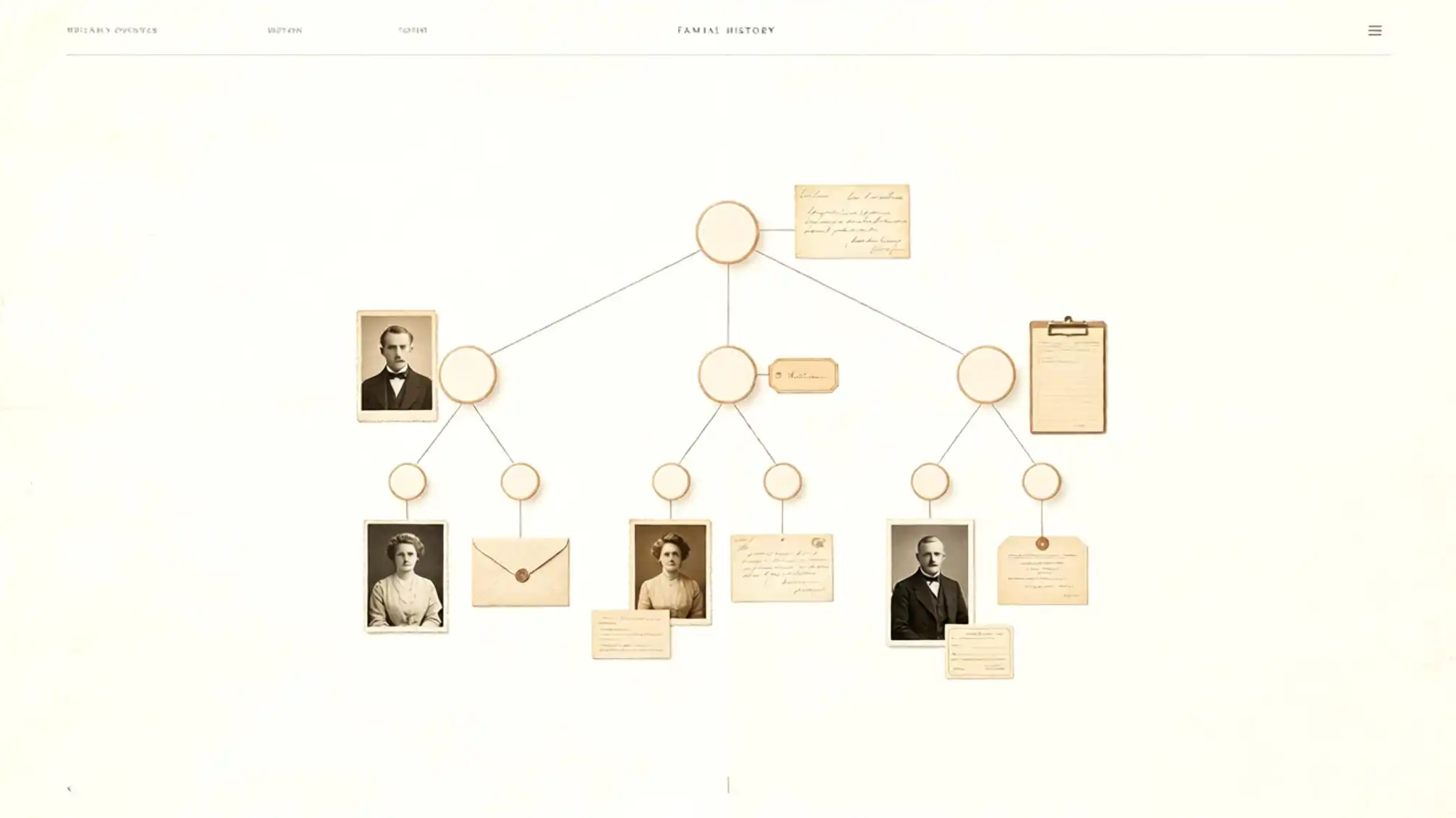
A family tree does not have to be perfect. It begins with the people you know best: your parents, their parents, and their parents. Fill in what you are sure about, and leave blank spaces for the things you still need to learn. Those blank spaces are not failures; they are invitations to ask another question.
As you collect family stories, you will naturally see relationships and connections. You may notice that great-grandpa and his brother had the same middle name, or that several cousins share a love for gardening. These human details turn your family tree from a chart into a portrait.
Ask Questions That Open the Door to Memory
Some relatives are eager to talk; others need a gentle beginning. If a loved one is resistant, invite them to remember in a way that feels comfortable. Ask about something sensory, like the smell of their mother's cooking or the songs played at a wedding. Memory is often unlocked by the senses far more easily than by dates and places.
Respect silences. Sometimes the most important memories are difficult to speak. Do not push. Simply let your relative know that you are there to listen, not to judge. The fact that you are willing to record family history at all may soften the door.
Write Down the Stories While You Are Still Touched by Them
After a meaningful conversation, take a few minutes to write down what you heard. Use your own words, but note the phrases that were distinctive. Did your grandfather describe his first job as “hard work and a happy heart”? Save those exact words in quotation marks. They are precious pieces of your family's voice.
If you are researching alone and do not have a living relative to interview, write down the memories you already have. Your own memory is an important record. Sit quietly and list the moments, people, and places you remember from childhood. Those memories are part of your family heritage, and future generations will treasure them.
Preserve What You Have Learned So Far
You do not have to finish before you can preserve. Every story you record is a complete victory. After you have gathered a handful of memories, decide how you want to store them. Options include a private digital folder, a physical binder, or an online space where family members can read and contribute.
For many families, the best way to preserve and share family stories is through a living platform that invites the next generation to add their own voices. If you are ready to create a shared record of the stories you have collected, consider creating a page at FamilyLove stories where you can reflect on the people who shaped you and remember together as a family.
Begin Today, Not Someday
Recording family history is not a race. It is a practice of attention, coming to the table with open ears and a curious heart. The very first recording you make, even if it is shaky and short, is a priceless gift to the future. Today is the best day to begin.