How to Build a Family Tree: A Peaceful Path from Parents to Ancestors
Family trees are more than diagrams. They are a time machine for memory and belonging. If you want to learn how to build a family tree without getting lost in old records, start where you are: with your parents, the grandparents who shaped your family's heart, and the stories that connect them. This guide keeps the process calm, honest, and small enough to begin today. You do not need a genealogy degree, only curiosity and a simple system for the beautiful chaos of relatives and ancestors.
Every grand tree grows from the ground upward. Your first two generations above you become the trunk and main branches. Once you record them with care, every later discovery has a sturdy home.
Start With the Three Generations You Already Carry
Before you search through ships, passports, or distant towns, place your parents and grandparents at the center of the tree. Write down these facts for each person:
- Full legal names, including maiden names
- Birth dates and birthplaces
- Marriage dates and places of residence
- Names of siblings when you know them
Keep the list simple. The goal is not to complete every branch in one afternoon; it is to give later research a foundation. Add a middle name, a small town, a family photo, one fact at a time. Each small clue becomes easier to place when you already know how that person connects to you.
Look Inside Your Home Before You Look at Databases
Your home is an archive. Old photo albums, birthday cards, passports, handwritten notes, ceremony programs, letters, and even heirloom recipes can reveal names and relationships. Make digital copies of original items when possible. Then focus on one drawer or box at a time and ask who appears in the material and where that person belongs in your tree.
Interview Relatives Like a Story Detective
Once you have the immediate generations in front of you, approach relatives for details. Ask your parents to describe their own parents and grandparents. Ask aunts and uncles to name cousins you barely met. Let silence exist; memory often surfaces after a pause. Record the conversation with permission and take notes for later.
Three questions that open deep memories
- What do you see when you think about your grandparents' house?
- Which family tradition do you wish we had kept?
- When did you first feel proud of our family's name?
These questions reveal character details that official records never capture. Write the answers in the speaker's own words. Their phrasing carries emotion, and emotion keeps the family tree alive for generations.
Organize Parents and Grandparents Before You Branch Further
It can be tempting to leap many generations back and chase far-off villages, but slower is wiser. Every ancestor creates a new set of relationships to verify. Organize you, your parents, and your grandparents first. Use a consistent note format such as surname plus birth year, and give each family branch its own page. Clarity today saves enormous effort later.
Visualize With a Simple Tree
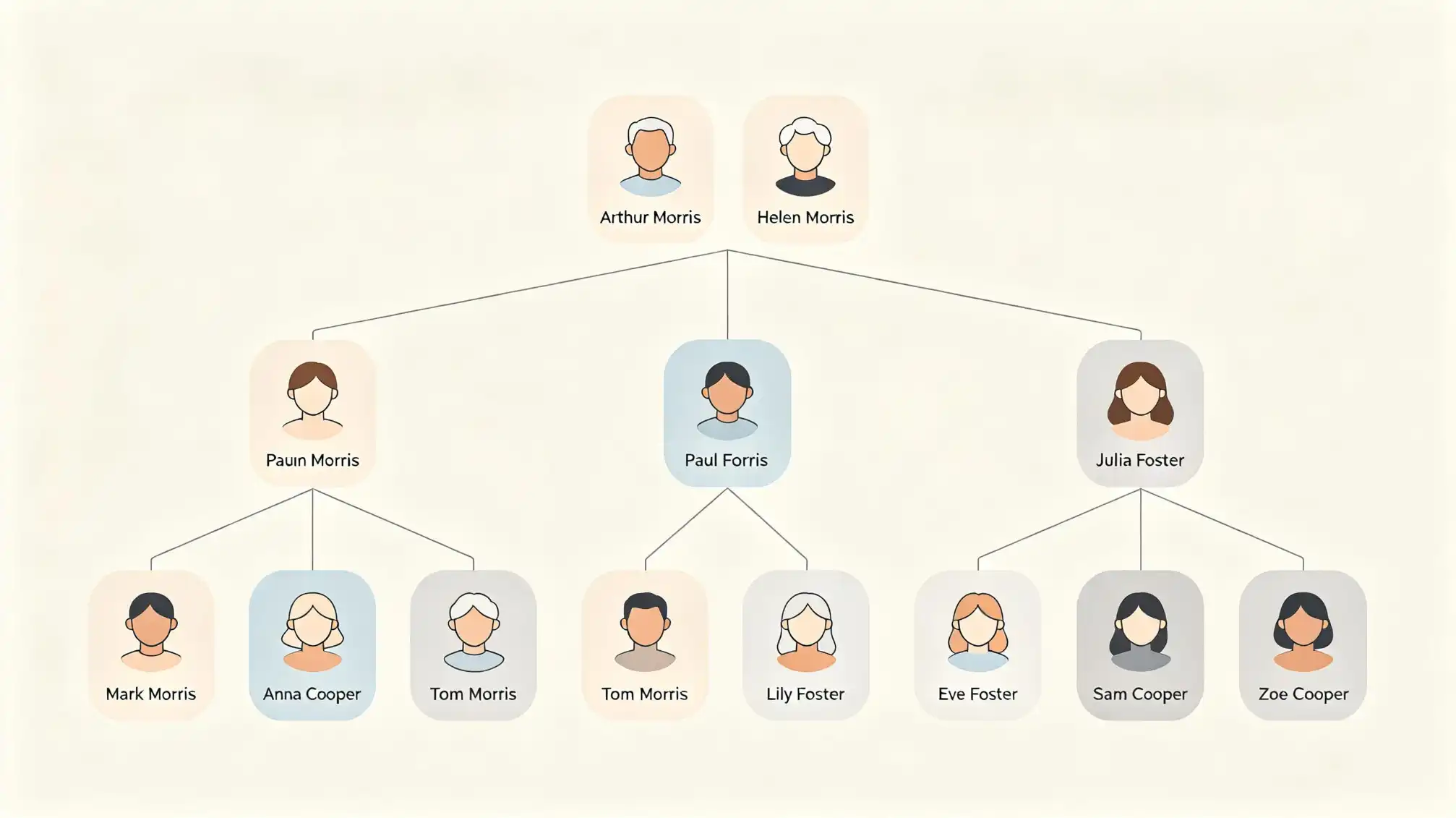
A family tree can be vertical, horizontal, or shaped around one ancestor. The best layout is the one that makes sense to the people who look at it. Start with a simple pattern:
- Place yourself at the bottom and branch upward to parents
- Branch upward again to each set of grandparents
- Add siblings and cousins as side branches
- Leave room for small notes beneath each name
Use paper, a spreadsheet, or a digital drawing board. Redrawing is okay. The first version is not a final artifact; it is a thinking tool.
Verify Gently Before Adding Ancestors
Stories about ancestors usually contain a grain of truth, but the grain can become polished with retelling. For important events, aim for two sources: an oral story plus an official document, or two separate oral accounts. Reliable places to look after you have the first three generations include civil registrations, census entries, church records, and local historical societies. Names and spellings vary, so write down the source and date for every discovery.
Invite Elders to Shape the Tree With You
Research becomes much more beautiful when it is shared. Show older relatives the tree you have built from their testimony and ask them to correct anything that feels wrong. Their corrections are quiet expressions of how they want their family to be seen. If relatives live far away, the family hub at FamilyLove gives you a private, caring place to gather shared memories and keep everyone connected to the same story.
Keep Ancestors Human
Names and dates are not enough. Parents and grandparents had favorite songs, painful losses, private jokes, and small rituals. Record affectionate details next to each name, such as always planted roses, sang off-key but loud, or kept every letter from home. Preserve exact phrases from relatives whenever possible. That is how a family map becomes a warm portrait, and how your tree continues to grow even when the names stop changing.