Family Tree for Beginners: Begin With the Stories You Already Own
Most beginner genealogists assume that a family tree begins with old documents, dusty certificates, and a clever search through archives. In reality, the strongest branches start much closer to home: with the voices, memories, and everyday details that your relatives have carried for decades. Before you open a blank spreadsheet or pay for a subscription, you can create the foundation of your entire family history using nothing more than a few questions and a willingness to listen.
Why Your Kitchen Table Is the Best Archive
The first place to begin is with the people who surround you. Parents, grandparents, aunts, uncles, cousins, and close family friends are living sources of history. Their memories may not always be exact, but they offer something no digitized record can: texture. A birth certificate tells you when a person was born; your grandmother tells you what kind of day it was, who came to visit, and how the family celebrated.
Start by creating a short list of relatives you can speak with this month. Do not worry about interviewing everyone at once. One patient conversation with an older relative usually leads to more names, more places, and more clues than a month of online searching. Ask open-ended questions such as:
- Who were your grandparents, and what do you remember about their house?
- What did your parents do for work, and how did the family spend holidays?
- Are there any family stories that have been told differently through the years?
- Where were the most important family events held?
Keep notes even when the story feels small. A casual remark about a neighbor, a school, or a street can become the detail that confirms a record later.
Give Your Family Tree a Shape That Works for You
Many beginners get stuck because they think they must choose the perfect software immediately. The truth is that a family tree can be built with paper, a whiteboard, a digital document, or a genealogy app. What matters is that the format fits the way your mind works.
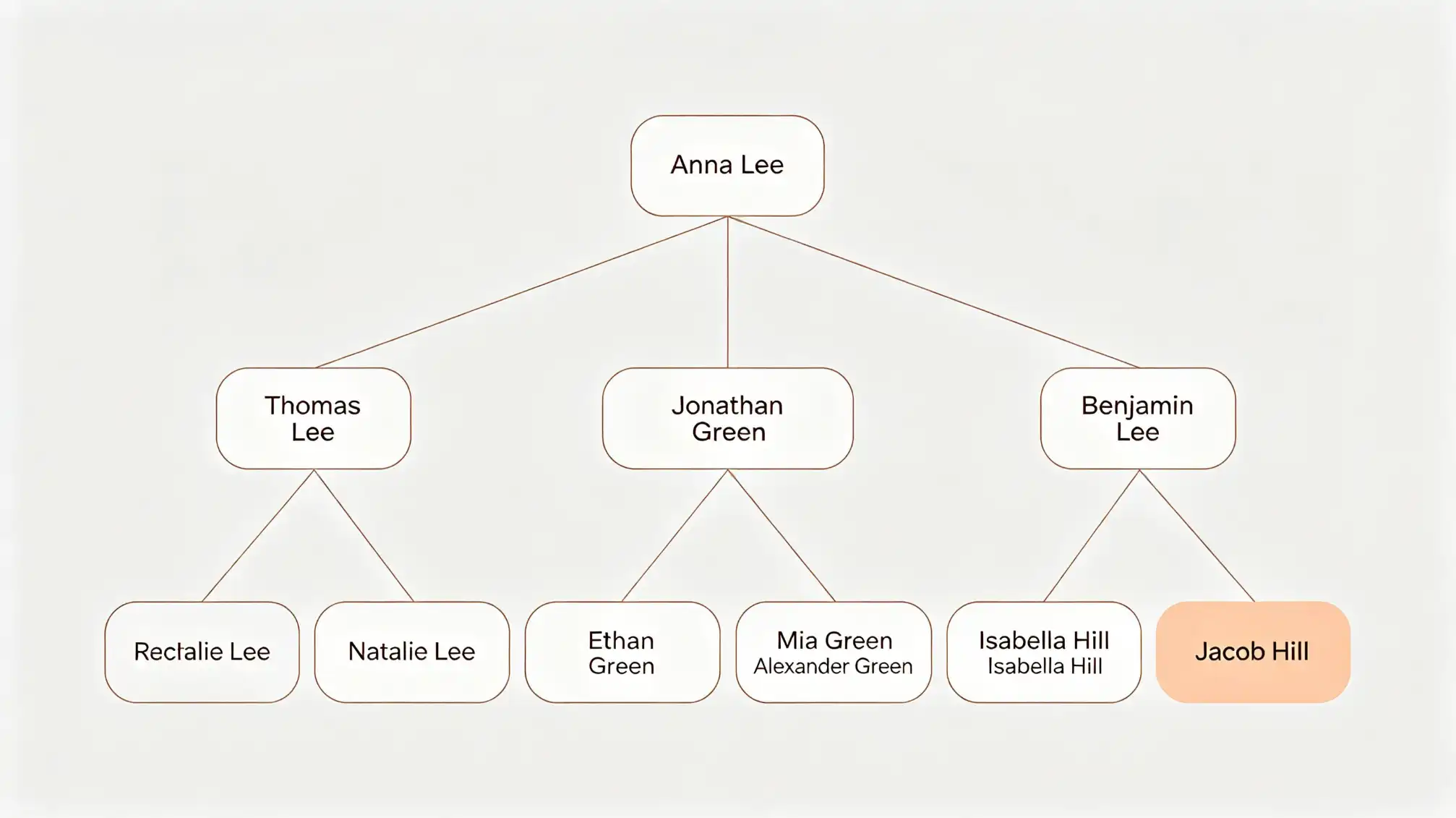
A simple visual structure works best for the first few generations. Put yourself or your oldest known ancestor at the base, then add parents above them, then grandparents, and then great-grandparents. Leave space beside each name for birth dates, death dates, and places. That empty space is a quiet reminder that the tree is not was a family tree is not something you finish in one afternoon.
If you enjoy a hands-on approach, sketch the chart on large paper and hang it where you will see it daily. If you prefer digital access, use an online family tree tool that lets you add photos and notes. The format matters less than your comfort with it. A family tree grows best when it is easy to revisit and edit.
Turn Relatives Into Collaborators, Not Just Sources
A common mistake among first-time researchers is treating relatives like one-time informants. You collect their memories and then disappear into records for months. A more practical approach is to create an ongoing conversation. When you share what you have learned, relatives remember more details and feel invested in the project.
You can also invite family members to help with specific tasks. One cousin may know how to scan printed photographs well; another may remember the names of people in group pictures; an older aunt may be able to translate old letters or identify the handwriting. By assigning small roles, you turn a solitary project into a shared act of remembering.
If you want to coordinate with the whole family, create a place where everyone can contribute. A shared hub helps when you are ready to post a photograph, ask a question, or share a newly discovered document. The family space at FamilyLove is a natural fit for this stage, because it lets you keep all those conversations connected to the family you are researching.
Move From Names to Lives
A family tree without stories is only a list. As you add names, train yourself to look for the life behind each one. If your great-grandfather was a farmer, what did that mean for his children? If an ancestor moved to a new country, how old was she when she boarded the ship? Those questions transform your tree into a family history that future generations will actually want to read.
Begin with what is obvious in your memories, then move outward into public records. Census returns, birth registrations, marriage certificates, ship manifests, and military service files can confirm the details you collected at the kitchen table. As you verify each fact, add it to your tree with a small source note. You do not need a complex citation system. A simple note like “birth record from the town registrar, 1912” is enough to keep you honest.
Use Research Gaps as Hooks for the Next Step
Every researcher encounters a missing maiden name or a confusing year of birth. Rather than seeing a gap as a failure, treat it as the next clue. Look again at the stories relatives shared. Did someone say the family came from a certain county? Did an old letter mention a nearby town? These fragments often point you to the right record set.
When you are truly stuck, pause and review the records you already have. Check whether names were spelled differently in different documents. Ask a relative if there is a Bible, letter, or photograph album hidden in a closet. Sometimes the most powerful clue is an item that seems too ordinary to matter.
Above all, stay consistent. Ten minutes of family history work each week will move you further than a single weekend of intense searching followed by months of burnout.