The Best Grandparents Family History Starts With Everyday Moments
Ask a grandparent about the formal side of their family tree and you might receive dates, names, and a proud mention of a ship's passenger list. Ask them to stand in the kitchen where their aunt used to fry potatoes, and they may remember the exact color of the oil, the song on the radio, and the boy who was not supposed to be there. That second story contains more grandparents family history than any family tree chart.
If you plan to collect oral history this year, you may have a list of family history questions stored on your phone. You want to know their relatives' birthplaces and every street they lived on. Those details matter. But a richer way to think about the work is to gather the texture of daily life before you try to form a timeline.
When home movies, photo albums, and old letters offer physical clues, the past feels close. Yet the glow of a screen or camera can break. The goal is to let your grandparents talk as they naturally would, not as if they are on a historical podcast.
Do Not Correct Memories, Preserve Them
As you begin listening to grandparents family history, you may notice small contradictions. Your grandmother insists her sister's wedding happened in May, though photographs suggest July. Let the date slide. If you stop to correct her, the story will lose its emotional center. You can verify the year later; the reason May means something to her belongs in the record.
Oral history is not an official archive. It is an invitation into another person's mind. If you listen for tone instead of precision, you will hear what made one aunt love visiting or why a brother never talked about the farm.
Let the Five Senses Open the Door
Sensory prompts can unlock what direct questions cannot. Instead of asking 'what year did your parents move', try asking 'when you walked into their new house for the first time, what did the rooms smell like and which step in the staircase squeaked'. Most people dismiss these kinds of memories, yet they anchor grandparents family history in ordinary life.
Sit close to your grandparent and keep your body language open. Hold a family object such as a worn apron or a pair of gardening gloves, then simply ask what that object remembers. If no object remains, use weather, the smell of bread, or the noise of a particular car engine. These cues feel like hanging out, not like an interview.

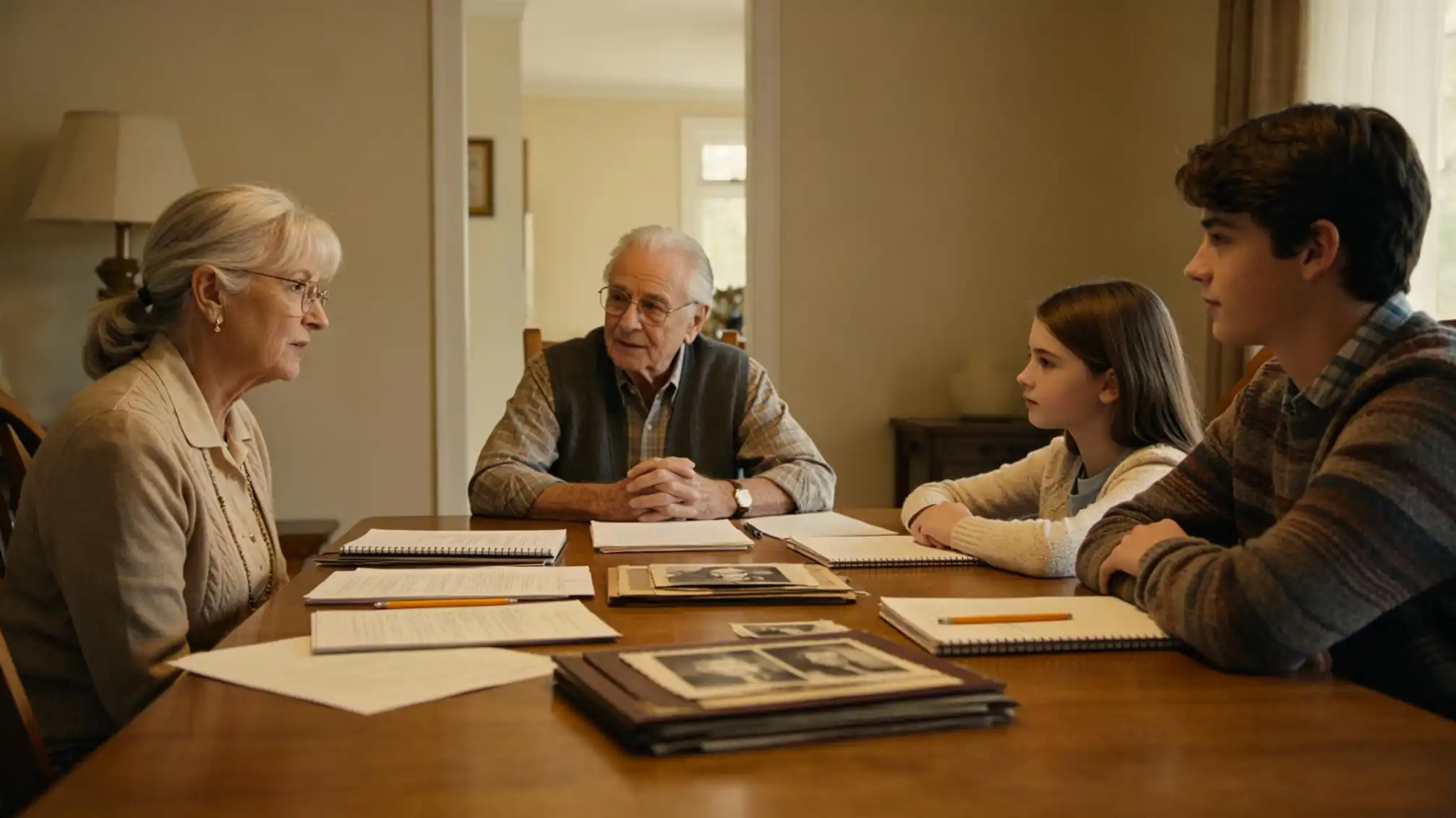
When you sit down for a recording, place a smartphone gently on the table between you. Let it become ordinary furniture. Keep the paper notes loose and do not lead with a clipboard. The more your grandparents feel you are curious about their world, the faster they will trust the silence.
Use Story Prompts Rather Than Rapid Questions
If traditional family history questions for grandparents make the conversation feel like a job interview, swap them for a few sentence stems. When you say 'tell me about a time you knew your big brother was on your side', your grandparent's mind goes searching for a scene. That scene is the real material.
Here are some openers to carry in your back pocket:
- What was the nearest thing your family shared, and who usually made it?
- Which grown-up made a point of kneeling down to talk to you, and what did they say?
- When did you first realize a relative you trusted was not perfect? What changed after that?
- What did your evenings feel like before and after the arrival of electricity? Do your hands remember?
- Who did your grandmother worry about at night, and what did she do with that worry?
Let each prompt sit. A simple statement can yield more grandparents family history than a long list of who, what and where. Ask a follow-up only when the speaker rests. Echo an interesting word back without turning it into a fact-check.
Shape Their Words Into a Story
After a conversation, write down what you heard while the voice is still warm in your memory. Keep the unusual expressions they used, even if the grammar is imperfect. If you later want to shape the notes into a polished piece, do that with care and read it back to them.
For a model of how memory can become a short narrative, browse the family stories that relatives have shared in the community library at familylove.love/stories. Seeing another family's telling may help you notice what is missing in your own grandparents family history and give you gentle ideas for the next session.
Honor the Pauses and the Detours
Grandparents are often taught that their stories are not important. They may say things like 'this is probably boring' and 'you do not want to hear an old lady talk'. At those moments, sit with the pause. Tell them that the boring parts are exactly what you want. Then stay quiet.
One of the best gifts you can offer during this process is an unhurried afternoon. Do not schedule two visits in one day. Let the story detour from a wedding day to an argument over dinner and then to the first television set on the block. The detour is never a detour; it is the road.