Every old family photo carries a secret that a scanner cannot capture. The slight curl on a corner, a fingerprint on the glossy side, the handwritten date on the back — these tiny traces connect us to relatives we may never meet. Yet many families focus only on saving the digital image and forget the richer purpose: preserving old family photos for family history, with all the textures, mistakes, and stories still attached.
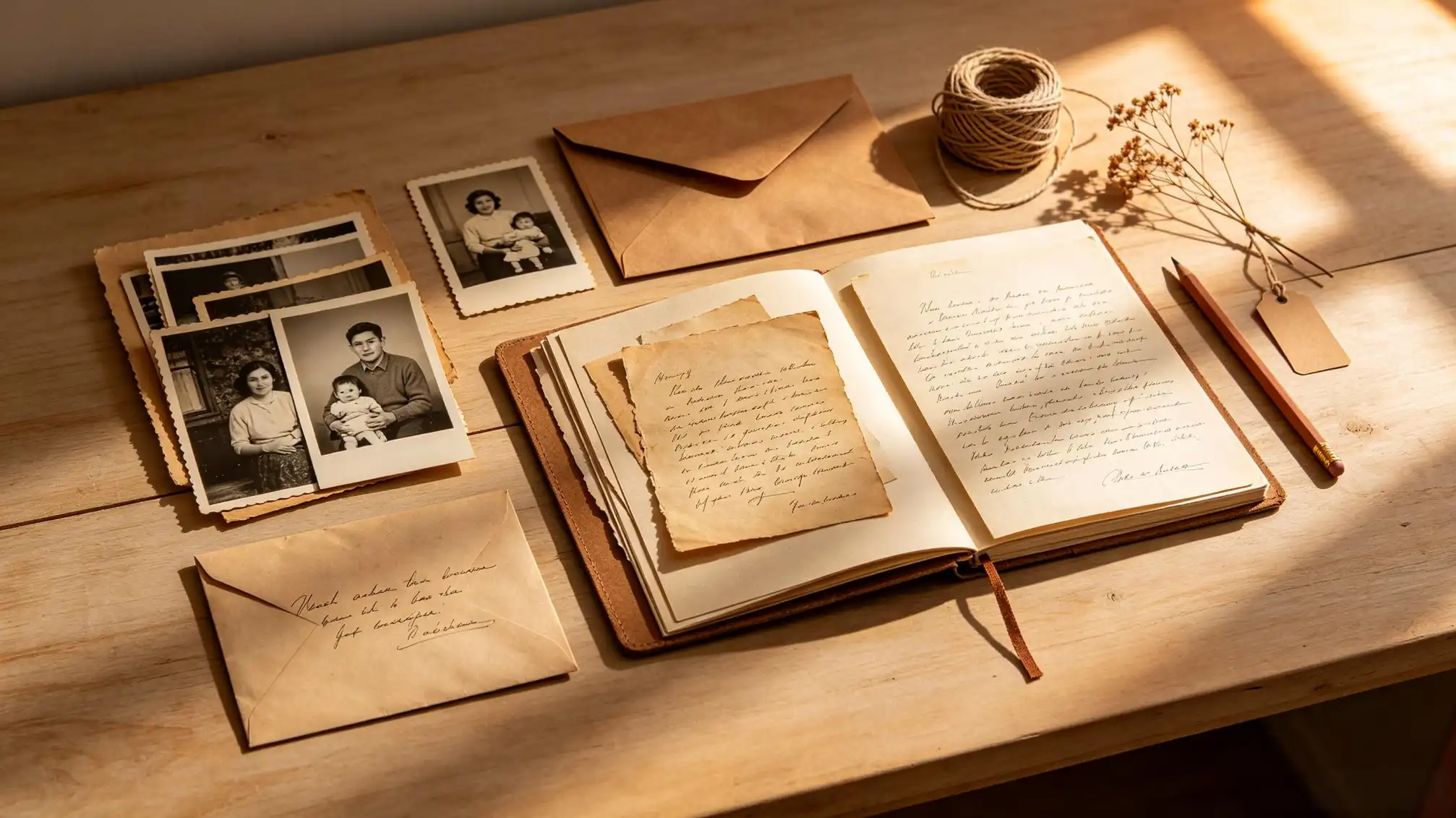
If you have inherited a shoebox of faded prints or a crumbling album, your first instinct may be to rush to the scanner. That is understandable. But the people in those images are more than pixels waiting to be saved. They are anchors of your family history, and the way you preserve them today will shape how future generations remember their ancestors.
Start by Listening to the Physical Print
Before you digitize a single family photo, take time to examine it as an object. Flip it over. Look for names, dates, and places written in someone's handwriting. Notice whether the print was cut in a strange shape, or whether the back tells a story of its own. These small clues are often more precious than the image itself because they give context. A photo of a young woman in a simple dress becomes far more meaningful when you find the inscription: Martha, before she left for the coast, 1921.
When you handle delicate originals, be kind. Wash and dry your hands or wear clean cotton gloves. Do not use tape, staplers, or paper clips. Keep photos away from direct sunlight and humidity. If you plan to store them in an album, choose archival-quality sleeves that are acid-free and PVC-free. The goal is not to freeze the photo in a sterile box, but to slow time so the stories can catch up.
Scan Like You Are Preparing a Conversation
Scanning is the first step, not the last. For most prints, a resolution of 300 dots per inch is enough for viewing; 600 dots per inch is better if you may need to crop or magnify details. If a photo is creased or faded, do not try to fix it with digital tricks while you scan. Scan the original as honestly as you can. Later, if you want a clean version for display, you can make another file. But the raw scan should be kept as the historical record — it preserves your family memories exactly as they exist, not as an idealized version.
Use a consistent file-naming system from the start. Instead of IMG_001.jpg, name a file something like 1905-06_Johansson-Maria_wedding_portrait.jpg. This may seem fussy, but your future children will thank you. A long descriptive filename works like a digital caption every time the image is opened, without requiring special software.
Don't Let Names Fade Faster Than the Print
The most fragile part of old family photos is not the paper. It is the knowledge of who is in the photograph. Too many albums contain faces that no one remembers because no one took ten minutes to write down the names. If you are the one doing the work, make the names your priority. Ask older relatives while they can still answer. Show them a small group of photos and let them talk, without rushing to the next scan.
This is where the preservation of family memories becomes a living activity rather than a technical task. When your aunt tells you that her father wore that coat every day, or that the house behind the children was built by their grandfather, you have captured something no scanner can see. Keep a notebook beside you. Record the memory as a separate text file, and link it to the scan by using the same file name with a .txt ending.
Sharing Family Photos Adds Layers to Family History
Once you have digitized a handful of images, share them with the people who would care most. A quiet response on a family group conversation can open the door to memories you never knew existed. Consider adding your own reflections to the Family Love family story collection, where photos and words can live together. When you share a photo with a story, you make it easier for someone else to add another layer — a correction, a laugh, a new detail.
Do not wait until the collection is perfect. The imperfect image that catches a cousin's eye is the one that makes them say, that is our grandmother's kitchen. That moment is exactly why we preserve old family photos for family history. The photos are a starting line, not the finish line.
Embrace the Weathered and the Worn
There is a quiet wisdom in a photo that has been carried in a wallet for fifty years or taped onto a refrigerator for decades. The faded corner is a form of affection. When you find these damaged images, resist the urge to call them lost. Instead, treat them as proof that your ancestors were loved. Preserve them with tenderness. If you restore a copy digitally, always keep the original with its stains and fold marks. Future generations may value that physical history far more than a smooth, airbrushed restoration.
Even an unlabeled photo can be useful. Look at clothing, hairstyles, furniture, or street signs. Compare the faces with pictures you have already identified. Write down the clues using terms like probably or cousin of? unclear. This uncertainty is honest. It leaves a clear question for someone else in your family to answer later.
Build a Family Photos History Kit
You do not need expensive equipment to start. A flatbed scanner, archival sleeves, and a simple box with dividers. But the more valuable tool is your intention. Create a small kit that includes a magnifying loupe, a notebook, and cotton gloves. Keep it near your photo collection. When you have fifteen spare minutes, pull out a small stack and date them, scan a single picture, or write down one memory. These tiny actions eventually transform scattered prints into a family archive.
Your ancestors are not waiting for a perfect curator. They are waiting to be remembered. Every family photo you preserve is a fragment of dialogue between generations. Some photos will remain mysterious no matter how hard you work. That is all right. The search itself is a form of family history.