Some of the brightest family memories stay hidden simply because no one sits down with the right questions. Family history questions are not a checklist for a dusty archive. They are the sparks that help your parents and grandparents remember the living moments behind old photos: the scent of a kitchen, the punchline of a joke, the nervous pause before a big decision.
Before we jump into specific prompts, understand this: your relatives probably want to talk more than you think. They just need an inviting question and permission to take their time.
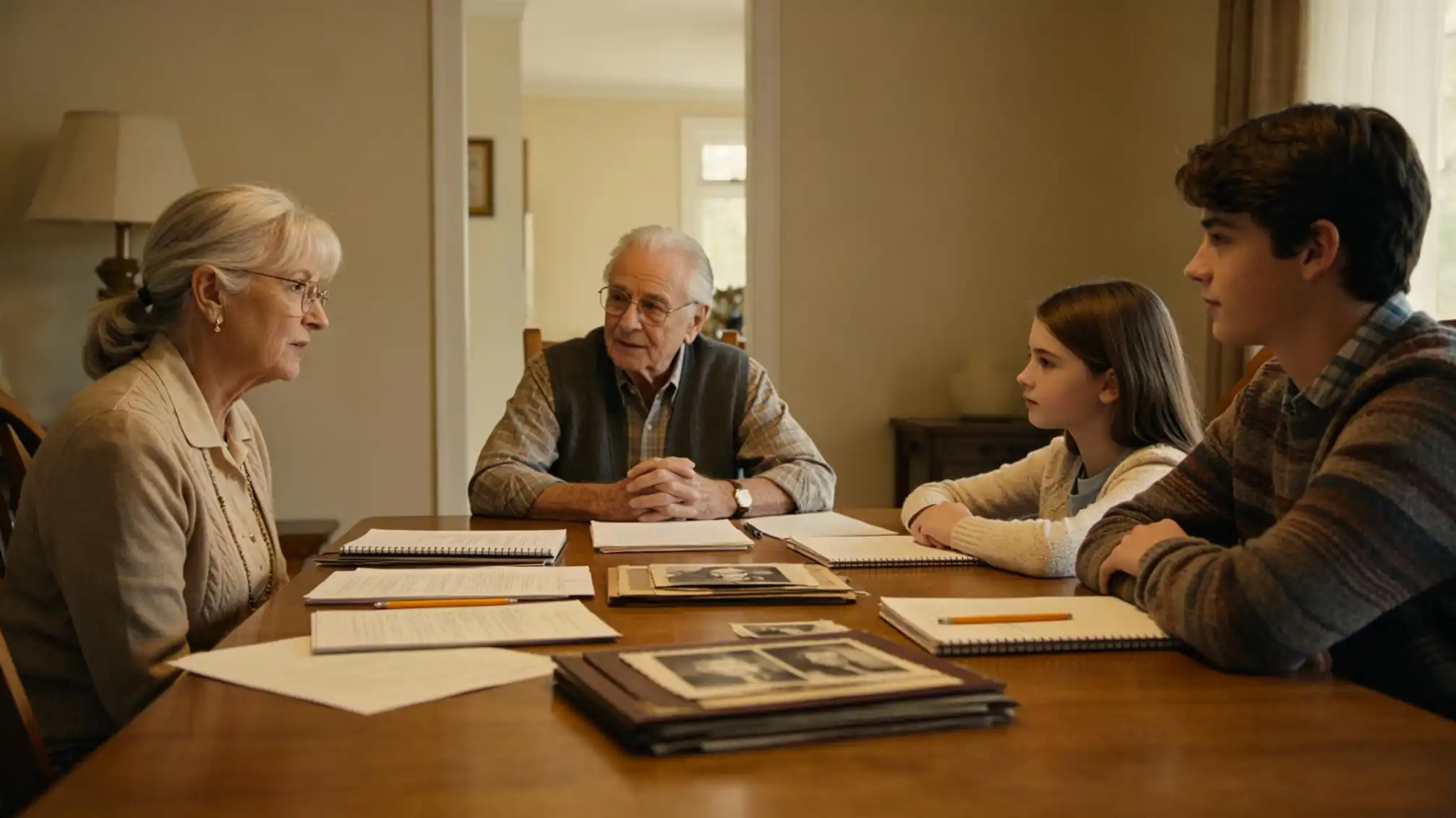
The Ordinary Details Open the Door
The phrase “tell me about your life” can be overwhelming. Most of us do not know where to start with a question that big. Family history questions work best when they are small enough for a specific memory to take root.
- “What did your room look like when you were ten?”
- “Who would you wait for after school?”
- “What sounds did you hear at night in your childhood home?”
Ask only one, then stop. If your relative says, “That was a long time ago,” stay silent for a few seconds. Silence is not a failure — it is the thinking space before memory arrives. A good conversation often finds its second wind after a quiet “hmm.”
Questions That Fit a Grandparent’s Rhythm
Grandparents remember differently than we do. You may want dates, but they will offer scenes. Let them. A story about a blue kitchen counter is not a distraction — it is history with texture.
- “What did you do for fun that your parents never quite understood?”
- “What family phrase or joke showed up at every celebration?”
- “Who took care of you when you were sick, and what did they make for you?”
- “What did you believe as a child that later turned out to be completely different?”
Do not rush to the next question. If your grandfather mentions a dog, ask about that dog. If your mother mentions a dress, ask where the dress came from. The most memorable family history conversations come from following the unexpected path.
Ask About the Turns, Not Just the Years
When people begin telling their story, they often skip over the moments that changed everything. They think of those moments as ordinary. Your job is to make them curious about their own turning points.
- “What decision do you think changed the direction of our family the most?”
- “Before you met your closest friend, what did you think a best friend would be like?”
- “What is something you wish you had asked your own parents?”
- “When did you first realize you were becoming the person you are now?”
These family history questions invite reflection instead of yes-or-no answers. They work especially well when you are talking with relatives who claim earlier that nothing interesting ever happened to them. One thoughtful question can prove them wrong.
Be Ready for Heavy Answers
Some of the best family history questions touch tender ground. Loss, disappointment, and hard choices are part of every family. If your relative’s eyes fill with tears, do not take it as a cue to change the subject. Say something simple: “That must have been hard” or “Thank you for trusting me with this.”
You are not there to force a happy ending. You are there to honor the truth of their experience. Those honest moments often become the ones family members remember long after the recorder is off.
Turn One Conversation Into a Regular Practice
A single afternoon is enough to begin, but the real gift comes from returning over and over. When your parents or grandparents realize that you genuinely care about their memories, they begin to save stories for you: a small detail from a phone call, a joke they want to repeat, an old document they found in a drawer.
Keep a simple folder for voice notes, scan the photos you take together, and write down recurring names. If you need inspiration or want to feel what a memory looks like in words, browse the family stories shared by other readers — they will remind you that every family has material worth preserving.