Why a Family Tree Template Needs a Plan
A family tree template is more than a printable chart to fill with names. It can become the backbone of your entire family history project. But many people start by typing in whatever names they remember, only to feel blocked when they hit an unknown date or a missing parent. The solution is to use the template as a thinking tool, not just a record sheet. With a little structure, a simple family tree template can guide your research, expose gaps, and help you share discoveries with relatives in a meaningful way.
Start With the Right Family Tree Template
Before you choose a free family tree template, decide what story you are trying to tell. Do you want a compact four-generation chart for your grandchildren? Or are you tracking a surname across several countries? A basic vertical tree is the easiest starting point. A fan chart works better for displaying many ancestors in a small space. A cousin chart helps you map relationships after the tree grows wide. If you plan to keep your research digital, look for a free family tree template that gives separate fields for dates, places, notes, and source citations. That extra space will save you pain later.
Digital vs. Printable Templates
Digital templates allow you to link photos, attach documents, and reorder branches as you discover new connections. Printable templates are useful for family gatherings where everyone can add sticky notes or write directly on the chart. Choose the format that matches your workflow. Many people use both: a printed family tree template for the wall and a digital family history template as the master copy.
Gather Names, Dates, and Stories Before You Fill the Template
The biggest mistake people make is opening a family tree template and trying to complete it from memory in one sitting. Instead, do a quick inventory. Collect your own birth date and place, your parents’ details, and your grandparents’ basic information. Then move to photos, old letters, and family records. You do not need proof for every step yet—the template is there to show what you know and what you still need to find. Write down stories associated with each person so the finished tree feels alive, not just a list of names.
Build the Skeleton: Direct Family First
When you are ready to fill in the family history template, start with yourself in the center or bottom, depending on the chart. Add your parents and siblings. Then work outward to grandparents. Keep each generation on the correct line or branch, because this helps you see whether the template structure matches your biological or chosen family. If the template does not fit a step-parent, adoption, or blended family situation, do not force it. Look for a more flexible free family tree template, or annotate your chart with dashed lines and short explanations. Family history is not one-size-fits-all.
Choose a Layout That Matches Your Family Story
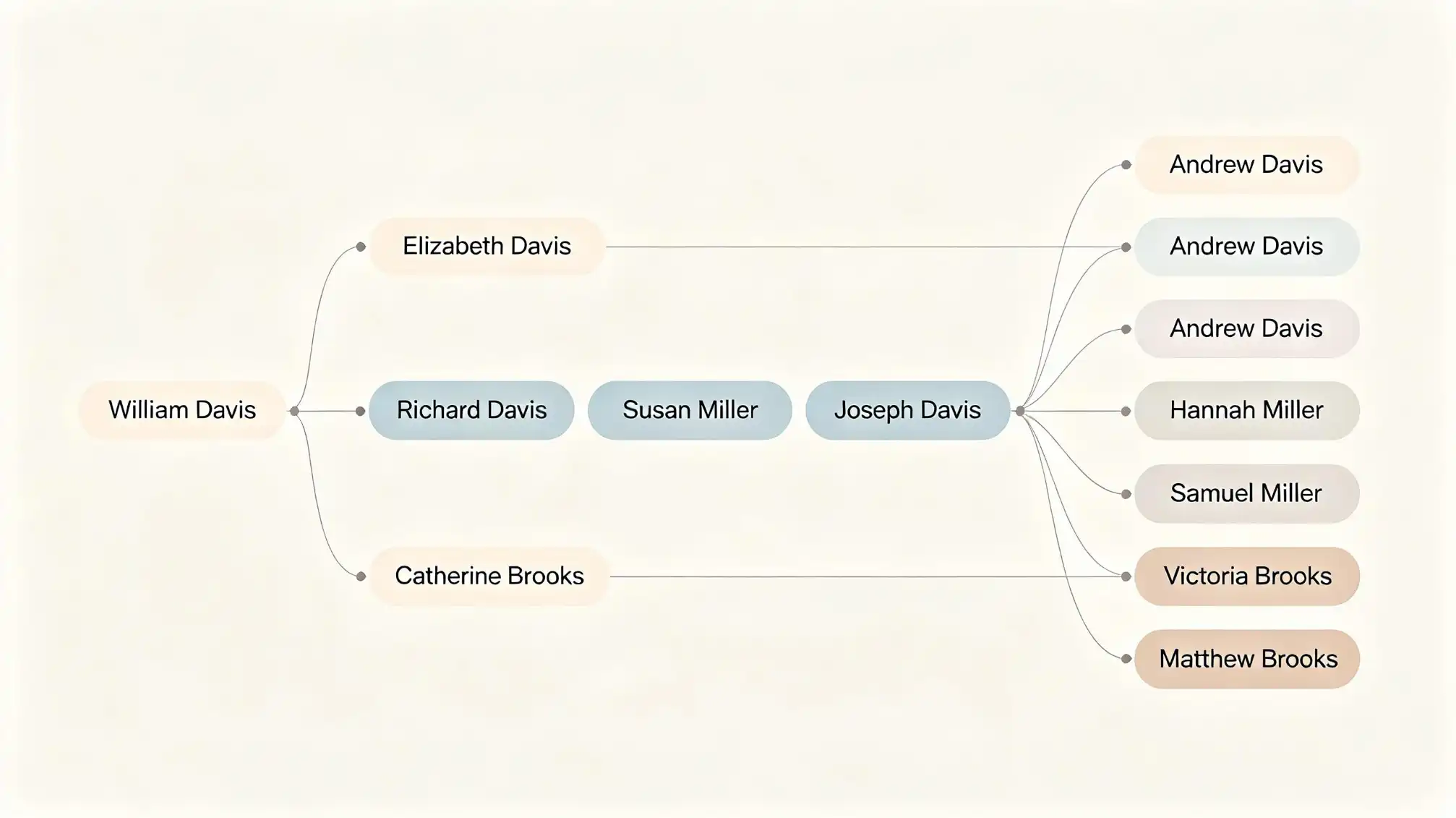
Once the main names are in place, step back and look at your family tree template. Do you have many ancestors on one side, but almost none on the other? That is normal. Instead of forcing a symmetrical chart, follow the story. If your maternal line is deep and well documented, let that branch extend further. If your paternal side is full of blank spaces, use the template’s blank branches as a visual to-do list. Column layouts are great for a family history template because they let you compare generations side by side. A modern family tree diagram, such as the one you often see online, can be more approachable for younger relatives than an old-fashioned cramped chart. Use colors to mark completed branches, confirmed records, and missing links.
Keep Your Family History Template Flexible
Your tree will change. You will discover an aunt you never knew about or realize an ancestor’s last name was spelled differently in old records. A family tree template should be easy to update. If you are using a digital spreadsheet-style free family tree template, leave enough room in every cell for multiple spellings and alternate names. If you are using a graphic designer-style template, resist the urge to format everything until the research is nearly finished. That means you should spend more time in a simple editing tool or on lined paper, not in perfect colors and fonts. Flexibility is the reason many genealogists keep a rough working tree separate from their final polished chart.
Use Source Notes and Verify Details
A family tree template that has no source column is only a list of unverified claims. Whether you are using a family history template for a school project or a serious genealogy project, add a small notes section under each person. For each fact, ask: Where did this date come from? A census record, a death certificate, or a family member’s memory? Memories are valuable, but they are also fallible. When you find a discrepancy, keep both dates in the template and highlight the discrepancy. This practice prevents you from mixing up your great-uncles and helps future generations trust the chart.
Turn the Finished Template Into a Shared Family Record
After you have filled out your family tree template, do not keep it hidden. Print a copy of your free family tree template and bring it to your next family meetup. Let older relatives correct spellings and add nicknames. You may discover that a family story has more branches than anyone remembered. If you are looking for a central place to share the final tree and keep relatives in touch, explore the family section on FamilyLove.love for inspiration. A shared chart is not only a gift to your relatives; it is also an invitation for them to contribute their own pieces of the record.
Refresh the Template as Your History Grows
Your first pass through a family tree template is only version one. After you collect a few records, you may find that a different shape works better. Some people move from a pedigree style to a portrait style because they want to include photos. Others shift from a wide tree to a narrative style when they start writing stories about each relative. The template is not the project itself—your research is the project. Let the template become richer with each new clue. Revisit it at least once a month, adding one new person or one new source note each time. That small habit makes family history manageable and enjoyable.