When most people hear “family tree,” they picture a decorative chart hanging in a relative’s hallway. It has elegant lines, small boxes, and the neat names of people born generations ago. That image is accurate, but it is also incomplete. A family tree is much more than a drawing; it is a personal map that helps you navigate family history and discover the lives of your ancestors. For a beginner, this kind of chart is a gentle entry point into genealogy because it starts with what you already know and then invites you to take one step deeper into the past.
A Family Tree Helps You Ask the Right Questions
Beginning genealogy can feel like standing in front of an enormous archive and not knowing where to start. A family tree solves that problem by giving your research a clear shape. Instead of randomly searching for old records, you look at a person, a relationship, or a missing date and ask, “What happened here?” Each branch becomes a question waiting to be answered. That is why building a family tree is the most important first step in family history. It turns a vague curiosity into a clear set of logical next actions.
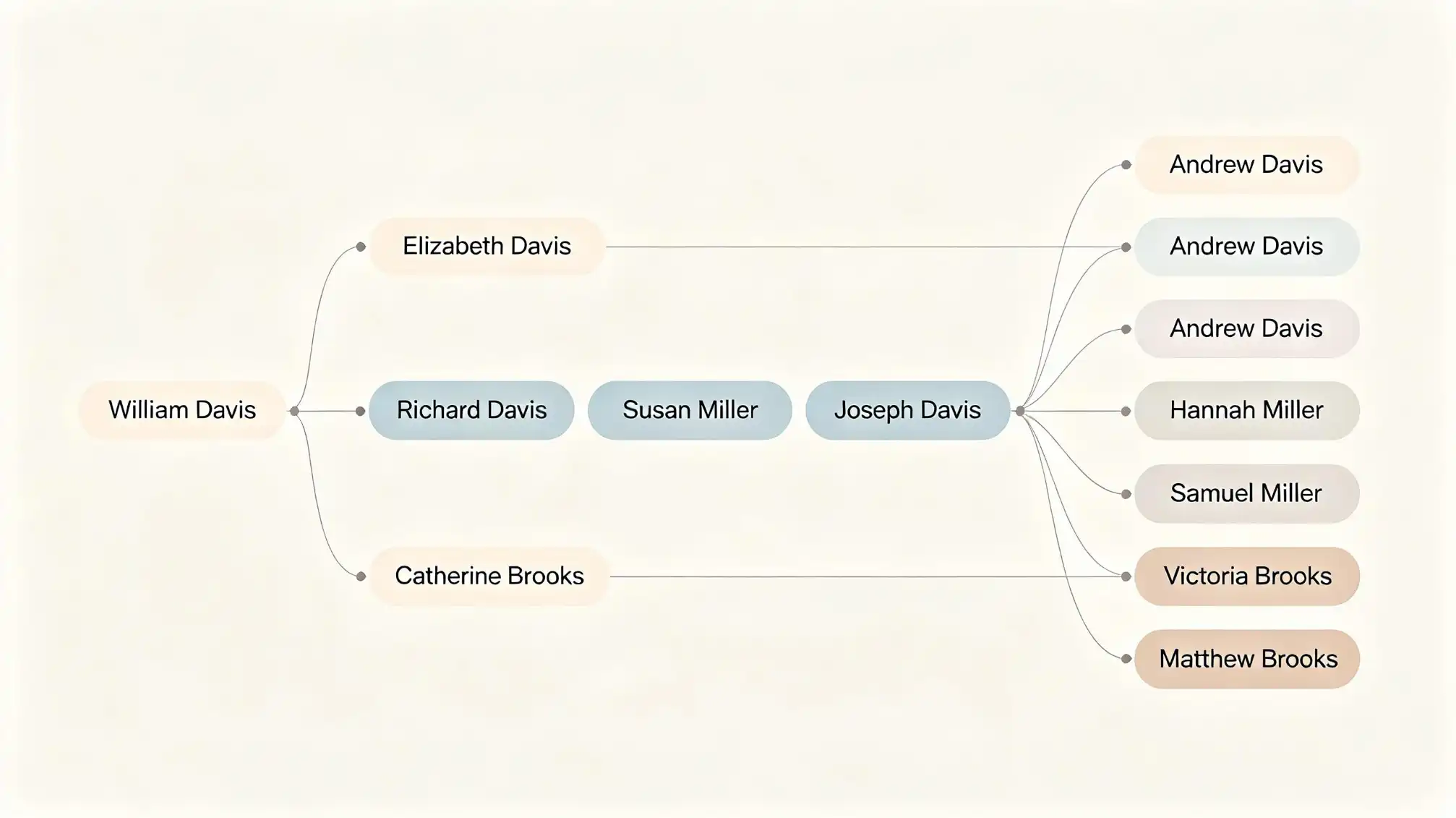
You might begin with your parents and grandparents. Write down their names, birthplaces, and the dates you know. Add marriages, children, and even family stories that have been passed down. At first, this may look less like a beautiful tree and more like a work in progress, but that is exactly how it should look. The tree grows as you do. As you add details, you start to notice patterns: people who lived near one another, names that appear again and again, or surprising gaps that your relatives may be able to fill.
Understanding What Your Family Tree Can Tell You
The real power of a family tree is not simply listing ancestors; it is understanding relationships. A chart with names and dates is useful, but genealogy becomes meaningful when you connect those names to places, occupations, and stories. Your tree can show migration patterns, family traditions, and even inherited talents. For example, you may discover that three generations of your family worked as teachers, or that your great-grandparents lived in the same small town for fifty years. These details help you see family history as a story, not just a collection of facts.
As you move backward in time, the tree naturally opens new branches. You may need to search for birth certificates, marriage registries, census forms, or immigration documents. At first, record keeping may feel overwhelming. But remember that a family tree is meant to be a practical tool, not a perfect scholarly work. It can hold links to old photographs, short notes from interviews with relatives, and even family recipes that have been passed down. The tree helps you connect all of these different kinds of memories in one place, making it easier to share with the next generation.
From Family Tree to Family History
Once you have the basic structure of your family tree in place, you can begin to view it as a doorway into family history. Rather than simply filling in spaces, ask questions about each ancestor. What kind of life did they have? What challenges did they face? What motivated them to move to a different city or country? These questions make family history personal. The family tree is the skeleton, and the stories, letters, and documents you collect form the flesh around it.
For beginners, a common mistake is to focus only on rare or famous ancestors. In reality, every branch of your tree matters. Even an ancestor with a modest life can teach you something about resilience, culture, or family health history. Try to follow one line at a time. Start with your parents and grandparents, then move to great-grandparents, and notice how the family tree expands quickly. Before long, you will have a respectful foundation for the lives of many ancestors.
Practical Tips for Your First Family Tree
Beginning genealogy requires little more than paper, a pencil, and a few conversations with family members. Begin with yourself and work outward. Write down your birth date and place, then your parents’ full names and significant dates. Move backward or sideways only when you feel ready. Keep the process simple.
When you add names, use a consistent method. Include full names, even maiden names for women, because that helps you trace the family tree without losing a branch. Note place names carefully; small villages or changed county lines can confuse research if you are not precise. And whenever possible, ask an older relative to look at your tree. They may correct a date, add a new child, or share a memory that brings an ancestor to life.
Connecting Generations With Family
A family tree is not meant to be a private document. Sharing it with family members is one of the most effective ways to grow your family history project. When you involve relatives, they often remember details you would never find in an official record. They may have photographs, bibles, letters, or simply the habit of telling a certain story at every holiday. Those fragments are valuable. To make this easier, visit the family page on Family Love to explore practical ways to bring relatives together around shared memories. It can help your research feel collaborative rather than isolating.
You may also discover that building the family tree strengthens your sense of belonging. Knowing that you are part of a longer story can be remarkably grounding. It can provide context for your family’s traditions, values, and even the way you celebrated birthdays or holidays. For many beginners, this is the hidden reward of genealogy: the more you learn about ancestors, the more you understand the family around you today.
What to Do When You Hit a Dead End
Even the most dedicated beginner will eventually run into a missing record or a confusing same name. Do not panic. Dead ends are normal in family history. When you hit one, return to the family tree and look at the surrounding people. A neighbor, a witness, or a surname on a census page can become a clue. Use a variety of genealogy websites, libraries, and local historical societies. Ask family members if they know why an ancestor disappeared from the records or moved suddenly. The answer is often hidden in a family legend that someone dismissed long ago.
Remember that a family tree is a process, not a destination. It will never be truly finished because every answer tends to reveal another question. That is part of the joy. For a beginner, it is more important to build a habit of curiosity than to achieve a complete chart. Your ancestors left traces of themselves; the family tree is your way of following those traces without turning the process into a stressful hunt.