There’s More Than One Way to Ask
When most of us think about grandparents family history, we imagine a formal interview with a notepad and a list of serious questions. Yet the deepest memories seldom arrive that way. They come in fragments — while folding clothes, stirring tea, or glancing at an old photo on the shelf. If you want to hear real family stories, you first have to create an atmosphere that feels safe, patient, and unhurried.
Your grandparents may have lived through moments that schoolbooks only mention in a paragraph. The way they met, the things they lost, the jokes they told — all of that is part of the family history that no archive will ever hold. So instead of reading off a script, try to let your curiosity lead. A few warm prompts can open a door, but the stories that come after often carry the real treasure.
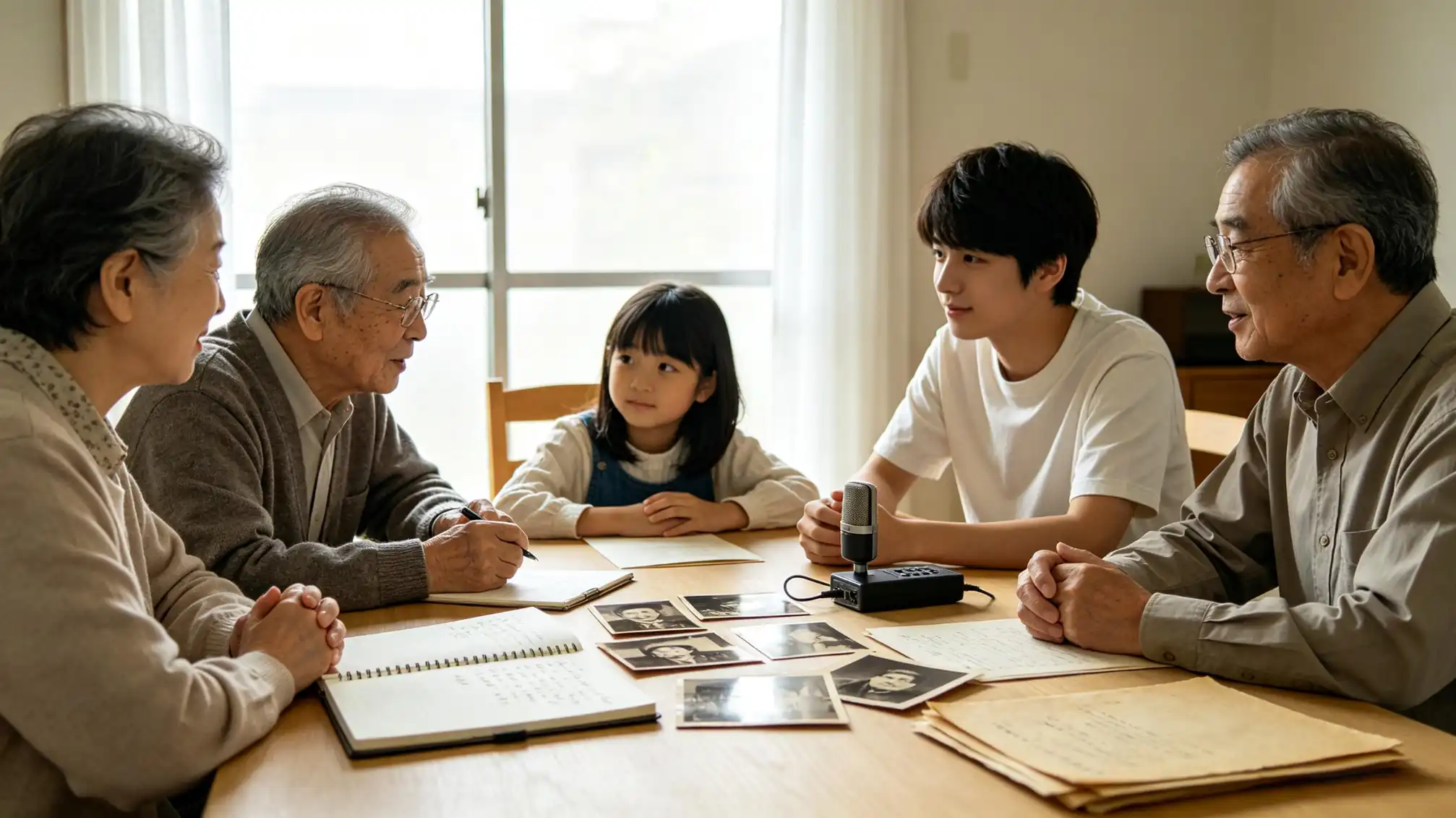
Begin with Something They Can Hold
It is easier to remember when there is a physical anchor in the room. A worn recipe card, a dance ticket, a cracked teacup, or a photo album with plastic pages that stick together can suddenly turn a distant memory into a living scene. Rather than saying, “Tell me about your childhood,” say, “I found this photo. Let’s look at it together.” Then wait.
Let your grandmother or grandfather describe what they see. They may start with something practical — the porch, the dog, the clothes they sewed — and before long, they are recalling the names of relatives you never met. This is one of the most enchanting parts of grandparents family history: no one needs an agenda when the photograph itself becomes the guide.
Ask Through Their Senses
When family history questions focus exclusively on dates and geographical locations, it can feel like homework. To make it more personal, ask with a sense of the body and the heart.
What did their mother’s cooking smell like on a rainy day? What sound did the front door make when your grandfather came home from work? What songs drifted through the open window in summer? These sensory memory prompts can unlock details that names and birth years will never reveal. You might learn that your great-aunt hummed off-key, that coal dust settled on the windowsill every morning, or that the family’s first car seemed to hiccup at every red light.
Let Each Story Lead You to the Next
Try not to solve the mystery as fast as you can. If they mention a move they made, don’t immediately ask, “What year?” Instead, ask, “Was there anything from the old house you wished you could take with you?” One question opens a memory; that memory carries another; soon your grandmother is telling a family story you had never heard in your entire life.
If you are looking for a little inspiration, you can read how other families approached their own relatives and grandparents family history on our family stories page. It is a wonderful way to gather courage for that first question, especially if you worry that the moment will pass before you find the right words.
Make Room for Hard Chapters Too
Not every family story is filled with laughter. There are losses, sacrifices, regrets, and moments that seemed unfair. We sometimes tiptoe around those chapters, but grandparents often want to tell them — not to be heavy, but to be understood. If you ask with warmth and no judgment, they may share how they survived a frightening season or what they learned when life did not go according to plan.
Let them control the pace. If their eyes suddenly look elsewhere, simply wait in silence. If they say, “That part is too sad,” gently remind them that you are there to listen, not to rush. Those vulnerable moments can become the most powerful memories your children ever receive.
A Few Natural Question Starters to Keep in Your Pocket
Below are not the usual formal history prompts. They are little doors you can open when the mood feels right.
- What’s the first meal you remember eating at your grandmother’s house?
- Where did you sit when the family gathered to talk at night?
- Was there a toy, a blanket, or a chair you loved as a child?
- Who in the family always made you laugh?
- What did a normal school morning look like for you?
- How old were you when you first realized that money could be scarce?
- Did you ever hide something so your mom or dad would not find it?
Each question is soft enough to feel like a conversation and deep enough to open a real memory. Keep the list nearby so you know exactly where to turn when the talk slows down.
Keep the Memory Alive After the Visit
After you collect an hour or two of these family stories, preserve them carefully. Use a voice memo app, let a camera rest on a table, or simply write down a few keywords in a nice notebook. A visible recorder might make grandparents self-conscious at first, so consider starting with your phone face down and only pick it up when the conversation is flowing naturally.
Later, write your grandparents a note listing your favourite moments from the conversation. Mention how you felt when they told you about their first job or their mother’s garden. You do not need to write a book — just enough to show them that their words truly matter. This simple habit often opens the door for the next visit, when they greet you with a brand-new story they remembered just for you.
If you want to shape these memories into a lasting collection, our family help documentation includes clear, simple guidance about organizing interviews, sharing recordings, and retelling stories in beautiful ways.