There is a surprising magic in opening a dusty shoebox filled with worn photographs. Some images are faded around the edges, others have tiny creases, and a few may still faintly smell of the attic where they waited for decades. But every single one carries a story: an ancestor's proud smile, a family home long gone, a holiday you only know through a relative's storytelling.
If you are the person who ends up with these treasures, you may feel both responsible and uncertain. Where do you begin? What matters most? How do you keep family photos alive without damaging them? This guide offers a fresh, doable approach to preserving old family photos for family history — not just as objects, but as a bridge to the people who came before you.
Why Family Photos Are More Than Paper
Family photos are the closest thing we have to time travel. They let your children see your mother as a child, your grandfather's military posture, or the curve of a street where your great-grandparents fell in love. Preservation is not about making things look new; it is about helping future generations recognize themselves inside these fragments of the past.
When you treat old family photos as family history, each print becomes a clue. The chair in the background tells you about daily life. The style of clothing dates the scene. The handwriting on the back may mention a name or a joke. Once that context disappears, the photo shrinks into just another beautiful face with no story.
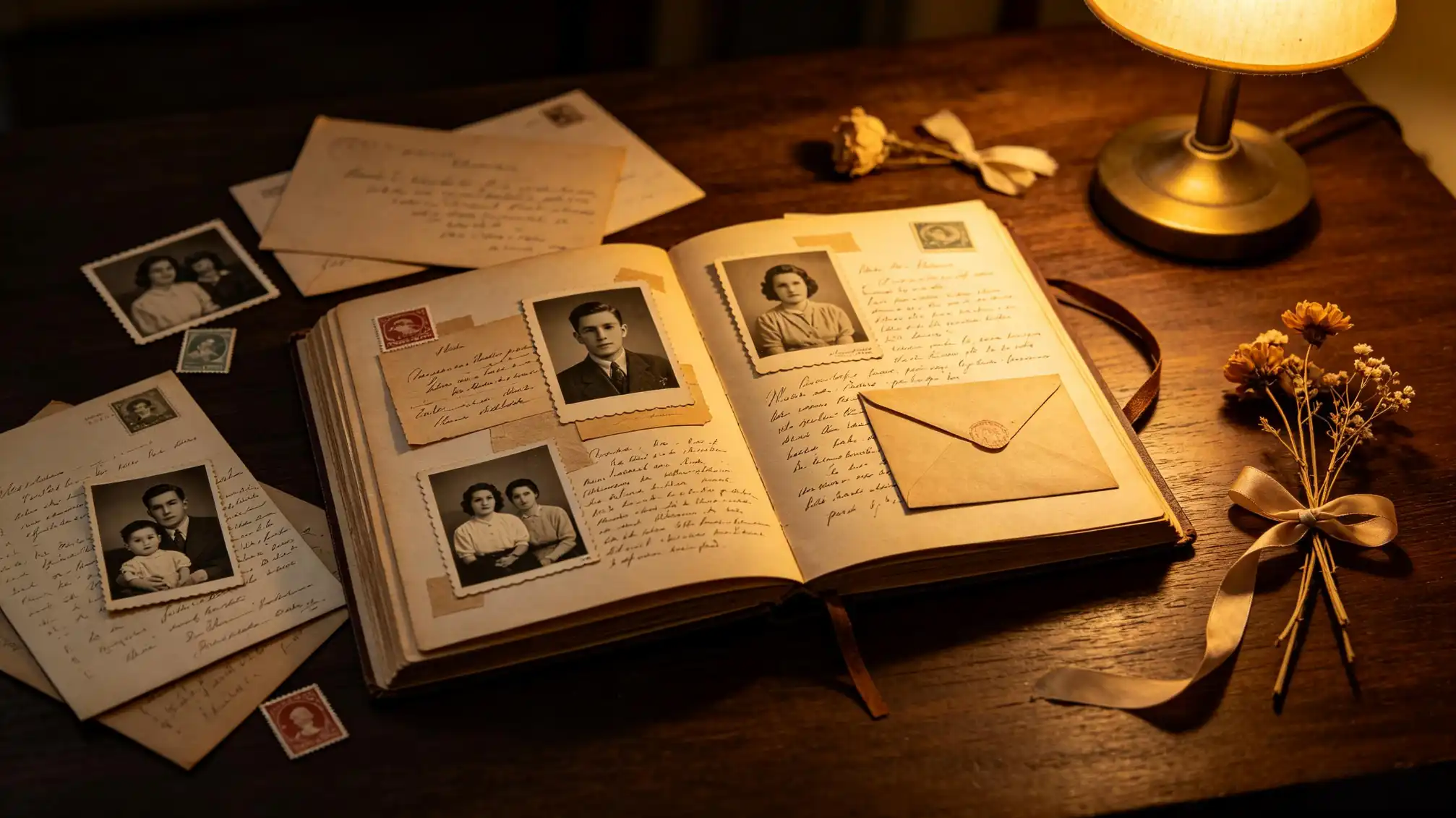
A New Mindset: Digitize First, Tidy Later
One common trap is waiting until the house is organized, or until every photo is labeled, before you start preserving. That does not work for busy families. Instead, begin by digitizing the most vulnerable photos first. Old sepia prints, tin-types, and faded snapshots can deteriorate quickly depending on heat, humidity, and light. By scanning them now, you create a safety copy that will survive even if the original does not.
You do not need expensive equipment. A flatbed scanner is excellent, but even a smartphone camera with a good daylight setup can produce a reliable digital image for family memories. For photos that are loosely lying in boxes, you should start with a quick assessment. Choose the ones that show faces clearly, feature recognizable locations, or have unusual historical details. Those are the highest-priority family photos for your family history work.
Build a Simple Family History Together
Preservation becomes far easier when you share the responsibility and stories with others. Instead of one person do it all, invite siblings, cousins, or your own children into the project. Ask them to write down one thing they remember about the people in the photos. Their words will lead to conversations, laughter, and the kind of oral stories that never make it into official records.
As you gather these memories, a wonderful thing happens: the photos become part of a living narrative. You are not just preserving prints; you are preserving family history in the words of the people who still hold it. Later, when you have a collection of images and stories, you can share them on a page like the family stories collection, where your memories can sit beside the experiences of other families.
How to Scan Old Family Photos Safely
When you scan physical photos, be gentle. Wipe the scanner glass with a dry microfiber cloth. Never use adhesive tapes or cleaning sprays directly on the photograph. If a print is badly wrinkled or creased, leave it as is. Try to flatten it under a stack of light books for a day or two before scanning. Do not force it.
Scan at a high resolution — at least 300 DPI for recent prints and 600 DPI for very old ancestor photos. If you have a small photo, a higher resolution will make it possible to zoom in on precious details. Save your scans as high-quality TIFF files for your permanent archive, and use JPEG for sharing with family members. Naming each file with a consistent pattern will save you endless confusion later. A format like LastName_FirstName_Date_Place.jpg works well for the whole family tree.
Build a Family Photo Archive That Anyone Can Understand
One of the biggest failures in family photo preservation is forgotten knowledge. We scan and scan, but then the files sit on a hard drive with names like “IMG_2043.” To truly preserve family photos for family history, you need an organizing method that is easy and shareable.
Create a simple folder system on your computer: one main folder for your family archive, then subfolders by surname, by decade, by event, or by branch of the family — whichever feels most natural. A spreadsheet is also useful. Each photograph can have its row, with columns for the names of people, the estimated year, the place, and a memory note. Do you not know who someone is? Write a note like “Uncle suggested this is the reunion at Granddad’s farm, but not confirmed.” Honesty is part of preserving.
Add Identifications Before You Forget
Watch for the handwriting on the back. Old photo albums often contain captions in faded pencil. Do not erase them. Capture both the back and the front when scanning. Also, use the chance to ask older relatives while they are still around. A single conversation about family photos can uncover names you would never find in any database.
Caring for the Original Photo Prints
After the digital copies are safe, give the original prints a calm second life. Store photos in acid-free, lignin-free boxes that let them breathe. Avoid plastic sleeves that contain PVC, as it can make photos turn yellow and brittle. The ideal place is a cool, dry, dark closet. Repeated folding and exposure to sunlight are your enemies. Look for individual sleeves made for archival storage and place photos inside without forcing them.
Do not use a garage or basement for photo storage. Temperature swings and moisture attract mold and insects. If you find a moldy photo, isolate it in a sealed bag and ask a professional conservator for advice. Your own safety and the photo’s survival are both more important than impatience.
Displaying Family Photos Without Hurting Them
You may be torn between keeping old family photos safe and being able to enjoy them. No one wants a family history that sits locked in a box. There are ways to keep memories present without exposing them to constant damage.
Use UV-filtering frames for the prints you love most, and keep them out of direct sunlight. If you would rather not risk the original, make high-quality copies for display and keep the originals in your archive. This is a wonderful way to bequeath a visual family history to future generations while protecting the fragile record.
Preserve Family Stories Alongside the Images
When you look at a photo of an ancestor, try asking three questions: What is this person feeling? What do I know about their life? What would they want me to remember? These questions invite empathy, not just cataloging.
Write these reflections directly into your archive notes. This is a brilliant way to ensure that future generations are not left with a sheet of mysterious faces. The sound of your voice, captured in a short video recording while you explain the story, is another powerful addition. Your photo can remain safely in your hand, but the story goes beyond the image.
Share the Archive With Family Members
After you have digitized and organized a good batch, share it before you finish. Incomplete archives are okay, because they still spark conversation. Send family member to sibling texts with a quick geneology. Better still, invite everyone into a shared folder. When a family remembers together, the task becomes much lighter, and the group connection grows.
Your family photos are not meant to be hidden in isolation. Once they are safely preserved, carry their stories forward into the world. Every time someone recognizes their grandmother’s expression in their own face, the preservation work pays off.