Many people assume that recording a family history requires the patience of an archivist and the storytelling skill of a novelist. It does not. A meaningful family history begins in much smaller places: a Sunday phone call, a shoebox of photographs, a dish that no one makes the way grandmother used to. The family tree is only the skeleton. Family stories are the breath inside it.
Do not wait until you feel ready. Do not wait until the house is quiet, the boxes are labeled, or your research is neat. The people you love are carrying memories that exist nowhere else. Every ordinary day without recording them allows another detail to fade. Begin with who is present, what is already in your hands, and the one question you have never had the courage to ask.
Start With the Person Whose Voice You Value Most
Genealogy often tells us to go backward, toward births and marriages and tombstones. But family history starts in the present. Choose one person and say, “I would love to hear your story.” Then follow their energy, not your outline. If an aunt begins a sentence with, “there was a year,” do not interrupt to ask for a date. Let her talk. You can build a timeline later. During the conversation, your most valuable task is to be present.
If your relative says something like, “I don’t know how to tell stories,” reassure them. Explain that you are not asking for a polished lecture. You just want their version of a memory. Try prompts such as, “what did you hear when you woke up on Saturdays?” Or, “what was the first thing you did when you came home from school?” The answers open a world.
Open the Boxes That Have Been Waiting
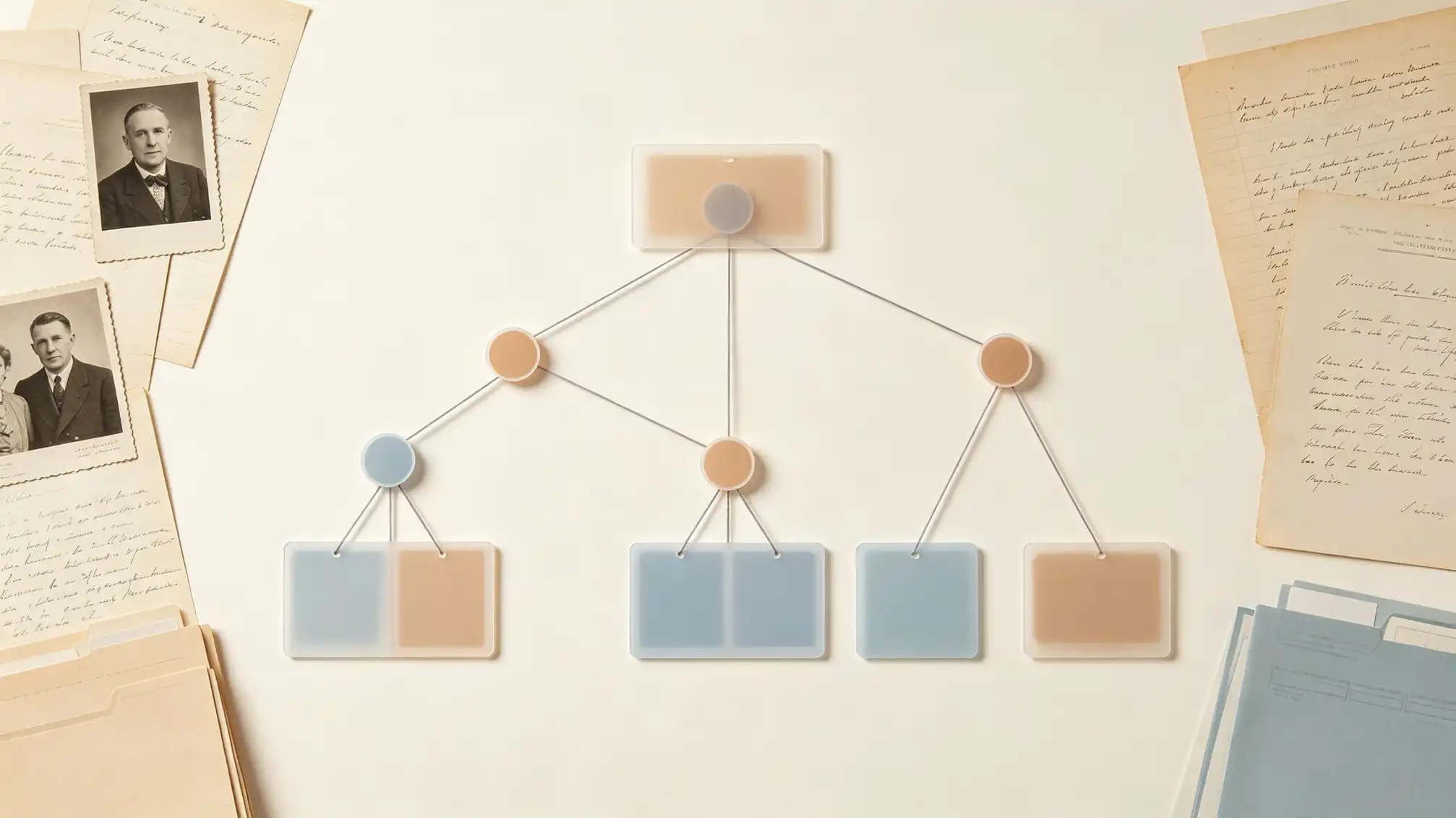
Before you open a genealogy website, look inside the house. Loose photographs, postcards, brochures, letters, and cards are the original family archive. Instead of sorting everything on the first pass, lay things out on a table and let your eyes move slowly. Notice which items make you feel something. The back of a photograph may carry a name and a date. A letter may mention hard weather, a lost brother, or a prayer before surgery. Every fold, stain, and pencil note is part of the story.
Invite a relative to hold the objects while you talk. Memory can return through the fingertips. A grandfather’s pen, a mother’s battered recipe box, or a child’s drawing brings back the exact gesture of a person, and makes family history less abstract.
Keep Recording Simple, Warm, and Repeatable
You do not need a studio or a professional microphone. A phone placed close enough to catch a quiet voice is more than enough. Start each recording with the name of the storyteller, the date, and the place, then speak gently. Explain that you are saving their voice because no chart can capture the way they laugh or pronounce a certain word. This is not a production; it is a tenderness.
Some of the most powerful family history recordings are only a few minutes long. A short clip of an elderly relative explaining a holiday tradition can become an heirloom. Record often, but keep each session brief. If a person becomes tired or sad, thank them, press stop, and pick up on another day.
Seven Questions That Open Whole Chapters
Keep a list of gentle questions nearby. You do not need to ask all of them. Choose the one that feels relevant, and leave space for silence.
- Describe the kitchen in the house where you grew up.
- Who in the family could everyone count on during hard times?
- What was the funniest misunderstanding you ever witnessed between relatives?
- Which object did your mother or grandmother refuse to throw away?
- How did your father or grandfather react when a plan fell apart?
- What did the neighborhood feel like when you walked home from school?
- Is there a family phrase, song, or recipe that brings the people back before you even know why?
Let Your Family Tree Be a Doorway, Not a Destination
Your ancestors are much more than surnames in a database. They faced seasons of hunger, grief, work, belonging, laughter, and hope. Use a family tree as a map to their world, not as a scoreboard. Pick one surname or one hometown that keeps reappearing. Find the neighborhood, the mill, the farm, and the church. From there, ask what their hands did, what their evenings sounded like, and what they wanted for their children.
Treat each ancestor as the main character of a particular time. If a great-grandfather worked on the railroad, ask what his hands looked like after a long day. If an ancestor crossed an ocean, ask what they carried and what they left behind. You may never know the exact answer, but the curiosity makes the search humane.
Share Fragments Before They Feel Perfect
So many family stories remain hidden because we wait until they are well-written and complete. That wait can last years. Offer your family a small glimpse of the process. Send a relative the voice memo they just recorded; they will hear something true in it. Create a simple post in the Family Love stories area, and invite a cousin to add what they remember from another side. Sharing keeps the work alive and shows everyone that their memories matter.