Why a Family Tree Is More Than a List of Names
Starting a family tree can feel like a daunting research project, but it is really an act of belonging. You are not just collecting names; you are preserving small stories, migrations, trades, and traditions that shaped the people you love. A family tree becomes a visual story of how you came to be, and every branch gives future generations a clearer sense of identity.
If you are a beginner, the best way to approach family history is to start small. You do not need a subscription to a genealogy website or a stack of old birth certificates on day one. You need a notebook, a few questions, and the patience to listen to the people who already hold your family’s memories. The true goal is not to build a perfect chart overnight, but to create a living document that can grow with every conversation you have.
Begin with What You Already Know
The first step in how to build a family tree is to write down every fact you already know without researching anything. Start with yourself: your full name, birth date, birthplace, and the names of your parents. Add your siblings if you have any, then move up one generation.
- Record full names, including maiden names for married women.
- Add dates and places for births, marriages, and deaths if you know them.
- Note any nicknames, occupations, or family stories that come to mind.
This simple list becomes the backbone of your family tree. Once you see how much you already know, you will notice the gaps. Those gaps are not failures; they are your roadmap. They tell you exactly which relatives to contact first and which records you should look for in the next step.
A useful trick is to draw a rough chart on paper before you open a spreadsheet. The physical act of writing names and connecting them with lines helps you see relationships more clearly. It also reminds you that a family tree is first a human diagram, not a database entry.
Turn Relatives into Living Sources
Your older relatives are the most valuable sources in your family history. They carry names and faces that no archive will ever contain. Ask them open-ended questions and let them wander. It is often in the rambling moments that you learn which uncle crossed the border, which grandmother survived a war, or what the family name originally meant.
Before you interview, prepare a list of questions. Ask about daily life, schooling, holidays, and the places they lived. If they are comfortable, record the conversation on your phone. Always ask for permission, and never correct their memories in the moment. Your job is to listen, not to judge.
If you feel nervous about starting the conversation, take a look at the family-oriented resources at FamilyLove. It can give you ideas for approaching relatives with warmth and curiosity, especially if you want to make this a shared family project.
Do not stop with your immediate grandparents. Second cousins, great-aunts, and in-laws can offer surprising details. A cousin who grew up in another city might have letters and photographs that your side of the family has never seen. Every relative you contact is a new branch waiting to be connected.
Organize Documents Before You Overwhelm Yourself
After your first round of interviews, you will likely have a pile of notes. Before you add official records, build a simple organization system. A three-ring binder with dividers for each surname works perfectly. Alternatively, use a spreadsheet with columns for name, relation, date, place, notes, and source.
Whenever you receive a photocopy of a birth certificate, a worn wedding photo, or a family Bible inscription, record where it came from. This is called citing your sources, and it will save you when you start comparing two relatives who remember the same event differently.
Do not feel pressured to buy expensive software. A simple paper filing system or a free online tree app can carry you through your first year of family history research. The goal is consistency, not complexity. If you prefer digital tools, choose one platform and stick with it until you understand its strengths and weaknesses.
As your collection grows, scan documents and photos so you have digital backups. Label each scanned file with a clear name, such as SmithJohn_1880_photo. This habit will protect your family history from fading paper and accidental loss, and it will make sharing your findings with relatives much easier.
Design a Clear Family Tree Diagram
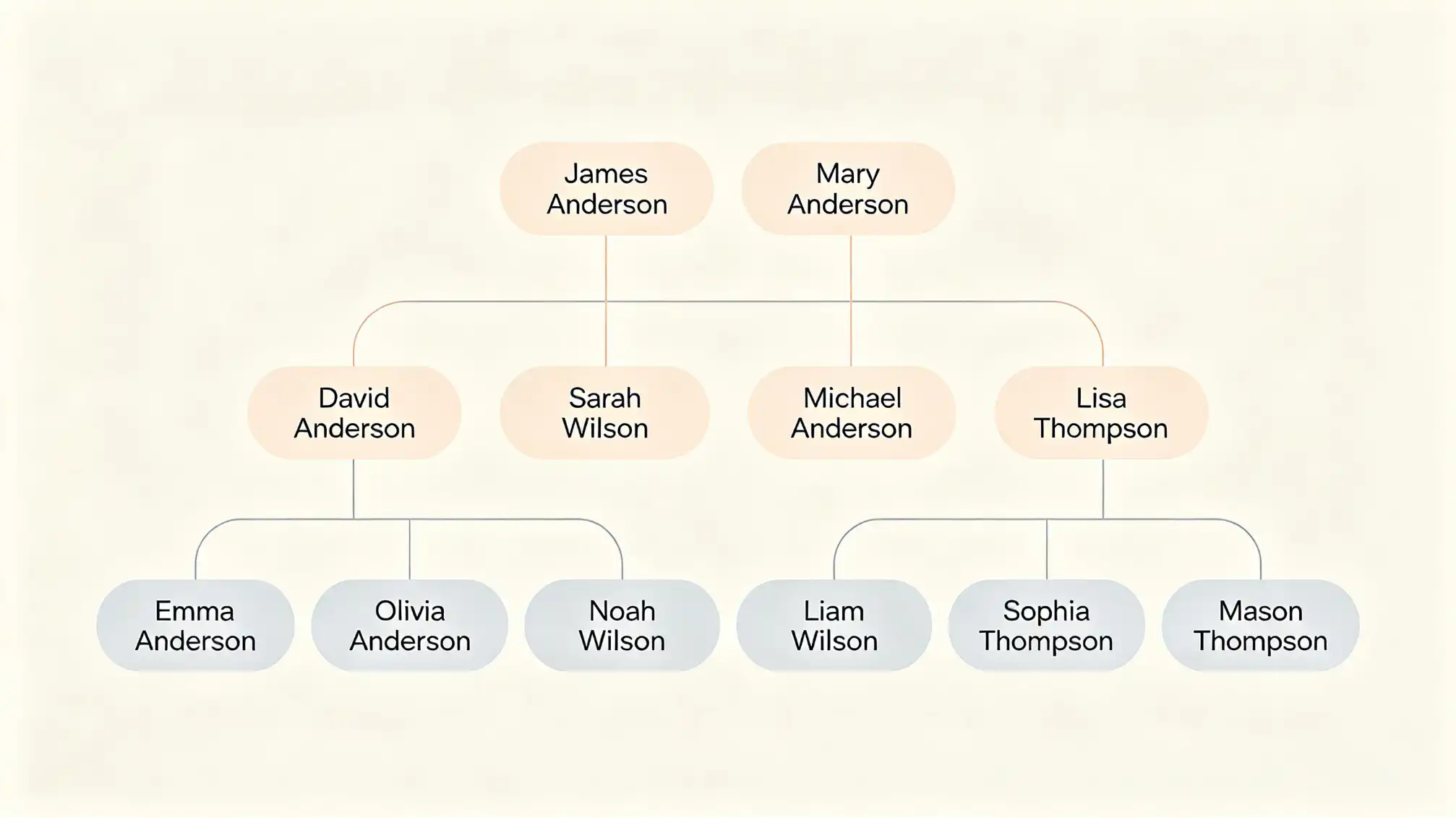
Your family tree will take shape naturally as you place people on a diagram. You can draw it by hand, use a template, or choose a digital tool. The key is to keep it readable. Put yourself at the base, then your parents, grandparents, and great-grandparents above you. Use consistent symbols for men and women, and leave space for notes.
Many beginners prefer to build a vertical tree that moves upward from themselves. That style works well for a straightforward family history. If you want a broader picture, you can create a horizontal tree that includes aunts, uncles, and cousins. The format does not matter as much as the clarity.
Do not be afraid to revise your diagram as you learn new facts. A family tree is never truly finished. The best ones are flexible, allowing you to add a new spouse, a corrected birth year, or a previously unknown child without ripping the page apart.
Verify and Expand Your Family History Gradually
Once your diagram shows the names you have collected, it is time to verify them if you plan to go deeper. Public records such as census lists, birth registrations, marriage records, and cemetery indexes can confirm details and fill gaps. Start with records from your own country or region, because you already know the language and the geography.
Do not skip the verification step. Family stories often mix up dates or spellings, and one wrong name can branch into hours of wasted searching. When you find a new fact, compare it with the source. A family tree is only as strong as the evidence behind it.
If you enjoy the process, you will soon learn how to build a family tree that extends beyond your grandparents. Look into local historical societies, church archives, and immigration records. Every piece of family history you confirm makes the next generation feel more rooted.
You may also consider using DNA testing as a companion tool, not a replacement for records. DNA matches can point you toward living relatives and distant branches, but they rarely give you names and dates by themselves. Treat DNA results as clues that motivate deeper research.
Mistakes Every First-Time Family Tree Builder Makes
Even professional researchers make mistakes, but you can avoid the most common ones. First, do not accept online family trees as fact. Many contain errors that were copied from other unreliable sources. Use them only as clues that require proof.
- Never ignore women’s maiden names; they are the bridge to entire branches of your family history.
- Do not become obsessed with reaching famous ancestors at the expense of honoring the everyday people who raised you.
- Do not trust your memory alone. Write everything down, even if it seems insignificant.
- Avoid adding living relatives’ private details without their consent, especially in online public trees.
Remember that a family tree is not a competition. It is a collaborative map of your shared past. The best research happens when you stay curious, organized, and humble in the face of. Some questions will never be answered, and that is acceptable; your job is to preserve what can be learned with honesty and care.