Family Tree Basics: How a Simple Diagram Can Unlock Your Family History
When people first dip into genealogy, they often hear the phrase "family tree" and picture a decorative chart hanging in a relative's hallway. But a family tree is far more than a static illustration. It is a living map of relationships, shared stories, and inherited identity. For beginners exploring family history, understanding the true purpose of a family tree can turn a casual interest into a lifelong passion.
This guide walks you through what a family tree represents, why it matters, and how you can start creating one today. Whether you want to reconnect with distant ancestors or simply preserve your grandmother's memories, a family tree gives you a clear and meaningful structure for doing so.
More Than Names and Dates
A family tree is a visual representation of your lineage. It shows how individuals are connected through blood, marriage, and sometimes adoption. Traditionally, it branches out from a single person upward to parents, grandparents, and great-grandparents, or downward to children and grandchildren. But modern family trees can be as flexible as your needs—some people build them sideways to include cousins, aunts, and uncles, while others focus on one surname line.
The real value of a family tree lies in what it reveals about patterns and stories. You might notice that several ancestors shared the same profession, migrated from the same region, or lived through similar historical events. These connections can transform your understanding of who you are and where you come from. For many beginners, the moment they see their family history laid out visually is the moment genealogy becomes addictive.
Why Family History Matters
Exploring your family history is not just a hobby; it has genuine emotional and psychological benefits. Research shows that knowing your family's stories can increase resilience and give you a stronger sense of identity. When you see how your ancestors faced hardship, moved across countries, or built new lives, you gain a broader perspective on your own challenges.
In addition, a family tree can help you connect with living relatives. Sharing a draft of your family tree with a parent or an aunt often sparks conversations about old photographs, traditions, and long-forgotten names. These exchanges breathe life into the diagram, turning dates and locations into vivid memories.
The Many Shapes of a Family Tree
Before you begin, it helps to know the common formats. A pedigree chart is the classic ancestor-focused tree, showing only your direct line: parents, grandparents, and so on. An ahnenlist uses numbers to track ancestors without drawing branches. Meanwhile, a descending tree starts with an ancestor and fans out to all known descendants. For most beginners, a simple chart with yourself at the base and your direct ancestors above is the easiest starting point.
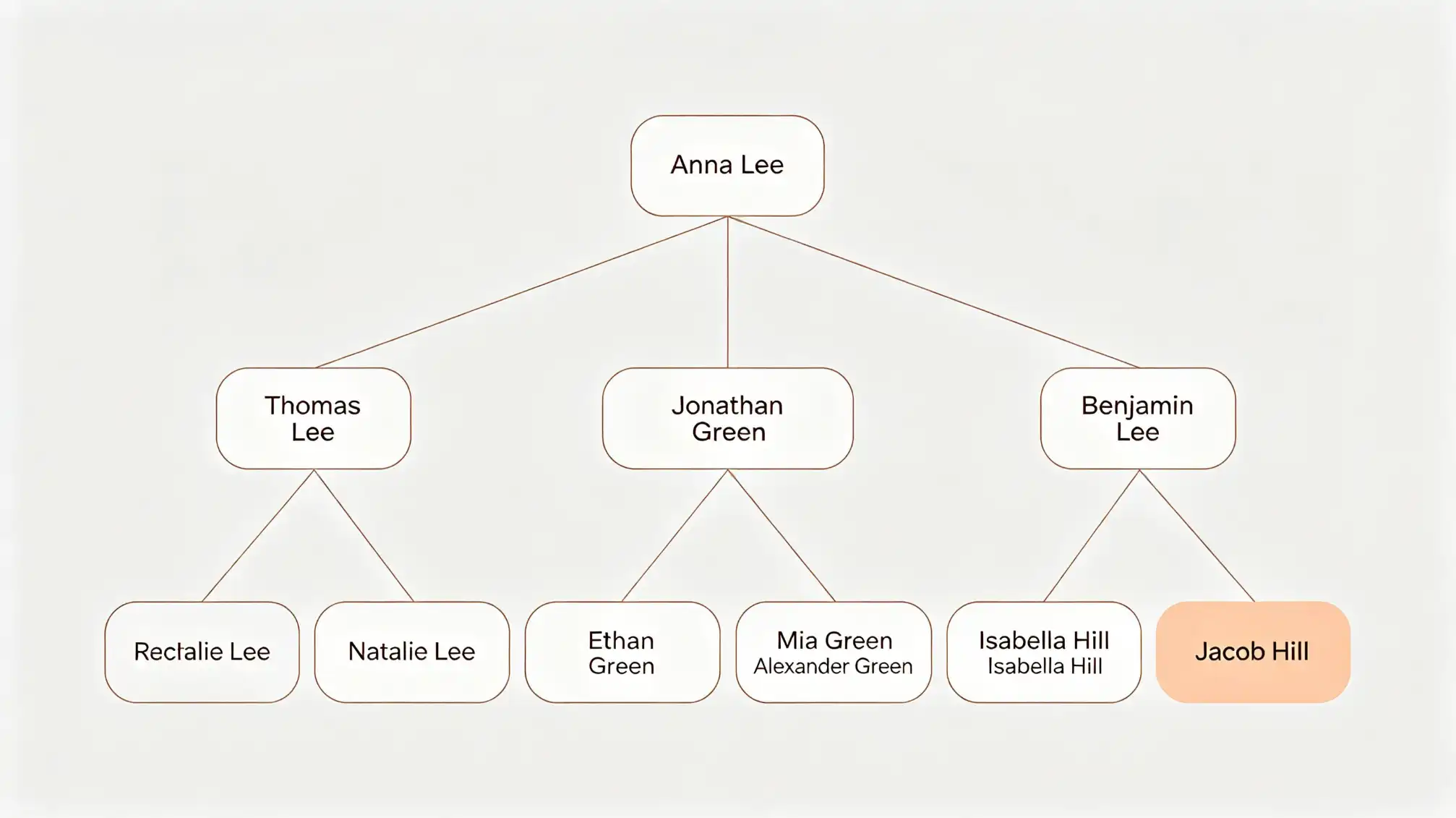
Do not worry about making it perfect. Your family tree can be digital, drawn on paper, or built using genealogy software. What matters is that it works for you and your family. You can always add branches later as you discover new information through interviews, records, and DNA testing.
How to Begin Building Your Family Tree
Starting your own family tree does not require a degree in history. It only requires curiosity and a willingness to ask questions.
- Start with yourself. Write your full name, date and place of birth, and then add your parents. Work backward one generation at a time.
- Talk to relatives. Ask your parents, grandparents, and older relatives about names, places, and stories. Record their memories if you can.
- Gather documents. Birth certificates, marriage licenses, census records, and old letters can confirm dates and relationships.
- Use family history websites. Platforms like FamilySearch, Ancestry, and MyHeritage offer searchable databases and intuitive tree builders.
- Stay organized. Keep notes about where you found each piece of information. This will save you frustration later.
As you collect details, you will likely hear about relatives who settled in a particular town or migrated through a certain port. These clues are invaluable. If you want to explore how your family's unique story connects to broader themes of love and belonging, you might find inspiration by visiting a page dedicated to family connections at our family-focused resources. It offers gentle reminders of why these bonds matter.
Common Pitfalls and How to Avoid Them
Every beginner makes mistakes, and that is okay. The most common pitfall is assuming a family tree must be complete before it can be enjoyed. In reality, a family tree is always a work in progress. Another mistake is copying information from other people's trees without verifying it. Always look for original records or at least multiple sources that agree.
You might also feel overwhelmed by the number of ancestors you find. Remember that you do not need to research every branch at once. Choose one line that fascinates you, perhaps your maternal grandmother's side, and focus there for a while. This makes the process manageable and more rewarding.
Using Your Family Tree for Deeper Genealogy
Once your basic family tree is established, you can use it as a springboard for deeper genealogy. Each blank space becomes a research question. Each name suggests a story waiting to be uncovered. You can link records to individuals in your tree, add historical context, and even integrate DNA matches to confirm relationships with distant cousins.
Your family tree becomes a central hub for all your family history efforts. Instead of keeping notebooks and folders scattered around, you have one clear place to organize everything. This is particularly valuable if you hope to pass your research down to future generations. A well-structured family tree is a gift that keeps giving.