Family Memories: Creating a Shared Family Space That Holds Your Story
Family memories are not just the photos stored on your phone or the old letters in a shoebox. They are the warmth of a familiar voice, the smell of a favorite meal, and the way your family laughs at the same joke every year. But memories are also fragile. Without a place to live, they fade. This is why creating a shared family space — a corner, a wall, or even a digital folder — can be one of the most meaningful things you do together.
Why Family Memories Need a Home
Do you remember what you were doing three summers ago? Maybe not exactly. But if your family has a story about that trip to the lake, or a silly video from a birthday morning, you can step right back into it. That is the gift of family memories: they help you remember who you are together.
When you give your memories a dedicated home, you are saying that your family history matters. It matters not only for grandparents or cousins who live far away, but for the youngest child who is still learning what makes your family unique. A shared family space helps everyone feel included. It also turns memory-keeping from a chore into a gentle ritual. Instead of saying, “We should organize those photos someday,” you can say, “Let’s sit together and add a few memories tonight.”
Start With a Corner, Not a Big Project
Many families think preserving family memories means scanning every old album and creating a perfect archive. That can feel overwhelming. A better way is to start small. Choose a spot in your living room, hallway, or even a shelf in the kitchen. Call it your family memory nook. It doesn’t need to be elaborate. A corkboard, a jar of notes, a small photo frame, and a notebook are enough.
The magic of a shared family space is that it grows with you. You can add a ticket stub from a movie, a drawing from your child, or a postcard from a relative. Every family member can contribute. Over time, the space becomes a map of your shared life. It holds your family memories in a way that feels natural, not staged.
Make Family History Feel Present
Family history often sounds like something you research online or ask about at holidays. But your family history is also happening right now. The everyday moments — cooking together, walking the dog, reading before bed — are the memories you will cherish later. By intentionally placing these moments into your shared space, you help your family see that their story is being written every day.
You can use a simple notebook for “my family history” entries. Let each family member write one line about their favorite moment from the week. These small notes become a treasure chest of family memories. When you look back months later, you’ll be surprised by how much life was living in those little words.
Bring Family Photos Into the Conversation
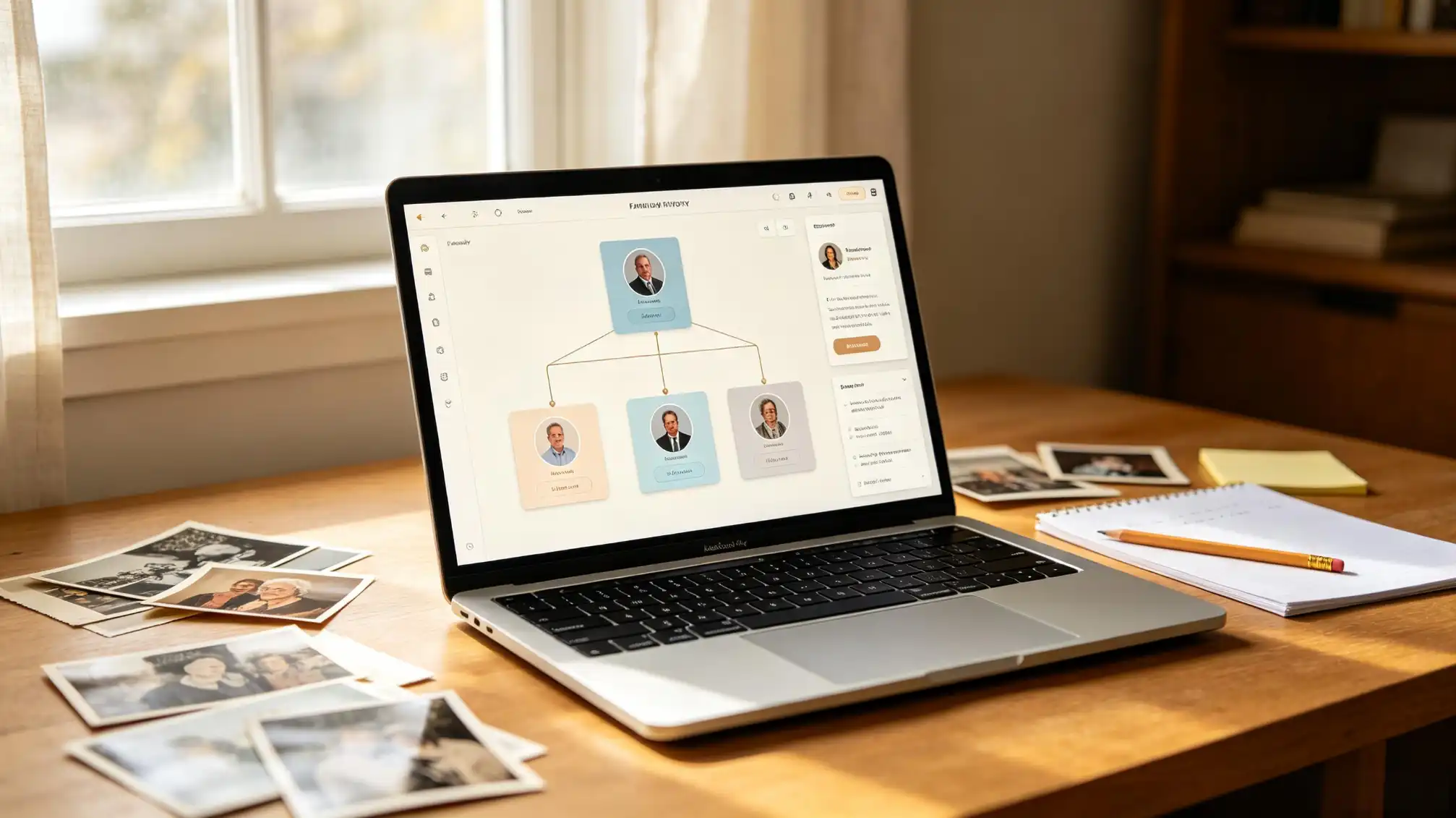
Family photos are often the first things we think of when we talk about preserving memories. And for good reason. A photograph can capture a feeling that words cannot. But photos become even more powerful when you talk about them together. Instead of scrolling through your camera roll alone, set aside a time when everyone can gather around a laptop or phone. Ask questions: Where were we when this was taken? What did we eat? Who told the best joke that day? The answers are what turn family photos into family memories.
If you have older printed photos, try scanning them together as a team. One person can handle the scanner, another can label the files, and another can write down the stories that come up. This collaborative process makes preserving family history feel like an adventure rather than a cleanup project. And if you are looking for a more narrative way to organize all these stories, the family stories page at familylove.love/stories is a beautiful place to gather inspiration. It can show you how other families are capturing their own moments, and it might even help you decide what to include in your shared space.
Create Simple Memory Rituals
To keep your family memories alive, build small rituals around your shared space. It doesn’t have to be complicated. Here are a few ideas you can try:
- Pick one evening a month to add new photos, notes, or keepsakes to your family memory corner.
- At the end of each season, write a short family letter about the biggest little moments you shared.
- Let each person choose one favorite memory to write on a card and place in a jar. Read a few cards together on quiet evenings.
- Use your shared space as a starting point for telling stories to younger children. Show them their baby photo and tell them about the day they came home.
These rituals do not need to be long. Ten minutes of remembering together is enough to keep the thread of your family history strong.
Use Digital Tools With a Human Touch
Technology can be a wonderful friend when you want to preserve family memories. A shared family album in a cloud service, a private group where everyone can post updates, or a simple folder on your computer can all help. But the key is to keep the human touch. Family photos are not just files; they are moments. Your shared family space should feel warm, not like a corporation’s archive.
Try to involve every generation. Younger kids can pick their favorite pictures. Teenagers can help with scanning or creating a family history timeline. Grandparents can contribute by telling stories about the past. When everyone has a role, the family memories become a shared creation. It is no longer one person’s job to preserve the past; it is a family project that brings everyone closer.
Make Your Shared Space Work for Every Age
A shared space for family memories should be inviting for toddlers, teens, parents, and grandparents all at once. Place a few comfortable cushions nearby so younger children feel welcome. Keep a stack of blank cards and markers within reach so anyone can add a memory in their own way. For older family members, make sure photo labels are large enough to read and that any digital screens are simple to navigate.
The more accessible your shared family space feels, the more often it will be used. When a child knows they can tape a drawing onto the wall without being scolded, they will feel proud. When a grandparent sees their old recipe card displayed next to a recent photo, they will feel honored. That is the quiet power of a family memory corner: it tells everyone that their moments matter.
Let the Space Evolve
A shared family space should never become a static museum. Let it change with the seasons of your life. Some items will become less important over time, while new ones will take their place. That is exactly how memory works. What matters is that your family knows where to go when they want to feel connected to your shared story.
When you make space for family memories, you are also making space for gratitude. You start to notice the small details of your days more fully. You become more aware of the funny, tender, and ordinary moments that build a family. And years from now, your children will be able to look back and see how their family loved, laughed, and lived.