The Grandparents Family History Treasure Hunt
Every family has stories that live only in the hearts of its oldest members. Your grandparents hold memories of a world you may never know — the smell of their childhood kitchen, the sound of their mother's voice, the first time they saw your grandfather smile. But those stories fade if we don't ask. That's why we've created this gentle, practical guide to gathering your grandparents family history in a way that feels natural, joyful, and deeply meaningful.
You don't need a film crew or a professional genealogy kit. You just need a quiet afternoon, a few open-ended family history questions, and the willingness to listen. This is about more than names and dates — it's about capturing the texture of your family's journey.
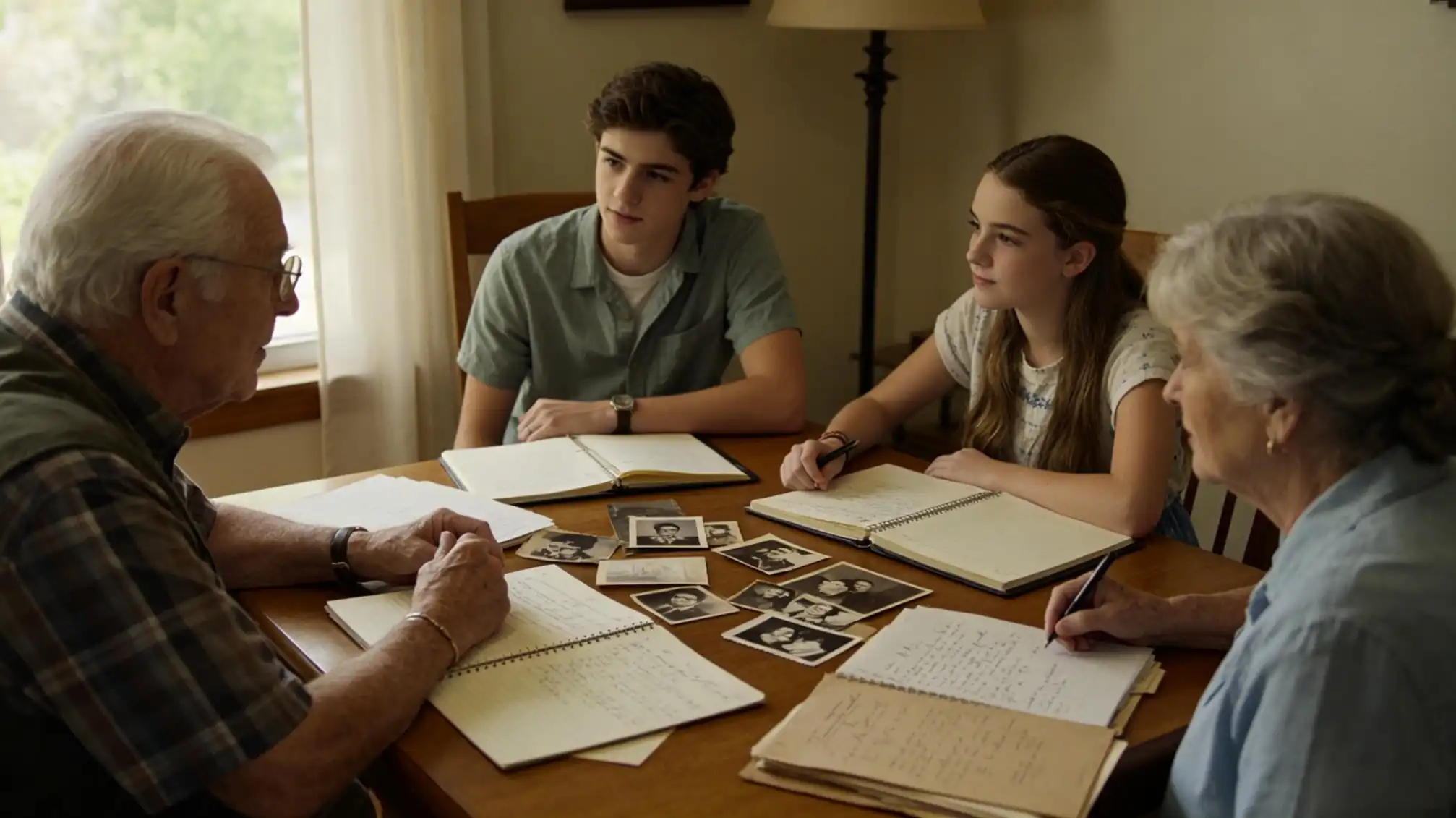
Start With Comfort, Not Interview
Before you dive into questions, remember: your grandparents are not being interviewed for a news program. They are being invited to share their life with someone they love. Choose a cozy spot, make tea, and let the conversation wander. Keep your phone out of sight or use a small voice recorder with their permission. Tell them you're curious about their life, and that you want to keep their stories for the family.
You might begin with something simple like, "What is the earliest memory you have of your own grandparents?" This often unlocks a chain of memories — and suddenly you're learning about your great-great-grandparents too. These family stories become bridges between generations.
Everyday Magic: Questions About Childhood and Home
Instead of asking broad questions like "What was the past like?" (which can overwhelming), focus on sensory, specific details. Here are some family history questions that invite vivid answers:
- What did your bedroom look like when you were eight? What was your favorite toy?
- Who cooked the meals in your house, and what did you eat on special occasions?
- What sound did your neighborhood make in the mornings? Birds, streetcars, church bells?
- How did you get to school? Who was your best friend, and what toys did you play with?
- What was the happiest ordinary day you remember?
These questions often make grandparents smile. They don't feel like an interrogation — they feel like being seen. And as they answer, you'll naturally discover threads of resilience, humor, and love that connect directly to who you are today.
Questions About Growing Up: Teen Years and Risky Choices
Teenage memories are golden because they reveal personality, rebellion, and dreams. Try asking:
- What was the most adventurous thing you did with your friends?
- What did your parents worry about most when you were a teenager?
- What was your first job, and how did you spend your first paycheck?
- Did you ever break a rule that you now find funny?
- Who was your first crush, and did you ever tell them?
These family history questions help your grandparents remember that they were once young, restless, and full of hope. That's a beautiful gift to both of you.
Love, Marriage, and Big Life Changes
Once your grandparents are comfortable, you can gently explore the stories of how your family was formed — from first meetings to moving across countries. Some questions to ask:
- How did you and Grandpa/Grandma meet? What did you think of them at first?
- Tell me about the moment you decided to get married. Was there a proposal, or was it just understood?
- What was the hardest goodbye you ever had to say?
- What big change took the most courage for you?
- What did you learn about your own parents after you became a parent?
These questions may stir deeper emotions. Let the silence be okay. If your grandparent becomes quiet, don't rush. Some of the most precious family stories are the ones we sit with in silence before they're spoken.
Preserving the History: Simple Ways to Keep Everything
You do not need to transcribe everything perfectly. But you do want to create a record. Consider:
- Voice recordings — even just a few minutes on your phone will be priceless later.
- Photo prompts — bring an old album and ask, "Who is in this picture?"
- Memory notes — write down the key phrases you love, not just the facts.
- Sharing with family — once you've collected a few sessions, create a page where all relatives can add their memories. For a wonderful place to keep and share your family's stories, explore the family story corner at https://www.familylove.love/stories — it's a beautiful way to keep everyone connected.
Remember, you aren't doing this just to make a record. You are doing it to build intimacy. The conversation itself is the gift. Your grandparents family history is not only in the answers — it's in the laughter, the pauses, and the love you share while you listen.
What to Do If They Don't Want to Talk
Not every grandparent is eager to open up. That's okay. Sometimes they need multiple visits before they trust the process. If your grandparent is hesitant, try:
- Starting with your own story about them. "I remember when you taught me to bake, do you remember that?"
- Telling them why their stories matter to you personally.
- Using an object — an old spoon, a hankie, a faded postcard — and asking about that object specifically.
- Inviting another family member who might make them feel more relaxed.
Patience is your best tool. The questions are just the door; trust is what opens it.
Practical Steps
- Related: Read more about sharing family stories on Family Love
- Help and guidance for preserving grandparents family history