Old family photos are more than paper and ink. They are the faces of your family history — a grandmother's smile, a great-grandfather's Sunday suit, a house that no longer stands. But if those photos are left in a shoebox or stuck in an old album, they may not survive long enough to tell their story. Preserving old family photos for family history doesn't require a museum budget. It requires a thoughtful system, a little time, and a commitment to keep the memories attached to the images alive.
Why Family Photos Deserve More Than a Shoebox
Most families have at least one drawer or box filled with loose prints. Some are faded, some have sticky plastic from old album sleeves, and many have no names on the back. When you look at them, you might recognize a face or remember a holiday. But your children and grandchildren may only see strangers. The goal of preserving family photos is not just to keep the physical object intact — it is to keep the identity, relationships, and stories attached to it.
Family photos are also unique historical documents. They capture clothing, cars, home interiors, and neighborhood scenes that no written record can fully describe. For family historians, they are primary sources. For your family, they are emotional anchors. Treat them that way, and future generations will thank you.
Start With a Family Photo Audit
Before you buy anything or start scanning, take a gentle inventory. Pull all the family photos you can find: loose prints, albums, framed pictures, even the old ones tucked inside books. Do not sort them by year yet. Instead, create a safe workspace where you can look at each image without rushing.
As you go through the photos, place them into broad categories:
- People you recognize
- People you do not recognize
- Places and houses
- Events and milestones
- Images with writing on the back
- Damaged or fragile photos
This audit helps you understand the full scope of your collection. It also gives you a chance to spot photos that need urgent care, such as those with mold, tears, or severe fading. Resist the urge to fix them yourself with household tape or glue. Instead, set them aside and handle them carefully.
Digitize With Purpose — Create a Family History Workflow
Scanning is one of the most important steps for preserving old family photos for family history. Digital copies ensure that even if a physical photo is lost, the image lives on. But digitizing works best when you do it with purpose.
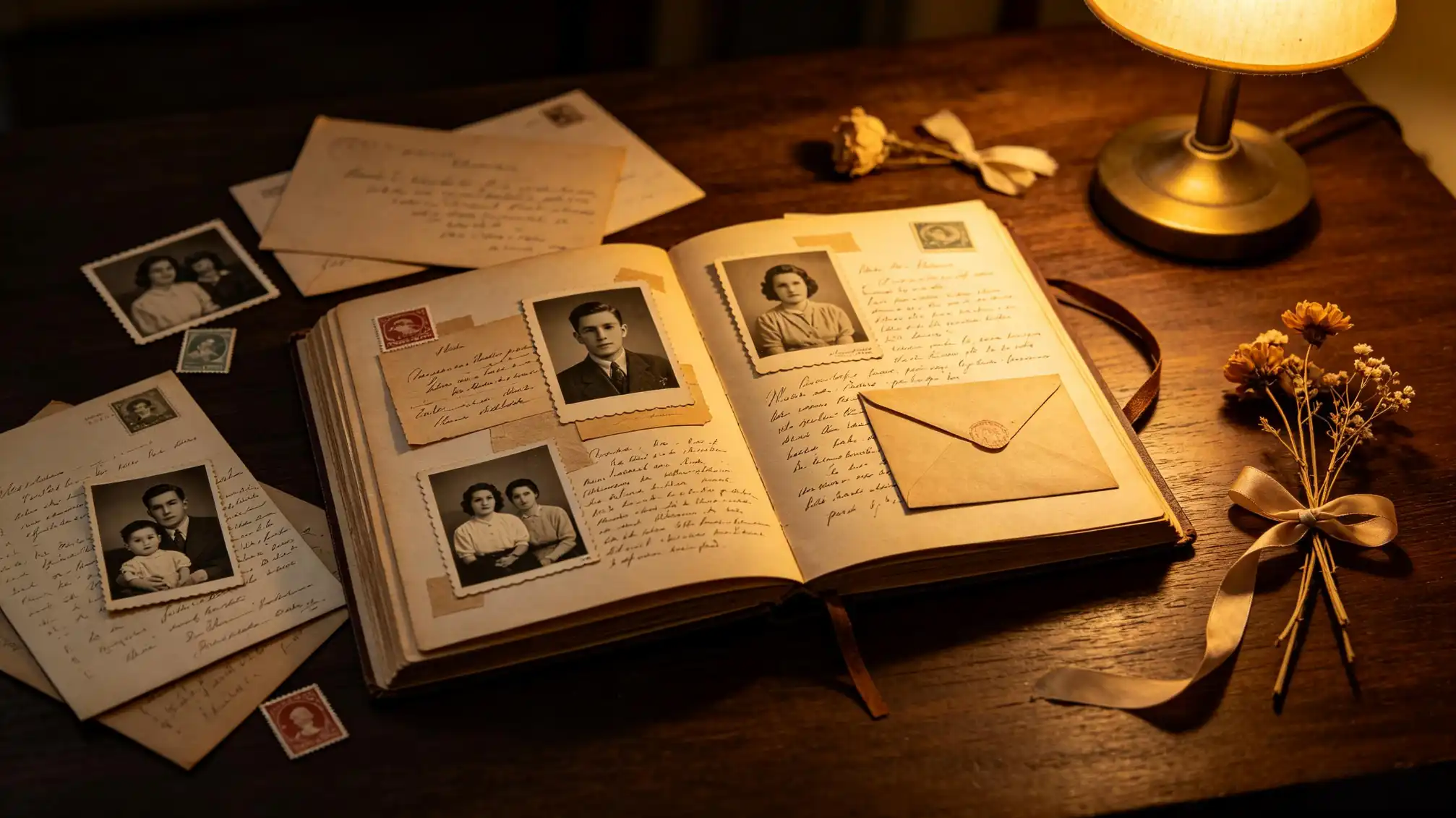
Use a flatbed scanner whenever possible. Set the resolution to at least 300 DPI for standard prints, and go higher — 600 DPI or more — for small or detailed photos. Save your scans in a lossless format like TIFF for the master copy, and create separate JPEG versions for sharing. Name your files intentionally: for example, Lastname_FirstName_Year_Place. A consistent naming system makes your family history easier to search and share with relatives.
Do not stop at just scanning the image. Use a voice recorder or a notes app to capture what you know about each photo as you go. Who is in the picture? Where was it taken? Why was it taken? These oral clues are just as valuable as the image itself. Later, you can attach those notes to the digital file.
Organize by Generations, Not by Year
Many family photo collections are organized by the year they were taken, but that only makes sense if you already know every date. For older family photos, dating is often approximate. A better approach for family history is to organize by generation or by family line.
Create folders for each great-grandparent pair, then by their children, and then by current family members. This structure follows the natural flow of family history and makes it easier to spot missing people or missing stories. You can also create a folder called “Unidentified” and return to it later. Do not discard unknown photos — they may be identified by an older relative or through online family history communities.
As you build your digital archive, remind yourself that organization is not a one-time task. It is a living system. When new family photos are taken, add them to the archive. When someone shares an old picture on social media, ask them for a scan and add it to the right folder. Your family history grows with every generation.
Preserve the Back of the Photo Too
The front of a family photo gets all the attention, but the back often holds the key to your family history. Names, dates, locations, and short notes are frequently written in cursive or pencil. These small inscriptions can identify a person or explain a moment in time.
When scanning a photo, scan the back side as well. Save it as a separate file or as a combined image. If the writing is difficult to read, enlarge it and transcribe the text into a document. Always keep the original photo and its inscription together — in a labeled archival sleeve, if possible.
If you have a photo with no inscription, consider turning it over and reading the pattern of the mount or the print paper. Studio photographers often printed their names on the back or bottom edge. This small clue can help you identify the time period and the town where your ancestor lived.
Store the Originals Safely and Share the Copies
Once your family photos are digitized, the physical originals should be preserved too. Use archival-quality boxes, albums, or sleeves made from acid-free materials. Avoid plastic sleeves that contain PVC, and never store photos in a damp attic or a hot garage. Aim for a cool, dry, and dark place where the temperature does not swing wildly.
Handle prints by the edges, not the surface. If a photo is cracked or curled, consider consulting a professional photo conservator rather than attempting a DIY repair. Sometimes the only safe thing is to leave it as it is and rely on the digital copy.
Most importantly, share your digitized family photos with relatives. Family memories become stronger when they are shared. Create a digital album for your close family, send a photo to a cousin, or add printed copies to a family gathering table. If you want to pair your photos with the stories behind them, you can share them on a family stories page like FamilyLove stories and invite relatives to contribute their own recollections.
Preserving old family photos for family history is not about hoarding the past. It is about building a bridge between your ancestors and the generations still to come. Every time you scan a photo, label a file, or write down a memory, you are making sure that your family history remains alive.