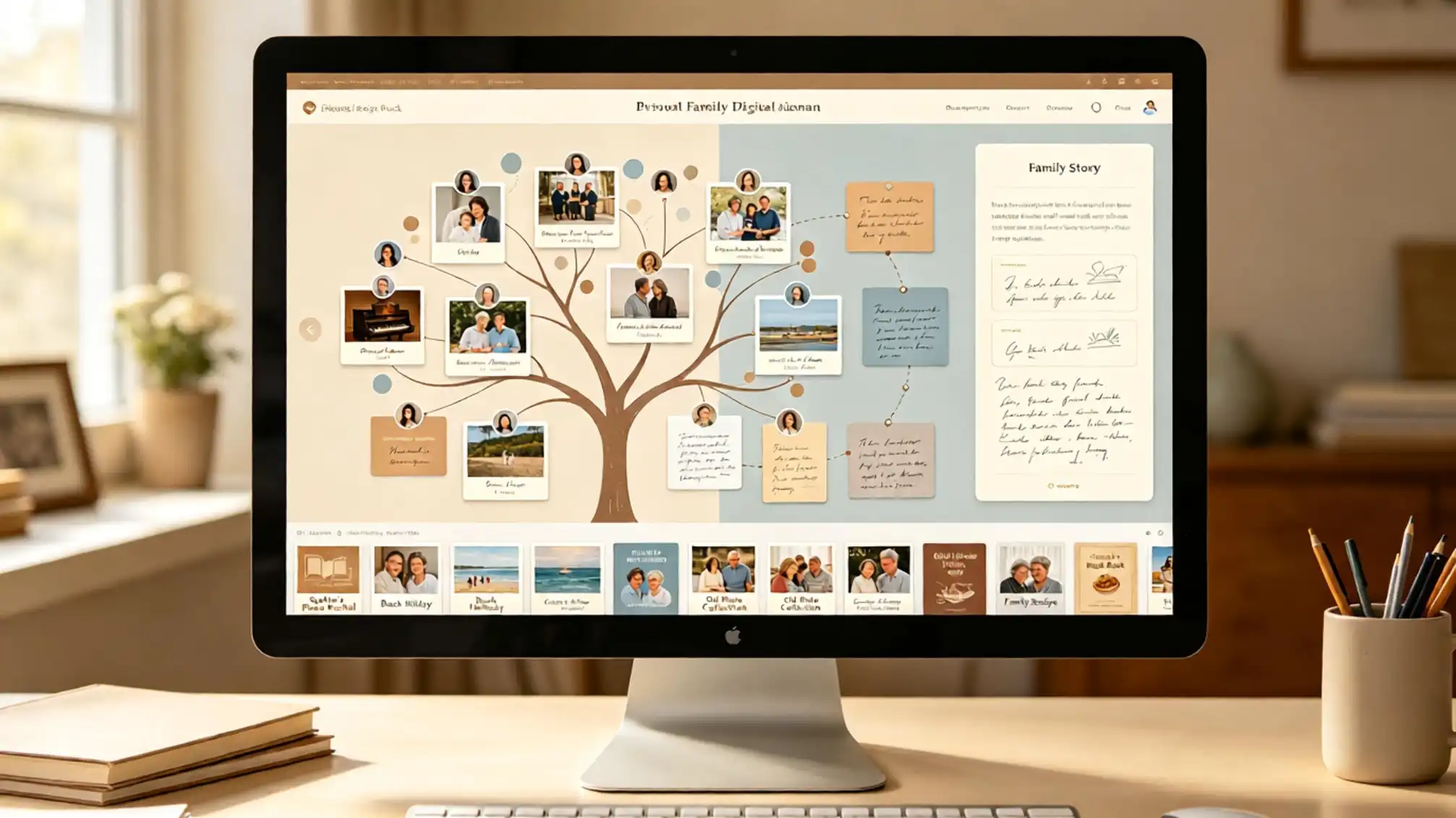
Every family has a treasure chest hidden in plain sight. It sits in the stories your grandmother tells while stirring soup, in the faded handwriting on the back of a photograph, and in the nicknames your father still uses for his cousins. That treasure is my family history — not just dates and places, but the messy, wonderful moments that made us who we are. And the best way to preserve it is to give it shape. A family tree does more than arrange names; it becomes a place where family stories can grow roots and reach new branches.
Start with the Stories You Already Carry
You don't need a pedigree chart or a subscription to a genealogy website to begin. The raw materials of your family history are already inside you: a memory of sitting on a porch swing, the recipe only your aunt knew, the joke your grandfather told at every wedding. Write them down, even if they seem small. Those details bring life to a family tree that otherwise looks like a list of names.
Grab a notebook or open a note on your phone. Jot down every relative you can name without asking anyone. Include their approximate years, where they lived, and one sentence about what you remember most. This first messy list is the soil. You can organize it later.
Next, sort the memories by family line. On your mother's side, who were the personalities? On your father's side, what jobs did people hold? Don't worry about being perfect. The goal is to see the shapes hidden in your memories — the storytellers, the wanderers, the farmers, the bakers.
Turn Conversations into Living Records
Once your own memory is stretched, it's time to invite others. Ask your parents, aunts, uncles, and older cousins to walk through your list with you. You'll be amazed how one question — “What was grandma like as a girl?” — can unlock a flood of family stories.
Record the conversation if everyone feels comfortable. A phone voice memo works beautifully. As you listen, capture the details that are easy to lose: the name of the family dog, the street they lived on, the song they danced to at their wedding. Those are the ornaments that make your family tree feel alive.
When you ask questions, keep them open. Instead of “What year were you born?” try “What do you remember about the day you were born?” Instead of “Where did grandpa work?” ask “Tell me about the place grandpa took you to work.” These invitations make people want to share.
Sketch Your Tree with Gentle Scaffolding
Now comes the satisfying moment: turning stories into structure. Start a simple diagram on paper or use an online tool. The classic family tree begins with you at the bottom, then your parents, then grandparents, and so on. But don't feel trapped by the traditional format. A ladder tree, a circle chart, or a digital scrapbook can work just as well.
The key is to place the information where it feels intuitive. Record full names, birth and death dates if you know them, and small notes beneath each person. For example, “Always grew tomatoes” or “Played violin by ear.” That way, your family history stays human, not just historical.
If you run into blank branches, leave them open. An empty branch can be a gentle invitation for a relative to fill in what they know. It’s better to have an honest gap than a guessed name.
Handle Contradictions with Compassion
As you gather stories, you will discover that two relatives remember the same event differently. That's not a mistake — it's the texture of memory. Maybe Aunt Rosa says the family came from one village, while your cousin swears it was another. Instead of choosing a “correct” version, note both, with the source. Your family history is richer for those differing perspectives.
If a piece of information seems unverifiable, write “as told by” next to it. That phrasing honors the storyteller while keeping the tree honest. You can always check official records later, but the story itself remains valuable.
Make Your Tree a Shared Family Project
Don't let your tree sit alone in a drawer. Share it! A wonderful way to do this is to create an active family page where everyone can contribute photos, memories, and corrections. If you're looking for a place to start, consider building on your dedicated family page within FamilyLove. There, you can post your developing tree and invite relatives to add their own branches in real time.
When you share, keep it positive. Label each person with a story, not just a relation. A tree that says “Great-Uncle Joe — once rode a horse into a grocery store” will spark far more conversations than one that says “Great-Uncle Joe (1912–1988).” Both are true, but one carries the flame of your family history.
Celebrate the Unfinished Branches
A family tree is never truly complete. New babies are born, marriages join families, and someone always finds an old letter that changes what we know. That's the beauty of it: your family history is a living project, not a dusty chart. Let it evolve. Each year, you might add a new branch or update a story. You could make it a holiday tradition to read one memory aloud.
The most meaningful result isn't a perfect diagram. It's the feeling you get when a younger relative says, “I never knew that about Grandpa.” At that moment, your family stories have crossed generations and taken root in a new heart.